May El-Toukhy Triumphs With Venice Golden Lion For Woman Unknown While Addressing Industry Systemic Biases

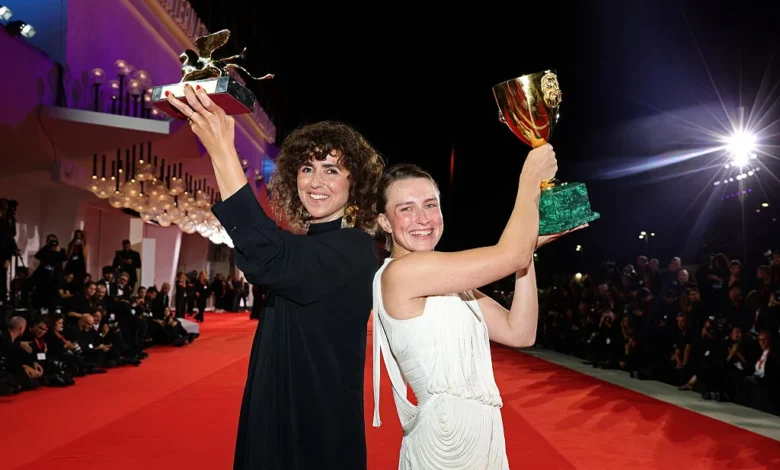
The 83rd Venice International Film Festival concluded its prestigious run with a historic and emotionally charged awards ceremony, punctuated by powerful political statements, poignant tributes, and a landmark victory for Danish filmmaker May El-Toukhy. El-Toukhy claimed the festival’s highest honor, the Golden Lion, for her psychological drama-thriller Woman Unknown. However, her post-victory press conference quickly turned into a broader examination of gender equity within the global film industry, as the director addressed the persistent underestimation of female creators by critics, pundits, and festival prognosticators.
The festival, held annually at the historic Lido di Venezia, once again served as the launchpad for the autumn awards season, drawing cinephiles, industry executives, and international media to the shores of the Venetian lagoon. Yet, beyond the glamour of the red carpet, this year’s iteration of the world’s oldest film festival will likely be remembered for its fierce engagement with contemporary geopolitics, artistic freedom, and the structural hurdles still facing women behind the camera.
A Laser Beam of Postwar Paranoia: Woman Unknown Sweeps Venice
Set against the stark backdrop of postwar Denmark, Woman Unknown explores a tense narrative intertwining sexual shame, societal judgment, and deep-seated political paranoia. The film follows a woman harboring dangerous secrets who fights desperately to evade the clutches of swift mob justice in a fractured society.
Jury President Maggie Gyllenhaal, leading an international panel of esteemed filmmakers and artists, was effusive in her praise for El-Toukhy’s directorial vision. During the jury deliberations and subsequent press announcements, Gyllenhaal described the film as "a brilliantly made movie that felt like a laser beam," highlighting its precision, tonal control, and psychological acuity.
In a rare occurrence for the Venice Film Festival, Woman Unknown did not stop at securing the Golden Lion. Danish actress Mathilde Arcel also captured the Coppa Volpi for Best Actress for her harrowing, nuanced performance as the film’s embattled protagonist. Festival rules typically discourage the simultaneous accumulation of the top feature prize and major acting awards by the same production. However, Gyllenhaal clarified that the dual victory occurred because the jury reached a unanimous consensus that Arcel’s performance was undeniably the finest among all competition entries, compelling them to bypass informal distribution protocols in favor of recognizing raw merit.
Challenging Industry Prognostications and Systemic Barriers
Despite the resounding critical success of Woman Unknown, El-Toukhy revealed that her journey to the Lido was fraught with the familiar institutional invisibility that many female directors face globally. Speaking to journalists after her triumph, the director admitted she was entirely unsurprised that industry pundits had categorized her victory as an upset.
"It doesn’t surprise me that some people would say, ‘Oh, did she get it?’ Because that’s part of everyday life as a woman in this industry," El-Toukhy stated.
Reflecting on pre-festival predictions, the director noted that out of dozens of titles heavily forecasted by trade publications and awards handicappers, her film languished consistently near the bottom of the lists, positioned at 39th or 40th place. For El-Toukhy, this trend is symptomatic of a deeper, structural failure within cinematic journalism and curation.
"When I look to those lists, we would be four women, and I would feel that I had to compete with those four women and not my male peers," she explained. "That’s a systemic issue, and that’s something that all of us need to think about, including journalists, the media, my male peers. How can we make it easier for women to be part of this industry? I don’t have the feeling that my male colleagues aren’t interested in having women in the industry, but still, there are structures in place that we haven’t found a way to solve."
The critique places a renewed spotlight on gender parity initiatives across major European film festivals. While Venice, Cannes, and Berlin have signed various equality pledges in recent years to increase female representation in their official competitions, El-Toukhy’s comments underscore that qualitative parity—measured in critical attention, financial backing, and awards recognition—remains an elusive target.
Geopolitical Tensions Surface With Special Jury Prize Winner Naza
Art and politics collided forcefully in the Sala Grande as the festival distributed its secondary prizes. The Special Jury Prize was awarded to Naza, a hard-hitting, investigative documentary-drama exploring the Israel Defense Forces’ (IDF) military actions and the killing of civilians in Gaza.
Directors Yuval Abraham and his collaborators used their platform to address the pressing humanitarian crisis and to push back against official military critiques of their project. Speaking directly to the international press corps, Abraham emphasized the film’s imperative to pierce through domestic information barriers in Israel.
"It’s definitely important to show it to Israelis in as wide a way as possible. I hope we will be able to," Abraham said. "It’s important as Israelis that we recognize what our government has done in Gaza."
Addressing statements released by the IDF criticizing the film’s accuracy and framing, Abraham vigorously defended the production’s journalistic integrity. He noted that the project was executed in rigorous partnership with major international journalistic entities, specifically The Guardian.
"To me, it seems like an attempt to not face reality," Abraham asserted. "In just these 10 days of the festival, Israel, our country, has killed multiple Palestinian children in Gaza. This is the reality described by Palestinian journalists from the very start. And I think it’s important we talk about it."
The inclusion and recognition of Naza at Venice highlights the festival’s historical willingness to champion politically sensitive, non-fiction storytelling that challenges state narratives, frequently turning the Lido into a barometer for international geopolitical discourse.
A Heavy Heart on the Lido: Remembering Producer Jeremy Thomas
Amid the celebration of new cinematic achievements, a cloud of mourning hung over the festival following the sudden passing of legendary independent British producer Jeremy Thomas, who died the night before the ceremony. Thomas, an influential titan of world cinema, was celebrated for championing uncompromising auteur-driven projects across decades.
Italian actor Riccardo Scamarcio, who secured the Best Actor prize in the Orizzonti sidebar section for his searing performance in The House of the Monkey, dedicated a significant portion of his press interaction to honoring Thomas. Scamarcio, visibly emotional and fighting back tears, offered a profound tribute to the late producer with whom he had collaborated.
"He was a pirate. He was a free man, a great man of cinema," Scamarcio said. "He made movies that are part of the history of cinema, and he behaved like an independent producer, like the father of the movie he produces, protecting directors and creators. But he did so protecting the freedom of the artists to express themselves. When I heard the news this morning, I was glad to come to Venice to get my award, but I cried for Jeremy."
Thomas’s death marks the end of an era for classic independent European financing models, reminding the international film community of the fragility of the support systems that allow risky, non-commercial art to reach the screen.
Courage Under Fire: Iranian Cinema Recognized in Orizzonti
International solidarity was further underscored in the Orizzonti section, where Iranian actress Laleh Marzban claimed the Best Actress prize for her powerful performance in Falling House. The film has drawn international acclaim for its unflinching critique of patriarchal authoritarianism and government oppression in Iran.
During the post-awards press conference, Deadline journalist Melanie Goodfellow questioned Marzban regarding the potential repercussions the film might face upon its eventual release or distribution within Iran due to its overt political defiance.
Marzban framed her artistic contribution within the broader, incremental struggle for civil rights and professional autonomy by women in her homeland.
"This question is very important for me as an actress, and as all other women in Iran, whether they be doctors, artists, whatever profession women can perform, we can only make one step at the time, one step towards our objective," Marzban reflected. "If we give our small contribution, maybe we will reach our objective. I have made my small part. I have given my contribution. I really hope many other people can make small steps towards our common objective."
Broader Implications and Legacy of the 83rd Venice Film Festival
As the lights dim on the 83rd Venice International Film Festival, the 2026 edition will be analyzed not merely for its palmarès, but for the cultural and political friction points it exposed. May El-Toukhy’s historic Golden Lion win for Woman Unknown serves as both a celebration of exceptional Danish filmmaking and a stark reminder of the uphill battle women continue to wage against institutional pigeonholing.
Concurrently, the festival’s embrace of contentious geopolitical narratives like Naza and politically perilous artistic expressions like Falling House reaffirms that cinema remains a vital, unyielding arena for dissent. As the winning titles transition from the serene Venetian lagoon to commercial distribution and the grueling global awards circuit, they carry forward the urgent conversations sparked on the Lido—conversations that challenge the industry to reevaluate its internal structures, honor its departed legends, and confront uncomfortable global realities head-on.