CNN Political Briefing Navigating the Complexities of American Governance and Electoral Shifts

The American political landscape is undergoing a profound and rapid transformation, defined by sharp legislative standoffs, high-stakes local elections, and shifting internal dynamics within both major political parties. As the nation looks ahead to the crucial 2026 midterm elections, political analysts, lawmakers, and strategists are closely examining the fractures and alliances shaping Washington and state capitals alike. Through insightful discussions hosted by CNN Political Director David Chalian on the CNN Political Briefing podcast, a comprehensive picture emerges of a government grappling with deep polarization, questions of leadership, and evolving voter sentiment. From Capitol Hill disputes over government funding to unexpected electoral outcomes in major urban centers, the current political climate reflects a country at a critical crossroads.
Legislative Battles and the Anatomy of Government Shutdowns
One of the defining structural challenges of the legislative calendar has been the recurrent threat and reality of federal government shutdowns. These fiscal impasses have repeatedly brought Washington to a standstill, serving as a primary battleground for partisan conflict. In late 2025, a protracted government shutdown exposed deep fractures not only between Republicans and Democrats but also within the leadership ranks of both parties.
As the budget standoff stretched into its third week, congressional leaders faced immense pressure from their respective caucuses. Representative Ro Khanna, a prominent progressive Democrat from California, outlined the strategic calculus of his party during the crisis, identifying which legislative components were negotiable and which remained absolute red lines for the progressive wing. On the opposing side, moderate and battleground Republicans offered contrasting views. Representative Mike Lawler, representing a competitive district in New York, argued that the Democratic leadership had fundamentally miscalculated the political fallout of the shutdown, contending that voters would ultimately hold the opposition responsible for administrative disruptions.
Parallel to these partisan finger-pointing exercises, Democratic campaign strategists maintained a laser focus on the electoral horizon. Representative Suzan DelBene of Washington, serving as the Chair of the Democratic Congressional Campaign Committee, articulated the party’s blueprint for leveraging these legislative fights to recapture the House of Representatives in the upcoming 2026 midterms. Meanwhile, veteran political figures like former Virginia Governor Terry McAuliffe weighed in on the intra-party debates, suggesting that strategic unity—or the lack thereof—would determine whether Democrats could capitalize on widespread public frustration.
Internal Strife and Leadership Crises in the House
Beyond fiscal standoffs, the Republican majority in the House of Representatives has faced severe internal dissent regarding legislative direction and leadership efficacy. The traditional unity of the GOP conference has been tested by competing priorities, ranging from domestic economic concerns to high-profile congressional oversight investigations.
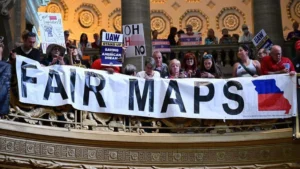
A striking example of this internal friction surfaced when California Republican Congressman Kevin Kiley voiced sharp criticisms regarding the leadership of House Speaker Mike Johnson. In an assessment that resonated throughout Capitol Hill, Kiley argued that the current leadership had failed to effectively steer the party’s agenda during a critical legislative session. This public critique highlighted a broader "vibe shift" within the Republican caucus as members begin to position themselves for a post-Trump political era and prepare for the formidable electoral challenges of the 2026 midterms. Compounding these pressures, Kiley also addressed the immediate local political hurdles he faced, including newly redrawn congressional district lines in California implemented under Democratic Governor Gavin Newsom—a maneuver designed to reshape the state’s congressional delegation.
The MAGA Movement and the Trump Presidency
At the center of conservative politics, President Donald Trump continues to exert immense influence over the Republican Party, though recent months have revealed subtle cracks in his traditionally unbreakable bond with the MAGA base. Observers have noted emerging tensions regarding the administration’s policy focus and public messaging.
Political analysts, including POLITICO’s Jonathan Martin, have closely monitored these developments to determine whether the administration is entering a de facto lame-duck period earlier than anticipated. A rare point of friction materialized when the administration reversed course on the public release of confidential investigative files related to Jeffrey Epstein—a move calculated to appease internal party factions but indicative of the delicate balancing act required to maintain base loyalty. Furthermore, critics within and adjacent to the conservative coalition have voiced concerns that the administration’s heavy emphasis on foreign affairs has occasionally overshadowed pressing domestic priorities, most notably consumer prices, inflation, and the broader cost-of-living crisis facing everyday Americans. These strategic pivots have sparked rigorous debates among political scientists regarding the long-term trajectory of the populist movement and the identity of future conservative leaders.

High-Profile Legal Confrontations
The intersection of partisan politics and the American judicial system has produced some of the most extraordinary legal chapters in modern history. Among the most closely watched proceedings has been the federal prosecution of former FBI Director James Comey, a case that legal scholars describe as an unprecedented milestone in the relationship between the Department of Justice and federal law enforcement leadership.
Legal experts, such as former federal and state prosecutor Elie Honig, have analyzed the historical context of these investigations, drawing comparisons to previous eras of executive-judicial friction spanning from the Nixon administration to the modern era. The prosecution of high-ranking intelligence and law enforcement officials has fundamentally altered public perception of the justice system, intensifying debates over institutional independence, prosecutorial discretion, and the rule of law in a deeply polarized society.
Municipal Upsets and State-Level Electoral Shifts
While federal battles dominate national headlines, sub-national and municipal elections have provided crucial testing grounds for shifting voter demographics and ideological realignments. The 2025 election cycle featured high-stakes gubernatorial and legislative contests in states like New Jersey and Virginia, alongside a historic mayoral race in New York City.
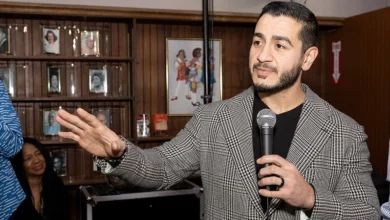
In Gotham, the political establishment was upended by the meteoric rise of Zohran Mamdani, a progressive state assemblyman who captured the New York City mayoral race. Mamdani’s victory rewrote the traditional municipal political playbook, demonstrating the growing viability of progressive platforms in America’s largest urban center. Spectrum News NY1 Political Anchor Errol Louis analyzed this seismic shift, noting how a candidate once considered a political outsider managed to build a winning coalition by focusing on housing affordability, economic equity, and grassroots mobilization.
The New York mayoral contest also featured notable bids from figures representing the city’s complex political mosaic. Curtis Sliwa, the Republican standard-bearer and founder of the Guardian Angels, mounted a strenuous campaign against significant mathematical odds—given that registered Democrats outnumber Republicans six to one in the city. Sliwa competed not only against Mamdani but also against former New York Governor Andrew Cuomo, who sought a political comeback years after resigning from office. CNN correspondents Jeff Zeleny and Eva McKend, who tracked the final weeks of the campaign trail across New York, New Jersey, and Virginia, reported that these localized races offered vital bellwethers for national party strategists attempting to gauge suburban and urban voter turnout trends ahead of the midterm elections.
Broader Implications and Future Outlook
The convergence of legislative gridlock in Washington, evolving power dynamics within both major political parties, and surprising electoral outcomes at the local level paints a complex portrait of contemporary American democracy. As the nation transitions from the immediate aftermath of the 2025 electoral cycle toward the 2026 midterms, several key implications emerge.
First, the fragility of legislative majorities in Congress suggests that governance will remain precarious, with policy outcomes heavily dependent on narrow margins and high-stakes negotiations. Second, the ideological evolution within the Republican and Democratic parties—marked by internal dissent among Republicans regarding leadership and strategy, alongside progressive breakthroughs in municipal politics—demonstrates that party coalitions are actively renegotiating their core identities. Finally, the growing disconnect between national partisan messaging and localized voter concerns over affordability and governance highlights the challenges facing candidates nationwide.
Ultimately, navigating this dynamic political terrain will require both parties to adapt swiftly to changing demographic realities and voter expectations. Whether through legislative compromise, electoral mobilization, or strategic realignment, the decisions made by political leaders today will decisively shape the trajectory of American governance for years to come.
Related posts: