Spaceport Cornwall and Virgin Orbit Prepare for Historic First Orbital Launch from United Kingdom Soil

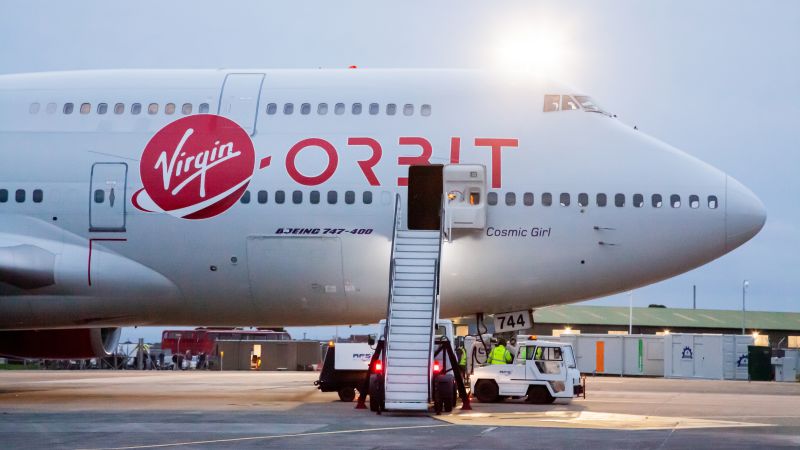
The rugged, windswept coastline of Cornwall, situated at the southwestern-most tip of England, has long been celebrated for its maritime heritage, surfing culture, and tourism. However, the region is currently undergoing a radical transformation as it prepares to become a pivotal player in the global space industry. For weeks, residents of the quiet town of Newquay have observed an unusual sight in the skies: a modified Boeing 747-400, known as "Cosmic Girl," performing low-altitude maneuvers over the Atlantic. This aircraft is not a standard passenger jet; it is the cornerstone of Virgin Orbit’s "Start Me Up" mission, which marks the first-ever orbital space launch from the United Kingdom and the first international launch for the California-based company.
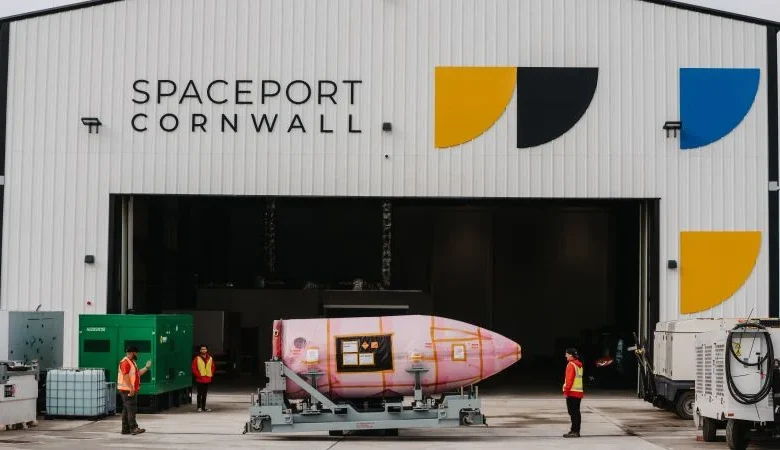
The operations are centered at Spaceport Cornwall, a facility integrated into Cornwall Airport Newquay. Despite being the 29th largest airport in the UK by passenger volume, Newquay boasts a 1.7-mile (2.7-kilometer) runway, one of the longest in the country, which was originally reinforced to handle heavy military transport and emergency landings for the Space Shuttle. Today, that runway serves as the springboard for a new era of British aerospace capability.
The Engineering Behind the Mission: Cosmic Girl and LauncherOne
At the heart of this historic endeavor is "Cosmic Girl," a former Virgin Atlantic passenger aircraft that served the airline for 14 years before being repurposed for spaceflight. The conversion of a commercial jumbo jet into a mobile launch platform represents a significant shift in how satellites are delivered to orbit. Unlike traditional vertical rockets that require massive, fixed launch pads and are highly susceptible to weather delays, Virgin Orbit utilizes a "horizontal launch" system.
The aircraft has been stripped of its interior seating and commercial amenities to reduce weight and make room for the sophisticated monitoring equipment required for space missions. Under its left wing, between the fuselage and the inboard engine, sits a pylon capable of carrying the LauncherOne rocket. LauncherOne is a two-stage, expendable rocket designed to carry small satellites—ranging from the size of a toaster to a large refrigerator—into Low Earth Orbit (LEO).
The flight profile is a marvel of modern aerospace engineering. Cosmic Girl takes off from the Newquay runway like a standard commercial flight. Once it reaches an altitude of approximately 35,000 feet over the Atlantic Ocean, the pilot performs a "pull-up" maneuver. At the precise moment, the 70-foot-long LauncherOne rocket is released. After a few seconds of freefall, the rocket’s first-stage engine, the NewtonThree, ignites, propelling the vehicle at speeds of up to 17,000 miles per hour toward the upper atmosphere.
Chronology of the UK Space Mission
The journey to this moment has been years in the making, involving complex regulatory hurdles, technical rehearsals, and international cooperation. The timeline of the current mission reflects the meticulous preparation required for such a feat:
- October 2, 2022: LauncherOne completed its final full-scale launch rehearsal at Virgin Orbit’s headquarters in Long Beach, California. This "wet dress rehearsal" involved fueling the rocket and simulating the countdown to ensure all systems were flight-ready.
- October 11, 2022: Cosmic Girl arrived at Spaceport Cornwall, touching down on the Newquay runway to the cheers of local enthusiasts and aerospace officials.
- October 14, 2022: The aircraft conducted a nearly three-hour test flight across Cornwall and Southwest England. This sortie was designed to familiarize the flight crew with local airspace and ensure that the modified aerodynamics of the 747, while carrying the pylon, remained stable in the British climate.
- Late October 2022: The LauncherOne rocket arrived in the UK via a military transport aircraft, meeting Cosmic Girl at the Spaceport’s newly constructed integration facility.
- November 2022 (Targeted): The official launch window for the "Start Me Up" mission is scheduled, pending final licensing from the Civil Aviation Authority (CAA).
Local Impact and Public Perception
For the people of Cornwall, the arrival of the space industry is more than just a technical curiosity; it represents a significant economic and cultural shift. Marc Andrew, a Newquay resident, is among the many locals who have flocked to the airport perimeter to witness history. "It was amazing to watch, and will be a nice bit of history to tell my little boy when he’s older," he told CNN. The sentiment is echoed throughout the region, where "space tourism" of a different kind is taking hold, with enthusiasts traveling from across the country to catch a glimpse of the "Queen of the Skies."
The project is expected to create hundreds of high-skilled jobs in a region that has historically struggled with seasonal unemployment and a reliance on the tourism and agricultural sectors. Spaceport Cornwall aims to foster a "cluster" of aerospace companies, providing services ranging from satellite tracking to data analysis.
Technical Specifications and Payload Details
The upcoming launch is not merely a demonstration of flight; it is a commercial mission carrying seven distinct payloads. These satellites represent a cross-section of modern space utility:
- Prometheus-2: Two small satellites (CubeSats) funded by the UK Ministry of Defence, designed to explore radio signals and imaging.
- CIRCE (Coordinated Ionospheric Reconstruction CubeSat Experiment): A joint mission between the UK’s Defence Science and Technology Laboratory and the US Naval Research Laboratory.
- DOVER: A satellite developed by RHEA Group in the UK, focused on providing resilient Positioning, Navigation, and Timing (PNT) signals.
- ForgeStar-0: Developed by the Welsh company Space Forge, this is the first satellite designed to be returned from space, paving the way for in-orbit manufacturing.
- IOD-3 AMBER: A satellite designed to provide Maritime Domain Awareness (MDA) data for the Satellite Applications Catapult and Horizon Technologies.
- AMAN: Oman’s first orbital mission, a satellite dedicated to Earth observation.
- STORK-6: Part of a Polish satellite constellation designed for multispectral imaging and agricultural monitoring.
By launching these diverse payloads, Virgin Orbit demonstrates the flexibility of horizontal launch. As the company noted in a recent statement, this method enables a "broader range of orbits than would be possible from a traditional ground-launched system," as the aircraft can fly to different locations to reach specific orbital planes.
Official Responses and Strategic Importance
The mission is a cornerstone of the UK’s National Space Strategy, which aims to capture 10% of the global space market by 2030. Ian Annett, Deputy CEO at the UK Space Agency, emphasized the regional and continental importance of the project, noting that it will be Europe’s first satellite launch. While French Guiana has long served as Europe’s primary gateway to space, the Cornwall launch represents the first time an orbital rocket will depart from European soil.
Matthew Stannard, Virgin Orbit’s Chief Pilot and a Royal Air Force veteran, expressed the personal and professional weight of the mission. "It feels amazing to bring Cosmic Girl home to the UK. We are weeks away now from the first UK launch at Spaceport Cornwall so it’s all very real," he stated.
Melissa Thorpe, Head of Spaceport Cornwall, has been a vocal advocate for the project’s environmental and social responsibilities. "Seeing the infrastructure in place makes our launch ambitions a reality," she said. Thorpe has highlighted that the spaceport is working toward becoming the most sustainable launch site in the world, focusing on carbon offsetting and ethical supply chains.

Analysis of Global Implications
The success of the Cornwall launch would validate the commercial viability of responsive spaceflight. In an era where geopolitical tensions and environmental concerns are rising, the ability to launch satellites from existing airports provides nations with a strategic advantage. It reduces the need for expensive, dedicated launch infrastructure and allows for rapid replacement of satellite assets if they are damaged or compromised.
Furthermore, this mission signals the decentralization of space access. For decades, space was the exclusive domain of global superpowers like the United States and Russia. The emergence of private entities like Virgin Orbit, combined with the initiative of local governments like Cornwall Council, proves that regional hubs can participate in the high-stakes arena of orbital logistics.
Virgin Orbit has already announced plans to replicate the Cornwall model globally. The company is in various stages of planning for horizontal launches in Australia, Brazil, Japan, Poland, and the Republic of Korea. This "launch anywhere" capability could revolutionize the telecommunications and Earth-observation industries, making space access more affordable and frequent.
Conclusion: A New Horizon for the United Kingdom
As the final countdown for the November launch approaches, the eyes of the global aerospace community remain fixed on the Cornish coast. The "Start Me Up" mission is more than a technical flight; it is a test of the UK’s ability to operate as a sovereign spacefaring nation. If successful, Spaceport Cornwall will transition from a local airport to a global hub for innovation, forever changing the identity of the remote southwestern tip of England.
For residents like Marc Andrew and the thousands of others watching the low-flying 747, the "Queen of the Skies" represents a bridge between Cornwall’s storied past and a future among the stars. The remote region, which rarely feels like the center of the world, is now exactly that—the epicenter of a new British space age.