The Surge in Diesel Prices Is Quietly Costing US Consumers Billions Amid Escalating Middle East Tensions

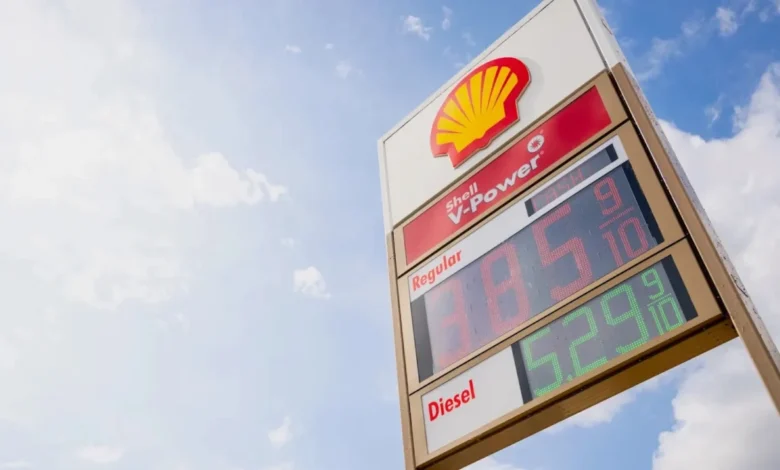
The American consumer, long accustomed to monitoring the fluctuating price of regular gasoline at the corner station, is facing a secondary, more insidious economic threat that often escapes the headlines: the skyrocketing cost of diesel fuel. While gasoline prices have surged significantly since the outbreak of hostilities in the Middle East, diesel—the literal engine of the global supply chain—has experienced an even more aggressive price trajectory. New data indicates that this spike is not merely a localized inconvenience for truckers but a multi-billion-dollar weight on the American economy, manifesting in higher costs for everything from grocery staples to home construction.
The catalyst for this economic volatility is the rapid deterioration of security in the Middle East. Following the commencement of military operations involving the United States, Israel, and Iran, Tehran moved to close the Strait of Hormuz. This narrow waterway, which at its narrowest point is only 21 miles wide, serves as the world’s most critical oil chokepoint. Approximately one-fifth of the world’s total oil consumption passes through this transit zone daily. The immediate cessation of traffic through the Strait sent shockwaves through global energy markets, creating a supply-side vacuum that traders scrambled to fill.
As of mid-April, the resulting war-driven price hikes have saddled U.S. consumers with an estimated $19 billion in additional fuel costs. According to a new analytical tool developed by researchers at Brown University’s Watson Institute, diesel fuel alone accounts for $9.4 billion of that total—nearly half of the entire national burden. For the average American household, this equates to roughly $71 in direct and indirect costs, a figure that continues to climb as peace negotiations remain stalled and military blockades intensify.
The Geopolitical Timeline: From Conflict to Economic Crisis
The current energy crisis did not emerge in a vacuum but followed a specific sequence of geopolitical escalations that have fundamentally altered the market’s risk premium.
- February 28: Military operations began in the region, involving coordinated strikes by U.S. and Israeli forces against Iranian-linked infrastructure. Almost immediately, Tehran issued threats regarding the maritime security of the Persian Gulf.
- Early March: Iran followed through on its rhetoric, effectively closing the Strait of Hormuz to international tanker traffic. Oil markets responded with a "fear premium," driving Brent crude prices toward historic highs.
- March 20–April 10: Despite back-channel diplomatic efforts and a brief two-week ceasefire intended to facilitate the safe passage of humanitarian goods and a limited number of tankers, the Strait remained largely impassable. Only a fraction of the usual maritime traffic successfully transited the waterway.
- April 12: Peace negotiations in a neutral third-party location collapsed over the weekend, with both the United States and Iran failing to reach an agreement on the de-escalation of maritime hostilities.
- April 13 (The Current Peak): Data confirmed that the war had officially cost U.S. consumers $19 billion in cumulative fuel increases.
- The Monday Blockade: Following the collapse of talks, President Donald Trump announced a comprehensive naval blockade of Iranian ports. This move, intended to further isolate Tehran, triggered a fresh round of price increases in the "spot market," where physical oil is traded for immediate delivery.
Why Diesel Is Outpacing Gasoline
While the public discourse often centers on the "price at the pump" for passenger vehicles, the economic fundamentals of diesel are significantly more precarious. Since the conflict began on February 28, gasoline prices have jumped by 38 percent. In contrast, diesel prices have surged by 54 percent over the same period.
Several factors contribute to this disparity. First is the "yield" of a barrel of crude oil. Modern refineries are calibrated to produce a specific ratio of fuels; generally, a single barrel of oil produces significantly less diesel than it does gasoline. When the global supply of crude is constricted, the scarcity of diesel becomes apparent more quickly.
Second is the issue of demand elasticity. Patrick De Haan, head of petroleum analysis for GasBuddy, notes that gasoline demand is relatively "elastic." When prices rise, families may cancel road trips, carpool, or utilize public transit, thereby reducing overall consumption. Diesel, however, is "inelastic." It is the primary fuel for the heavy-duty trucks that stock retail shelves, the locomotives that move freight across the continent, the tractors that harvest crops, and the heavy machinery required for construction. These industries cannot simply "drive less." If a delivery truck must reach a grocery store, the operator must pay the prevailing rate for diesel, regardless of the cost. These expenses are then passed down the supply chain, eventually appearing as "inflation" on the price tags of milk, bread, and consumer electronics.
The Invisible Tax on the American Household
Jeff Colgan, a political scientist at Brown University who spearheaded the project to track war-related fuel costs, describes the diesel spike as an invisible tax. "You’re probably feeling it in ways you don’t realize," Colgan explained. Because diesel is the backbone of the logistics sector, its price movements act as a leading indicator for broader Consumer Price Index (CPI) trends.
The timing of the conflict has further exacerbated the situation. The military escalation coincided with the tail end of a severe winter in the U.S. Northeast. In this region, heating oil is a primary source of residential warmth. Because heating oil and diesel are molecularly nearly identical—distillate fuels that come from the same part of the refining process—they compete for the same supply. The seasonal pressure of heating demand, layered atop the geopolitical shock of the Strait of Hormuz closure, created a "perfect storm" for distillate pricing.
Global Winners and Market Realities
While American consumers and the broader global economy suffer, the crisis has created clear winners among oil-producing nations that are not geographically constrained by the Middle Eastern conflict. Russia has emerged as the primary beneficiary of the soaring global prices. By exporting its oil through Baltic and Pacific ports, Russia is able to sell its energy at the inflated market rates caused by the closure of the Strait of Hormuz without facing the same logistical blockages.
The United States, as a major domestic producer, also sees increased revenue for its energy sector, but this is a double-edged sword. While domestic oil companies report record profits, the domestic manufacturing and agricultural sectors are reeling from the input costs.
Mike Wirth, Chief Executive of Chevron, recently highlighted the disconnect between "paper" markets and physical reality. While commodity traders often look at "forward curves"—expectations of what oil will cost in months to come—the "spot price" (the cost of a barrel today) has been trending much higher. This suggests that the physical shortage of oil is more acute than some financial models suggest. "Physical prices and physical supplies would reflect a tighter market than I think the forward curve reflects," Wirth stated, signaling that the industry expects continued volatility.
Broader Implications and the Path Ahead
The long-term implications of this diesel spike extend beyond the immediate financial hit to consumers. Sustained high diesel prices threaten to stall the post-pandemic economic recovery by increasing the "cost of doing business" across all sectors. In agriculture, higher diesel costs for tractors and transport could lead to a secondary wave of food price increases in the coming harvest season. In the construction sector, the cost of operating heavy machinery and transporting raw materials like steel and lumber is already causing delays in housing projects.
Furthermore, the damage to infrastructure in the Middle East suggests that even if the Strait of Hormuz were to reopen tomorrow, the market would not immediately return to its pre-war baseline. Analysts suggest it could take months, if not longer, to repair damaged pumping stations, refineries, and loading terminals. Additionally, reports indicate that Iran may seek to recoup its war losses by imposing "tanker fees" or transit taxes on ships moving through the region, which would permanently bake higher costs into the global energy price.
As the United States enters the summer months—traditionally the peak season for gasoline demand—there is some hope that the price gap between diesel and gasoline will narrow. "From here on out," De Haan suggested, "you may see a little bit less of an increase in diesel as markets move up," referring to the seasonal shift where refineries prioritize gasoline production.
However, for the millions of Americans struggling with the rising cost of living, the damage may already be done. With $19 billion already drained from the economy in less than two months, the "quiet" crisis of diesel fuel has become a loud and undeniable factor in the nation’s economic health. The situation remains fluid, but the data from Brown University serves as a stark reminder: in modern warfare, the most devastating strikes are often those felt at the gas pump and the grocery checkout line thousands of miles away from the front lines.
Related posts: