A high-stakes conflict over a massive technological infrastructure project in rural Utah has escalated into a national security dispute, with billionaire investor Kevin O’Leary publicly accusing local political consultants and advocacy groups of acting as agents for the Chinese government. The controversy centers on "Stratos," a proposed 40,000-acre data center campus in Box Elder County, which critics argue will devastate the state’s fragile water resources and dramatically increase its carbon footprint.
The dispute reached a fever pitch last week when O’Leary, known as "Mr. Wonderful" on the hit television show Shark Tank, appeared on Fox News to defend the project. During his segment, O’Leary claimed that his team had conducted a "deep dig into the IP addresses" of those opposing the development. He alleged that his investigation identified "two cells inside of Utah" that are purportedly affiliated with the Chinese Communist Party (CCP). Specifically, he named Elevate Strategies, a political consulting firm run by Gabi Finlayson and Jackie Morgan, and the nonprofit organization Alliance for a Better Utah.
Finlayson and Morgan, who were traveling to a speaking engagement in central Utah when the news broke, have vehemently denied the allegations, characterizing them as a desperate attempt to silence legitimate local opposition through character assassination. "You don’t wake up in the morning often thinking, like, maybe I’ll get accused of sedition today on Fox News by Kevin O’Leary, but here we are," Finlayson stated.
The Stratos Project: Scale and Ambition
The Stratos data center is envisioned as one of the largest facilities of its kind in the United States. Spanning 40,000 acres, the campus is designed to provide the massive computational power required for the development and deployment of artificial intelligence (AI). O’Leary and his partners at O’Leary Ventures argue that the project is not merely a commercial venture but a "national security imperative" necessary for the United States to maintain technological dominance over global adversaries, particularly China.
This rhetoric aligns with a 2025 executive order issued by Donald Trump, which sought to accelerate the federal permitting process for data center infrastructure. The order emphasized that achieving "unquestioned and unchallenged global technological dominance" is essential to U.S. interests. Investors in the sector have increasingly adopted this "AI arms race" narrative to justify large-scale projects that might otherwise face significant regulatory or environmental hurdles.
However, the sheer scale of Stratos has triggered alarm among Utah residents, environmentalists, and local officials. A University of Utah professor recently estimated that the project’s operations could increase the state’s net greenhouse gas emissions by as much as 50 percent. Furthermore, the facility’s demand for electricity and water—in a state currently grappling with a declared drought emergency—has become a flashpoint for public anger.
Chronology of the Conflict
The tension surrounding the Stratos project has been building for months, characterized by a lack of transparency and a perceived bypass of local democratic processes.
- Early 2026: Initial plans for the Stratos data center are quietly advanced through the Military Installation Development Authority (MIDA), a powerful Utah state agency that possesses the authority to override local zoning and land-use regulations for projects deemed to have a military or security nexus.
- May 2026: Thousands of Utah residents file formal protests against the project’s water rights applications, citing concerns over the impact on the already-receding Great Salt Lake.
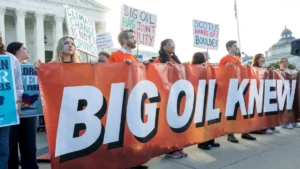
- May 14, 2026: Despite vocal public opposition, the Box Elder County Commission votes to approve the development. The meeting is marked by protests from hundreds of residents, including local farmers and ranchers.
- Mid-May 2026: Kevin O’Leary appears on Fox Business News and Fox News, accusing prominent critics of being CCP operatives. He promises to provide "proof" of these ties, though no such evidence has been publicly released to date.
- May 21, 2026: Utah Governor Spencer Cox, a Republican, acknowledges during a press conference that the rollout of the Stratos project "was not good," reflecting the growing political sensitivity of the issue.
- May 22, 2026: The Utah State Legislature announces it will convene a study to investigate the long-term impacts of the proposed data center on the state’s water supply and the Great Salt Lake.
- Late May 2026: Utah declares a statewide drought emergency, further complicating the data center’s path to completion.
Environmental and Resource Concerns
The primary driver of the opposition is not geopolitical, but environmental. Utah’s geography and climate make it particularly vulnerable to the high resource demands of data centers. These facilities require vast amounts of water for cooling systems and immense quantities of electricity to power the servers that process AI algorithms.
The Great Salt Lake, a critical ecosystem and economic driver for the region, has reached historic lows in recent years. Critics of Stratos argue that the water required to maintain a 40,000-acre campus would exacerbate the lake’s decline, leading to increased toxic dust storms and the collapse of local brine shrimp and migratory bird populations.
"Almost everyone in the entire state is so mad about this," Finlayson said. "There’s obviously the folks that are concerned about the environmental impacts, but then also you have a lot of more conservative people—ranchers and farmers—who live in these rural areas and don’t want this infrastructure imposed on them."
The bipartisan nature of the opposition is a rarity in Utah’s polarized political landscape. Observers have noted that the issue unites environmentalists, who are concerned with climate change, and libertarians, who are wary of state-sanctioned land grabs and the influence of wealthy outside investors.
The "Red Baiting" Strategy and National Security
O’Leary’s decision to frame domestic critics as foreign agents is seen by some analysts as a strategic move to shift the conversation away from local resource management and toward national defense. By invoking the threat of China, developers can argue that any delay in construction is a win for an adversary, thereby pressuring regulators to streamline approvals.
"Who would want us to stop building our electrical grid? Who would want to stop us from having the compute capacity to develop AI? There’s only one, it’s China," O’Leary told Maria Bartiromo on Fox Business.
However, the targets of these accusations point out that their work is deeply rooted in local Utah politics. Finlayson and Morgan primarily support Democratic campaigns in a state where the Republican Party holds a supermajority. They also operate a Substack focused on local news and community engagement. Elizabeth Hutchings of the Alliance for a Better Utah responded to the claims with irony, stating, "I’d probably get paid a lot more if I was" working for a foreign government.
The use of "IP address tracking" as a basis for such serious allegations has also been met with skepticism by cybersecurity experts. While IP addresses can indicate the origin of digital traffic, they are easily spoofed or routed through virtual private networks (VPNs). Without specific, verifiable data linking the activists’ internal communications to foreign intelligence services, the claims remain unsubstantiated.
Broader Impact and Implications
The situation in Utah serves as a microcosm of a larger national debate regarding the rapid expansion of AI infrastructure. As tech giants and investment firms race to build data centers, they are increasingly coming into conflict with local communities over land use, energy consumption, and water rights.
The Stratos controversy highlights several key trends:
- The Securitization of Technology: Commercial infrastructure projects are increasingly being branded as national security assets to bypass traditional environmental and community reviews.
- The Erosion of Local Control: The use of state-level agencies like MIDA to override county commissions and city councils has sparked a "libertarian streak" of pushback in Western states, where local autonomy is highly valued.
- The Bipartisan Environmental Coalition: Concerns over water and energy are bridging the gap between progressive environmentalists and conservative rural residents, creating new and potent political alliances.
- The Risks of Rhetorical Escalation: Labeling domestic political opponents as foreign spies sets a contentious precedent that may complicate the public discourse surrounding future infrastructure projects.
As of this week, protests against the Stratos project are scheduled to continue at the Utah State Capitol during the Memorial Day weekend. While O’Leary Ventures has not yet responded to requests for comment regarding the specific evidence of CCP ties, the Utah legislature’s decision to study the project’s impact suggests that the billionaire’s "national security" argument may not be enough to override local concerns about the state’s most precious resource: water.
"This is not about where you fall in the political spectrum," Finlayson concluded. "It’s about who has power to make decisions over your life and who doesn’t. Oftentimes, it feels like we don’t get to decide what happens to us, and we’re just getting things imposed on us by the government or by the wealthy."