Supreme Court intervenes in Missouri redistricting standoff to preserve stability for November midterm elections

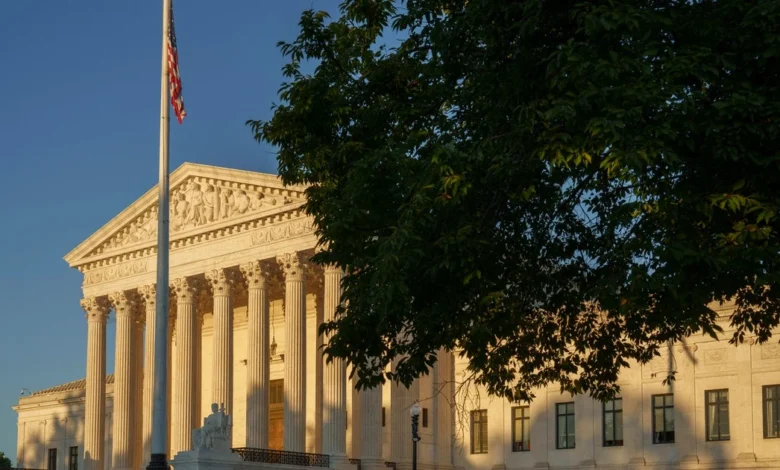
The Supreme Court of the United States issued a definitive ruling on Friday, effectively halting the latest attempt to force Missouri to adopt a controversial, redrawn congressional map for the upcoming November 3 general election. In an unsigned opinion devoid of noted dissents, the high court’s justices determined that the ongoing nature of the electoral process—which has already seen ballots printed, mailed, and cast—precludes a last-minute shift in district boundaries. This ruling mandates that the state must proceed with the congressional district lines established in 2022, rejecting a recent mandate from the U.S. Court of Appeals for the 8th Circuit that sought to implement a new map drafted by the Republican-led state legislature in 2025.
The justices emphasized that the judiciary must exercise extreme caution when interfering with active election cycles. The court’s opinion stated that “the election is not merely upcoming; it has already started,” noting that any forced reversion to the 2025 map at this late stage would inevitably usher in widespread electoral chaos, confusing voters and disenfranchising those who have already participated in early or absentee voting.
A Chronology of Legal Volatility
The legal battle over Missouri’s congressional boundaries has been defined by a rapid succession of conflicting judicial orders, creating a climate of uncertainty for election administrators, candidates, and voters alike. The saga reached the Supreme Court for the third time in less than two years this past Tuesday, following a whirlwind of lower court activity.
- 2022: The original congressional map is finalized and serves as the basis for the 2022 midterm elections, resulting in a 6-2 split between Republican and Democratic representatives.
- 2025: The Missouri state legislature, encouraged by President Donald Trump, approves a new redistricting plan. The map is designed to increase the GOP’s advantage, specifically by reconfiguring the Kansas City area to dilute the electoral influence of Democratic incumbent Rep. Emanuel Cleaver.
- August 2026: The state conducts its primary elections using the 2025-drawn map.
- September 2026 (Early): Legal challenges against the 2025 map lead to a series of conflicting injunctions. A Missouri Supreme Court decision initially blocks the use of the new map.
- September 2026 (Mid): A federal district court orders the state to adopt the 2025 map. The Supreme Court intervenes shortly thereafter, halting that decision and keeping the 2022 lines in place.
- September 21, 2026: The U.S. Court of Appeals for the 8th Circuit rules that the 2022 lines are constitutionally invalid, ordering the state to revert to the 2025 map immediately.
- September 25, 2026: The Supreme Court issues its final stay, definitively prohibiting lower courts from forcing a switch to the 2025 map for the remainder of the 2026 cycle.
The Administrative Crisis
The conflict between the 2022 and 2025 maps has placed an unprecedented burden on local election authorities. Election officials in Missouri have repeatedly warned that the logistical challenges of shifting map boundaries mid-cycle are "practically impossible." Because ballots were already printed and mailed to military and overseas voters by the September 19 federal deadline, any change to district lines would necessitate a complete recall and reissuance of ballots.
State officials noted in court filings that even if the court had forced the adoption of the 2025 map, the resulting administrative friction would have resulted in the disenfranchisement of thousands of voters. Furthermore, the state argued that the legal uncertainty had left candidates in a state of limbo, unable to properly campaign in regions where the boundaries were subject to hourly judicial reversals. "The honest truth is that—regardless of what this Court does—Missouri will not be able to run an orderly 2026 General Election," state officials conceded in a filing, highlighting the irreparable damage done to the public’s confidence in the administrative process.
Political Implications and Strategic Redistricting
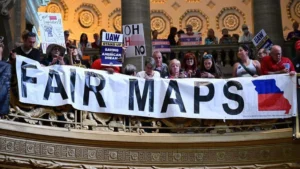
The push for the 2025 map, championed by Republican leadership, was aimed at securing a seventh seat in the state’s eight-district congressional delegation. By fracturing the traditionally Democratic-leaning Kansas City urban core, the map sought to solidify GOP control in a region that has served as a key battleground for the party’s House majority goals.
For the advocacy group "People Not Politicians," which spearheaded the challenge against the 2025 map, the victory in the Supreme Court is a partial vindication of their argument that the legislature’s redistricting effort was an unconstitutional maneuver. However, the group’s request for emergency relief acknowledged that the legal ping-pong match had created a situation where the "rules governing its results" were entirely unclear.
The broader national context of this case is tied to the mid-decade redistricting movement. Following the 2020 Census, several Republican-controlled legislatures sought to redraw maps to better align with changing political demographics and to bolster the party’s legislative prospects. Missouri’s attempt to mid-cycle shift its boundaries became one of the most high-profile instances of this trend, drawing intense scrutiny from voting rights advocates and federal judges alike.
Analyzing the Judicial Precedent
The Supreme Court’s decision to issue an unsigned opinion underscores a desire to minimize further judicial involvement in the Missouri process. By firmly instructing the District Court and the Court of Appeals that they should not order or require the use of the 2025 map, the justices have effectively "frozen" the controversy until the election concludes.
Legal analysts note that this ruling reinforces the "Purcell principle," a common judicial standard in the United States that discourages federal courts from changing election rules close to an election date to avoid confusion. By citing that the election is "already underway," the Supreme Court has signaled that while the underlying constitutional questions regarding the 2025 map may remain valid for future litigation, they are secondary to the immediate, practical necessity of completing the current election cycle in a stable manner.
The Path Forward
As the November 3 election approaches, the immediate crisis in Missouri appears to have been averted, at least in the courtroom. Voters will cast their ballots using the 2022-approved district lines. However, the legal questions surrounding the constitutionality of the 2025 map remain unresolved in the lower courts.
Once the election results are certified and the political dust settles, it is highly likely that the litigation will resume. The 8th Circuit’s earlier ruling, which declared the 2022 lines unconstitutional, remains a significant legal hurdle that will eventually need to be addressed if the state wishes to avoid similar challenges in the 2028 cycle. For now, however, the Supreme Court has prioritized the finality of the ballot box over the ongoing ideological battle over state geography.
For the voters of Missouri, the focus now shifts from judicial chambers back to the campaign trail. Candidates in the eight congressional districts, who have endured months of uncertainty regarding which voters they represent and which communities they must serve, will spend the final weeks of the campaign operating under the familiar, if imperfect, 2022 map. The resolution of this case serves as a stark reminder of the fragile intersection between judicial oversight, partisan strategy, and the mechanical reality of modern American elections.