Bridging the Conversion Gap: Why Traditional Metrics Fail to Capture the True Value of Social Media Video in Travel Marketing

The modern consumer journey from initial travel inspiration to the final booking confirmation is rarely a linear path. In an era dominated by short-form video content on platforms like Instagram and TikTok, travelers often spend weeks or even months marinating in visual inspiration before making a concrete financial commitment. This extended consideration window has created a persistent challenge for hospitality brands and tourism boards: bridging the gap between social media engagement and verifiable return on investment.
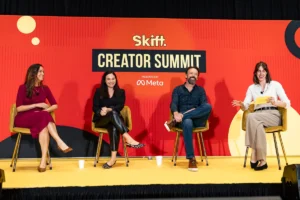
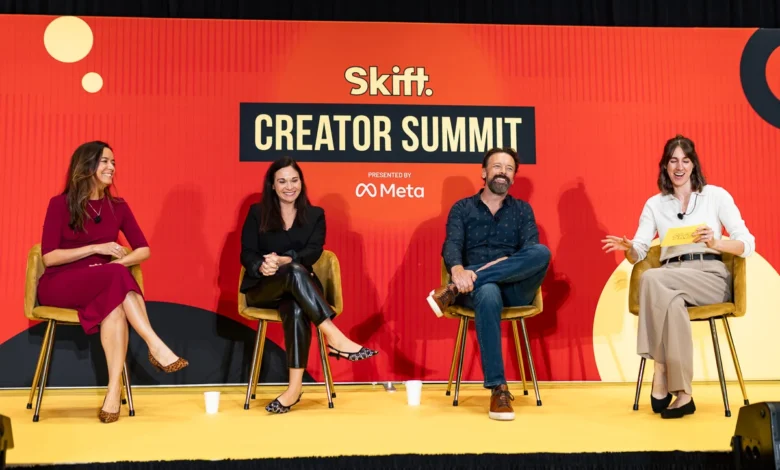
The complexity of this issue took center stage on September 22, 2026, at the Skift Creator Summit in New York City. Industry leaders convened to dissect how travel brands can better measure the impact of digital media, highlighting a fundamental flaw in traditional advertising metrics. Among the prominent voices driving the conversation were Diana Lucas, Director of Marketing Science for North America at Meta Platforms; Laurie Blair, Senior Vice President of Global Marketing and Loyalty at Hyatt; and Ross Borden, Founder and CEO of Matador. Their insights shed light on why legacy attribution models are falling short and how the travel industry must evolve to understand modern consumer behavior.
The Shortcomings of Click-Based Attribution
For decades, digital marketers have relied heavily on click-based attribution models to determine the success of their advertising campaigns. If a user clicked a link and made a purchase within a short attribution window, the ad took the credit. However, industry experts at the Skift Creator Summit argued that this outdated methodology is fundamentally broken, particularly within the travel and hospitality sector.
Diana Lucas of Meta Platforms pointed out that relying solely on direct clicks misses the vast majority of an ad’s actual impact. With video consumption accounting for a staggering 60% of all content consumed across Meta’s flagship platforms, Instagram and Facebook, passive viewing has become the primary driver of brand discovery. When a user watches a mesmerizing reel of a boutique hotel in Greece or a cinematic drone shot of a safari lodge in Kenya, they rarely click an ad immediately to book a room. Instead, that visual stimulus implants a subconscious desire, initiates independent research, and sets off a protracted decision-making process that standard click trackers fail to record.
This mismatch leaves travel brands struggling to connect the dots between marketing expenditures and actual revenue. When marketing budgets are up for review, teams that rely strictly on last-click attribution frequently undervalue the top-of-funnel social media campaigns that originally inspired the traveler. Consequently, brands risk cutting the very lifelines that introduce their properties to new audiences.
The Extended Travel Consideration Timeline
Unlike retail shopping, where purchasing a pair of shoes or a household appliance can be an impulsive, split-second decision, travel is a high-consideration purchase. Consumers invest significant financial resources, time, and emotional energy into planning vacations.
Market research consistently demonstrates that the travel booking window spans anywhere from 30 to over 120 days, depending on the destination and the nature of the trip. During this multi-month gestation period, a potential traveler is bombarded with thousands of digital touchpoints. They might first encounter a creator’s TikTok video showcasing a hidden beach, save the post for later, search for reviews on Google weeks later, visit the hotel’s official website directly a month after that, and finally execute a booking through a loyalty app or an online travel agency (OTA).
In this intricate web of interactions, assigning the conversion to a single touchpoint—such as a direct ad click—presents a heavily skewed picture of consumer behavior. The initial social media video that sparked the idea may have occurred 90 days prior, completely escaping the tracking parameters of traditional conversion windows. As a result, hospitality executives face immense pressure to justify their digital marketing allocations using metrics that were designed for a bygone retail era.

Evolving Strategies in Hospitality Marketing
Major hospitality players are actively re-evaluating their marketing frameworks to adapt to these shifting realities. Laurie Blair, Senior Vice President of Global Marketing and Loyalty at Hyatt, joined the discourse in New York to address how legacy hotel brands are adjusting their outreach. To capture the attention of modern consumers, brands must move beyond transactional advertising and focus on immersive, community-driven storytelling.
Hyatt and other hospitality leaders are increasingly partnering with content creators—often referred to as influencers—who possess authentic connections with niche audiences. Rather than deploying overly polished, corporate commercial spots, brands are leveraging user-generated content (UGC) and creator-led narratives that seamlessly blend into a user’s organic social media feed. These partnerships rely on trust and cultural resonance rather than hard-sell tactics.
However, crafting compelling content is only half the battle; proving its commercial viability requires advanced analytics. Forward-thinking marketing departments are moving toward holistic measurement solutions, such as marketing mix modeling (MMM) and conversion lift studies. These methodologies allow brands to measure incremental lift—determining whether a campaign actually drove more bookings than would have occurred organically without the advertising exposure, regardless of whether the user clicked a link.
The Creator Economy Meets Traditional Tourism
The integration of creator-led content into mainstream travel marketing represents a profound structural shift over the past decade. Ross Borden, Founder and CEO of Matador, emphasized at the summit how the creator economy has matured into an indispensable arm of the travel industry.
In the early days of influencer marketing, destination marketing organizations (DMOs) and hotel chains frequently viewed creators as a novelty—a cheap way to secure some aesthetic imagery in exchange for a free hotel stay. Today, the relationship is transactional, data-driven, and strategic. Creators function as modern-day travel journalists and independent production studios, wielding significant influence over consumer decision-making.
According to various industry surveys, younger demographics—particularly Millennials and Generation Z—overwhelmingly turn to social media platforms like TikTok and Instagram as their primary search engines for travel inspiration, bypassing traditional search engines and travel brochures entirely. This generational shift forces tourism boards and global hotel brands to allocate substantial portions of their media spend toward social video ecosystems. Yet, the monetization and attribution tracking of these investments remain the final frontier to conquer.
Broader Implications and Future Outlook
The discussions at the Skift Creator Summit underscore a critical turning point for the travel and tourism industry. As digital advertising budgets continue to migrate toward video-first social platforms, the demand for sophisticated attribution models will only intensify.
If tech giants like Meta, alongside hospitality leaders like Hyatt and publishing pioneers like Matador, cannot successfully bridge the gap between inspiration and conversion, brands risk misallocating resources. A failure to accurately measure social video ROI could lead risk-averse executives to pull back from creative, top-of-funnel storytelling in favor of short-term, bottom-funnel performance marketing. Such a move would stifle industry growth and disconnect brands from the very channels where modern consumers discover the world.
Ultimately, the path forward requires a cultural shift within corporate boardrooms. Marketers must abandon the comfort of simplistic click-based metrics and embrace the messy, non-linear reality of the modern consumer journey. By adopting advanced econometric modeling, appreciating the long-tail impact of video content, and viewing creators as strategic business partners rather than simple promotional tools, the travel industry can successfully decode the modern booking funnel and accurately value the true power of inspiration.