Yayoi Kusama iconic yellow pumpkin returns to Naoshima as a symbol of resilience and artistic revival

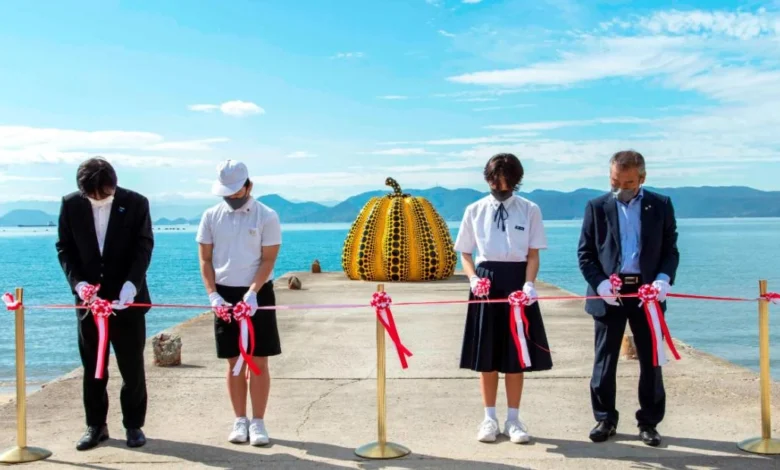
The return of Yayoi Kusama’s iconic yellow pumpkin sculpture to the pier at Naoshima on October 4, 2022, serves as more than a simple restoration of public art; it marks the symbolic recovery of Japan’s celebrated "art island" following a period of natural devastation and global isolation. For over a year, the empty concrete pedestal at the edge of the Seto Inland Sea stood as a poignant reminder of the fragility of outdoor installations in an era of increasingly volatile climate patterns. Now, the vibrant, polka-dotted sculpture is once again anchored to its historic site, ready to greet visitors as Japan reopens its borders to international tourism.
A Chronology of Destruction and Renewal
The original fiberglass-reinforced sculpture, a staple of the Naoshima landscape since 1994, met its fate in August 2021. As Typhoon Lupit swept through the Seto Inland Sea, the combination of high-velocity winds and powerful, surging waves proved too much for the installation. The sculpture, measuring two meters in height and 2.5 meters in width, was forcibly dislodged from its base and carried into the sea. By the time it was recovered, the artwork had been shattered into three distinct pieces.
The loss was felt deeply by the art community and the local population. For residents of Naoshima, the pumpkin was not merely a decorative object; it was a cornerstone of the island’s identity. The immediate aftermath involved a somber assessment of the damage by Benesse Holdings, the organization responsible for the management of the island’s expansive contemporary art program. Given the severity of the structural compromise, the decision was made to forgo repair and instead commission a brand-new iteration that would honor the artist’s original vision while addressing modern safety requirements.
Production on the new sculpture commenced in the spring of 2022. Under the guidance of Yayoi Kusama’s studio, the manufacturing process prioritized structural integrity to ensure that if future environmental hazards were to occur, the artwork would be better positioned to withstand the elements.
Engineering for Longevity in a Changing Climate
The newly installed pumpkin is a testament to the intersection of contemporary art and rigorous engineering. While visually identical to its predecessor—maintaining the same iconic yellow hue and black-spotted pattern—the technical specifications have been significantly upgraded.
The production team increased the thickness of the fiberglass-reinforced plastic shell by 10%. This adjustment is intended to bolster the sculpture against the increased frequency of extreme weather events that have impacted the region. Perhaps most notably, the design now includes a sophisticated internal anchoring system. A specialized hook has been embedded into the stem of the sculpture, allowing for a rapid-response removal process. In the event of a severe weather warning, maintenance teams can now efficiently detach the sculpture from the pier and relocate it to a secure, inland facility. This "managed retreat" strategy for public art represents a growing trend in how cultural heritage sites approach the reality of climate change.
The Cultural Significance of Naoshima
Naoshima, a quiet island with a population of approximately 3,200, has undergone a profound transformation over the last three decades. Once a sleepy fishing community, the island was revitalized through the "Naoshima Contemporary Art Project," an initiative led by the Benesse Group and architect Tadao Ando. By repurposing abandoned traditional houses and constructing world-class, subterranean museums, the island successfully branded itself as a sanctuary for high-culture, avant-garde art.
The yellow pumpkin has served as the island’s visual anchor for nearly 30 years. Positioned at the end of a pier that juts out into the serene blue waters of the Seto Inland Sea, it offers a stark, surreal contrast to the natural scenery. It is a quintessential site for contemporary art photography and has played a pivotal role in the island’s emergence as a premier global destination for art tourism.
Economic and Tourism Implications
The return of the pumpkin occurs at a critical juncture for the Japanese tourism industry. On October 11, 2022, Japan officially lifted its strict COVID-19 border restrictions, welcoming back individual leisure travelers for the first time in over two years. The timing of the reinstallation—just one week prior to this reopening—was viewed by local officials and tourism boards as a positive signal of stability and continuity.
Furthermore, the island is currently hosting the Setouchi Art Festival, a sprawling, triennial event that draws visitors from across the globe to the various islands of the Seto Inland Sea. The presence of the pumpkin serves as a vital draw for the festival, acting as a beacon that draws foot traffic through the village and toward the island’s other cultural venues, such as the Benesse House Museum and the Chichu Art Museum.
Economic data from the region suggests that the "art island" model has been a significant driver of local prosperity. Before the pandemic, the influx of international tourists provided a substantial revenue stream for local guesthouses, restaurants, and ferry operators. The restoration of the pumpkin is a tangible step toward restoring the island to its pre-pandemic status as a global cultural hub.
Perspectives from Stakeholders
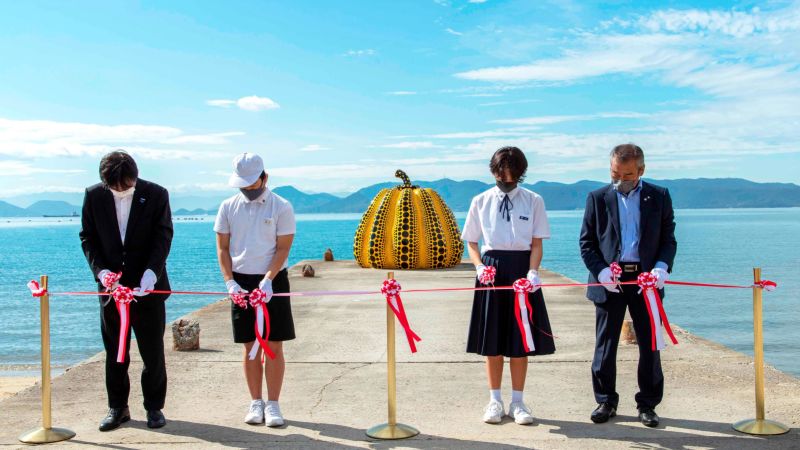
The unveiling ceremony, attended by local residents, students, and Benesse officials, was described as a moment of communal relief. Yukari Stenlund, a spokesperson for Benesse Holdings, emphasized the symbolic importance of the event, noting that the pumpkin acts as a bridge between the local community and the wider world.
"Since the pumpkin was a symbol of Naoshima, it is great to see the same artwork installed again at the same spot," Stenlund stated. "We are happy to share the joy with residents in Naoshima."

For the local population, the return of the sculpture signifies the end of a period of stagnation. Many residents have expressed that the pier felt empty and incomplete without the silhouette of the pumpkin. The project, which was supported by the local municipality, highlights the symbiotic relationship between private corporate initiatives and public community pride.
Looking Toward the Future
The story of the yellow pumpkin is reflective of a broader shift in how society preserves art in the 21st century. As sea levels rise and the intensity of typhoons increases, the preservation of outdoor installations requires a departure from traditional, static conservation methods. The incorporation of modular, reinforced, and removable features indicates that future installations in high-risk zones will likely follow a similar path.
The resilience of the sculpture serves as a metaphor for the resilience of the island itself. Despite being battered by the elements and forced into a long period of closure due to global health mandates, Naoshima remains committed to its mission of integrating art into the daily lives of its inhabitants and visitors.
For those planning to visit, the logistics remain largely unchanged: the island is accessible via a 20-minute ferry ride from Okayama, which serves as a major transit hub connected to Osaka via the Shinkansen (bullet train). As the Setouchi Art Festival concludes in November, the focus for the island will shift toward sustainable, long-term tourism management.
With the yellow pumpkin securely fastened to the pier once more, it stands as a testament to the enduring power of art to unify communities and provide a sense of place. While the original sculpture was lost to the sea, the new iteration carries with it the history of the 1994 "Out of Bounds" exhibition, ensuring that the legacy of the artist and the island’s unique identity remain intact for future generations of visitors to encounter, photograph, and cherish.