Missouri congressional map returns to the U.S. Supreme Court for a third time as redistricting chaos grips the state ahead of midterm elections.

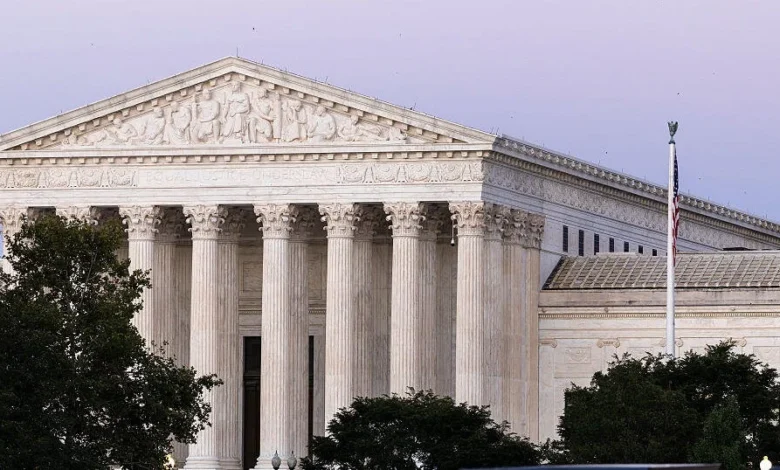
The legal battle over Missouri’s congressional boundaries has escalated to the highest court in the land for the third time this month, creating a climate of profound uncertainty for the state’s electorate as the 2026 midterm elections approach. This latest emergency petition, filed late Tuesday, arrives in the wake of a highly irregular ruling by a federal appeals court that attempted to reinstate a Republican-backed map despite the U.S. Supreme Court’s prior intervention. As the deadline for finalizing electoral logistics draws near, the dispute has become a centerpiece of the national struggle for control of the U.S. House of Representatives.
A Chronology of Legal Volatility
The current impasse is the result of a month-long tug-of-war between state-level judiciary mandates and federal appeals, largely spurred by a push for mid-decade redistricting initiated by President Trump.
- September 10, 2026: The U.S. Supreme Court issues a definitive stay, effectively blocking the implementation of a new, GOP-favorable map that had been recently pushed through the Missouri legislature. Justice Brett Kavanaugh, acting on behalf of the Court, rejected an appeal from Missouri Secretary of State Denny Hoskins. This decision left in place a ruling by the Missouri Supreme Court, which held that new districts cannot legally be enacted without being subjected to a statewide voter referendum.
- Mid-September 2026: Confusion intensifies as a federal appeals court issues a conflicting order, attempting to revive the Republican-backed map. This move directly challenged the authority of the state’s high court and defied the precedent set by Justice Kavanaugh just days earlier.
- September 22, 2026: The matter returns to the U.S. Supreme Court for a third time, as parties seeking to implement the new map demand a final resolution. The Court has set a deadline of midday Wednesday for respondents to file their counter-arguments.
This cycle of litigation has left county clerks and election officials in a precarious position. Because absentee voting has already commenced under the 2022 district lines, any eleventh-hour change to the map threatens to invalidate thousands of ballots and necessitate a massive administrative overhaul.
The Political Stakes of the Kansas City District
At the heart of the controversy is a tactical redesign of the district currently represented by Democratic Representative Emanuel Cleaver. The proposed map, which has received explicit backing from President Trump, would carve out segments of the Kansas City area to dilute the Democratic stronghold, effectively shifting the electoral math in favor of Republican candidates.
Proponents of the new map argue that the legislature has the constitutional authority to redraw lines to reflect shifting political interests, particularly when those interests align with a mandate from the executive branch. Critics, however, argue that such mid-decade maneuvering is a transparent attempt to bypass democratic processes.
Currently, Missouri sends six Republicans and two Democrats to the U.S. House. The proposed redistricting aims to flip one of those seats, potentially expanding the Republican delegation to seven out of eight. In a climate where the balance of power in the U.S. House rests on a razor-thin margin, the gain or loss of a single seat in Missouri could be the deciding factor in which party controls the chamber in the next congressional session.
Broader Implications of Mid-Decade Redistricting
Historically, the United States has adhered to a "once-a-decade" redistricting cycle following the decennial census. This stability ensures that constituents remain in consistent districts for a full ten-year period, allowing for the development of stable representative-constituent relationships. However, the last year has seen an aggressive trend of mid-decade redistricting, with approximately a dozen states attempting to alter their boundaries outside the traditional window.
This trend is not isolated to Missouri. Similar efforts have been observed in other states where Republican leadership has sought to maximize electoral efficiency. Legal experts observe that this shift represents a significant departure from established norms, forcing the federal judiciary to weigh in on the limits of state legislative power.
"We are witnessing a breakdown in the predictability of the electoral process," said one constitutional law scholar familiar with the case. "When the map changes in September for an election in November, the fundamental right of the voter to know who they are voting for and why is severely compromised."
Administrative and Voter Confusion
The human cost of this legal battle is felt most acutely by the more than one million Missourians who have been shuffled—and potentially reshuffled—between districts. For election administrators, the logistical nightmare is mounting. Many counties have already printed ballots and prepared voting machines based on the 2022 districts.
If the Supreme Court were to force a switch to the new map, election officials would be forced to:
- Void Current Absentee Ballots: Any voter who has already cast a ballot for a candidate in the wrong district would have their vote rendered invalid or would require a complex re-balloting process.
- Update Voter Registration Databases: Syncing millions of records to match new geographic boundaries within a matter of weeks is a task that carries a high risk of systemic error.
- Conduct Intensive Voter Education: Informing the public of their correct district at the last minute requires an immediate and expensive public information campaign.
Official Responses and the Path Forward
The office of Secretary of State Denny Hoskins has remained steadfast in its support of the new map, asserting that the legislative intent was clear and that the state supreme court’s interference was an overreach. Conversely, civil rights groups and Democratic advocates have lauded the state supreme court’s ruling, arguing that it protects the integrity of the ballot and prevents partisan gerrymandering from disenfranchising minority voters in urban centers.
As the U.S. Supreme Court reviews the latest filings, the legal community is watching for a signal on whether the Court intends to create a firm national precedent regarding mid-decade redistricting. A ruling in favor of the status quo would effectively end the practice for the 2026 cycle, while a ruling favoring the new map could open the floodgates for further last-minute changes in other states.
With the midday Wednesday deadline looming, all eyes are on the justices. The final decision will not only determine the political future of the state of Missouri but will also set a crucial precedent for the degree to which legislative bodies can manipulate electoral geography mere weeks before the polls open. For now, Missouri voters remain in a state of suspended animation, waiting to see which districts will officially define their representation in the upcoming Congress.