The legal scrutiny surrounding digital communication, executive influence, and corporate transparency reached a new milestone this week as the city of San Francisco officially filed a lawsuit against President Donald Trump’s social media enterprise, Trump Media & Technology Group. Announced on Tuesday by San Francisco City Attorney David Chiu, the legal action targets a specialized, high-cost subscription service known as Truth API. This product grants paying subscribers immediate, pre-public access to communications and policy-oriented announcements originating from high-profile accounts on the Truth Social platform, most notably that of President Donald Trump.
The lawsuit, lodged in California state court, invokes the state’s stringent Unfair Competition Law (UCL). It characterizes the subscription framework as an exclusive "pay-to-play scheme" that allegedly bypasses equitable public distribution channels. By allowing affluent participants to ingest market-moving data microseconds before it becomes available to ordinary investors and the general public, the city argues that the enterprise facilitates an uneven playing field reminiscent of insider trading dynamics. As regulatory agencies, financial analysts, and legal experts parse the broader ramifications of monetized executive communications, the case sets up a high-stakes clash between digital innovation, corporate governance, and the constitutional principles governing official government discourse.
Chronology of the Truth API Rollout and Escalating Legal Pressure
The genesis of the controversy traces back to the late summer commercial strategy implemented by Trump Media. On August 1, the company officially launched its Truth API subscription tier. Aimed primarily at institutional participants, financial entities, and high-frequency trading firms, the service was structured to cost between $60,000 and $100,000 per month. In exchange for this substantial recurring fee, subscribers receive a direct data pipeline designed to ingest posts from dominant accounts on Truth Social instantaneously.
Within weeks of its deployment, the product drew intense scrutiny from press freedom advocates, financial watchdogs, and legal scholars. The momentum against the platform culminated on a single day when concurrent legal challenges intensified the pressure on Trump Media. On Monday, the city of San Francisco finalized and filed its state-level complaint under the UCL. Simultaneously, a coalition consisting of dozens of former federal prosecutors, investigative agencies, and media advocacy groups—including organizations such as The Intercept and the Freedom of the Press Foundation—submitted supportive court briefs and separate federal legal challenges. These parallel efforts argue that the monetization framework violates core constitutional tenets, specifically citing potential infractions of the First and Fifth Amendments by restricting equal access to vital public information while enriching private entities tied directly to a sitting head of state.
Core Legal Arguments and the Mechanics of the Pay-to-Play Scheme
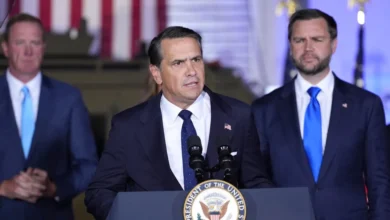
At the center of the San Francisco lawsuit is the intersection of high-frequency finance and executive communications. During a press conference detailing the legal action, City Attorney David Chiu emphasized the structural inequality baked into the Truth API subscription model. He pointed out that ordinary retail investors, citizens, and mainstream journalists are structurally disadvantaged when billions of dollars in market valuation can shift based on a single presidential post.
"Truth Social has knowingly created a marketplace for insider trading by giving high-paying subscribers an unfair advantage over ordinary investors in the market," Chiu stated. "It’s a pay-to-play scheme for early access to the president’s market-moving government decisions."
Chiu further elaborated on the technological capabilities of the platform’s current clientele. Because the subscription fee acts as an economic barrier—ranging up to $1,200,000 annually—the subscriber base is largely limited to sophisticated, automated trading institutions. These firms deploy algorithmic models designed to parse text data and execute financial transactions within microseconds of receipt.
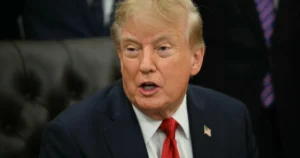
Adding an additional layer of corporate governance scrutiny, Chiu noted that President Donald Trump retains an approximate 41% ownership stake in Trump Media & Technology Group. Consequently, the city’s legal team contends that the sitting president stands to benefit personally and financially from a commercial product that capitalizes directly on the dissemination of official or semi-official policy pronouncements.
Corporate Defense and Counter-Statements
Trump Media & Technology Group has mounted a vigorous defense against the allegations, dismissing the lawsuit as a politically motivated attack driven by ideological opposition rather than sound legal theory. In an official statement provided to media outlets, a corporate spokesperson criticized the city’s legal strategy in sharp terms:
"The People of California should outsource their future lawsuits to AI chatbots who, unlike the left-wing activists masquerading as attorneys who filed this lawsuit, will grasp the basic distinction between public and nonpublic information."
The company’s core defense rests on the legal demarcation between private platform features and protected government archives, arguing that Truth Social operates as a private enterprise entitled to monetize its technological infrastructure, data feeds, and API access points just like any other social media aggregator or software-as-a-service provider. Representatives for the White House declined to address the specifics of the corporate litigation, deferring all inquiries to Trump Media and The Trump Organization.

Broader Economic and Ethical Implications
The legal battle over Truth API arrives at a critical juncture for financial markets and political ethics alike. For decades, regulatory frameworks such as the Securities and Exchange Commission’s (SEC) Regulation Fair Disclosure (Reg FD) have sought to prevent selective disclosure, ensuring that publicly traded companies and executive entities disseminate material information to the entire market simultaneously. While social media platforms have long complicated this framework—given that presidents and corporate CEOs frequently use personal or corporate accounts to break major news—the formal institutionalization of a paid, microsecond-ahead data feed represents an unprecedented escalation.
Ethics experts have warned that monetizing direct channels to executive statements introduces severe conflicts of interest. When the subjects of executive commentary include publicly traded corporations, regulatory bodies, international trade policies, and macroeconomic indicators, providing an exclusive, high-speed data advantage to elite financial subscribers threatens the integrity of fair and orderly markets.
Furthermore, the civil action brought by San Francisco under California’s Unfair Competition Law opens a unique legal frontier. The UCL broadly prohibits unlawful, unfair, or fraudulent business acts or practices, granting local government attorneys substantial latitude to protect consumers and market participants within the state from predatory or deceptive commercial practices. If the court finds that the API service constitutes an unfair business practice that distorts fair competition, it could result in sweeping injunctions, mandated alterations to how digital data feeds are distributed, and significant financial penalties for Trump Media.
As the litigation proceeds through the court system, it will likely force judicial authorities to grapple with foundational questions regarding the monetization of modern digital discourse, the regulatory boundaries of executive communication platforms, and the extent to which local governments can intervene in cross-state digital commerce to safeguard the public interest.