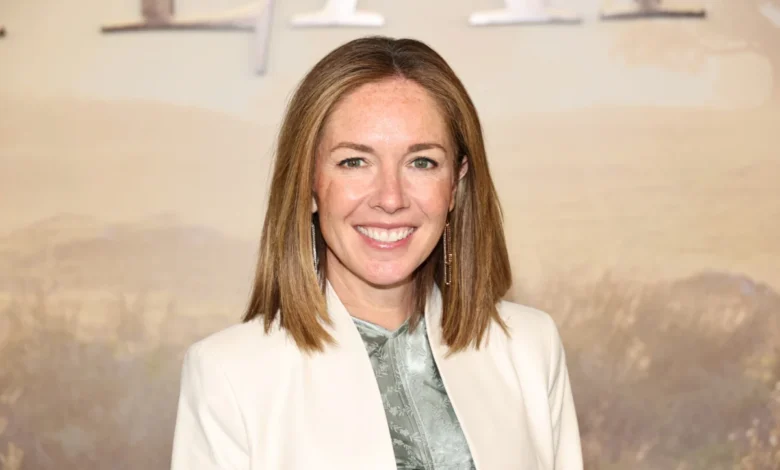
Starz Networks President Alison Hoffman has officially locked in her leadership role at the standalone media company through the end of the decade, signing a lucrative contract extension that cements her position as one of the premier executives in the modern streaming and television landscape. According to an SEC filing submitted by parent company Starz Entertainment, Hoffman’s new employment agreement took effect on August 6 and extends her tenure through December 31, 2029. Under the terms of the agreement, she will continue reporting directly to CEO Jeff Hirsch, pulling an annual base salary of $1.485 million, which is further supplemented by performance-based bonuses and substantial equity awards designed to align her success with the continued financial growth of the publicly traded network.
The contract renewal underscores the confidence that Starz’s board and executive leadership have placed in Hoffman as the company navigates its post-spin-off era. Having successfully guided the brand through sweeping industry transformations, Hoffman’s continuity at the helm is viewed by Wall Street analysts and industry insiders as a crucial stabilizing force for the network. Her leadership has been instrumental in steering Starz away from its legacy identity as a traditional premium cable channel toward a robust, future-proof streaming powerhouse capable of holding its own in the fiercely competitive "streaming wars."
A Veteran Executive’s Path to the Top
Alison Hoffman’s journey within the executive ranks of the television industry is marked by a deep expertise in marketing, audience acquisition, and brand positioning. Before taking the reins at Starz, Hoffman built a formidable reputation during her tenure at AMC Networks. Arriving at Starz in 2012, she stepped into the organization during a golden era of prestige television defined by cultural juggernauts like Mad Men, Breaking Bad, and The Walking Dead—experiences she quickly leveraged to elevate Starz’s original programming footprint.
Within the Starz organization, Hoffman steadily climbed the corporate ladder. She first made significant waves as the company’s Chief Marketing Officer, where she spearheaded high-impact promotional campaigns that captured subscriber attention and turned niche series into mainstream conversation starters. In April 2020, as the media landscape began shifting heavily toward direct-to-consumer streaming models, Hoffman was promoted to President of Domestic Networks. In this expanded capacity, she assumed comprehensive oversight of the network’s programming, linear operations, and digital streaming expansion, successfully positioning the brand to weather the decline of traditional cable bundles while accelerating digital subscriber acquisition.
Navigating the Post-Lionsgate Era as an Independent Entity
The contract renewal arrives at a pivotal juncture in Starz’s corporate history. In 2025, after a prolonged and deliberate strategic review process, Starz officially separated from Lionsgate to operate as a completely independent, standalone publicly traded company. This corporate uncoupling freed Starz from the traditional studio-network hybrid model, allowing management to laser-focus its capital and operational strategies squarely on streaming profitability and targeted subscriber growth.
Operating as an independent entity has presented both unique hurdles and extraordinary opportunities. Freed to chart its own course, Starz has heavily emphasized a curated content strategy rather than engaging in the hyper-expensive, volume-driven spending wars characteristic of larger tech-backed conglomerates. This disciplined approach has paid off remarkably well on the financial front. Thus far in 2026, Starz shares have experienced a dramatic upward trajectory, more than doubling in value as investors warm up to the company’s lean operational structure and clear path to profitability.
Subscribers, Pricing Power, and Financial Resilience
Financial resilience has become a hallmark of the post-separation era for Starz. During the company’s second-quarter earnings report released in August 2026, leadership revealed a statistic that sent ripples through the entertainment sector: Starz managed to successfully increase its overall subscriber count despite implementing simultaneous subscription price hikes.

During a post-earnings conference call with Wall Street analysts, CEO Jeff Hirsch characterized this dual achievement as an extreme rarity in the contemporary streaming business, where price increases almost universally trigger spikes in churn rates. Industry analysts attribute this consumer loyalty to Starz’s highly dedicated niche fanbase, who view the platform’s distinct slate of programming as indispensable. By refusing to chase mass-market ubiquity and instead super-serving distinct demographic cohorts—particularly women and diverse audiences—Starz has carved out a resilient economic moat.
Leveraging Intellectual Property Through Strategic Content Deals
A key component of Hoffman’s strategic vision for Starz involves maximizing the value of the network’s premier intellectual property through smart, non-exclusive distribution and licensing partnerships. A prime example of this philosophy is the recent, high-profile global licensing deal struck with Netflix, which brings the first four flagship series of the wildly popular Power franchise onto the world’s largest streaming platform.
When questioned by financial analysts regarding the potential cannibalization of Starz’s own direct-to-consumer app by licensing foundational hits to a major competitor, Hoffman robustly defended the move. She explained that the Netflix agreement serves as a powerful top-of-funnel marketing engine. According to Hoffman, the partnership "creates an opportunity for us. It’s a way for us to introduce the franchise to new audiences, new viewers, and really reinvigorate it." By exposing millions of global Netflix subscribers to the foundational seasons of the Power universe, Starz anticipates driving fresh traffic, curiosity, and ultimate subscriptions back to its proprietary streaming service for subsequent seasons and spin-off iterations.
A Robust Programming Slate and Upcoming Premieres
Under Hoffman’s strategic programming oversight, Starz continues to maintain a steady cadence of high-profile original content rollouts. The network remains the exclusive home of powerhouse franchises like the expansive Power universe and the time-travel romance saga Outlander, alongside prequel expansions such as Outlander: Blood of My Blood. Furthermore, the network has broadened its dramatic scope with gritty new originals like Fightland, demonstrating an ability to diversify its genre appeal beyond its historical comfort zones.
Looking ahead, the remainder of 2026 holds significant milestones for the network. Later this year, Starz will debut the highly anticipated third and final season of P-Valley, a critically acclaimed and culturally resonant drama that has become a cornerstone of the network’s identity. The conclusion of P-Valley represents the end of an era for one of Starz’s most defining modern hits, while simultaneously clearing the programming runway for the next generation of original series currently winding their way through production under Hoffman’s watchful eye.
Broader Industry Implications and Outlook Through 2029
The decision to lock in Alison Hoffman through December 31, 2029, sends a clear signal to the entertainment industry: Starz is committed to strategic stability, disciplined financial growth, and creative continuity. As the mid-2020s media landscape continues to undergo rapid consolidation, platform fatigue, and a relentless push toward profitability among streaming services, Starz has positioned itself as an agile, highly desirable acquisition target or a remarkably sturdy standalone micro-major.
With Hoffman leading the charge on network operations and programming strategy alongside CEO Jeff Hirsch, Starz enters the latter half of the decade with a clear identity. By balancing targeted licensing windfalls with a fiercely loyal subscriber base and disciplined cost management, the network has successfully decoupled its financial health from the chaotic spending models of legacy tech conglomerates. As Hoffman’s newly extended contract runs its course toward 2030, her leadership will undoubtedly remain central to whether Starz can maintain its hard-won financial momentum and continue to thrive as an independent beacon in the prestige television ecosystem.
Related posts: