Pat McAfee, the polarizing sports media personality and former NFL punter, addressed a violent online threat on air during his ESPN program on Monday, prompting widespread discussion regarding the safety of public figures in the digital age. Broadcasting live from Los Angeles ahead of an ESPN Monday Night Football matchup between the New York Giants and the Los Angeles Rams, McAfee read an inflammatory post originating from the social media platform X, formerly known as Twitter. The incident underscores the persistent challenges faced by high-profile media figures who navigate intense public scrutiny, unconventional broadcasting styles, and the volatile ecosystem of social media discourse.
The broadcast segment in question captured McAfee reading a message that directly referenced the tragic September 2025 shooting death of conservative activist Charlie Kirk. The offending social media user wrote, "If someone kirked him live during his show it would be a top 3 moment in the history of mankind." Pausing to address the comment, McAfee expressed immediate bewilderment before reading it to his audience. "Somebody just said they wanted me to get Kirked live on-air," McAfee stated on the air. "What does that mean?"
Recognizing the gravity of the text, McAfee attempted to clarify the chaotic nature of internet commentary while acknowledging the alarming implication of the remark. "Well I think a lot of people are saying a lot of stuff on the internet… That’s crazy. I hope that doesn’t happen, by the way. And if it does, then I’ll see ya next hour," he remarked. Later in the broadcast, McAfee shared a screenshot of the now-deleted post directly to his official X account, documenting the digital harassment for his millions of followers.

The Context and Chronology of the Charlie Kirk Tragedy
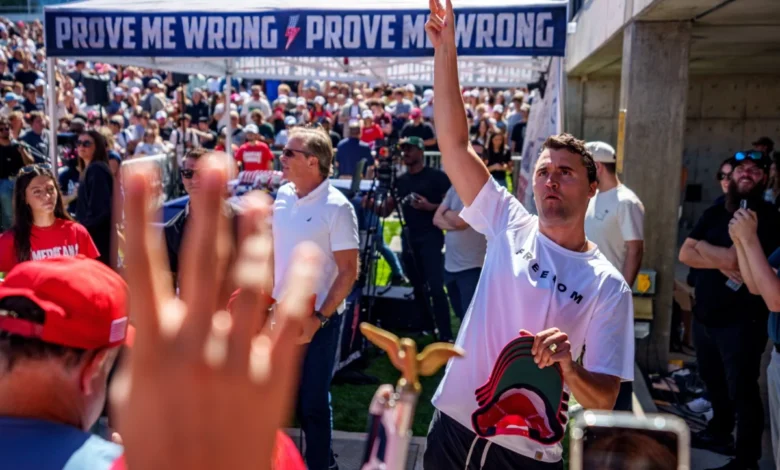
The chilling reference made on McAfee’s program links directly to a high-profile act of political violence that sent shockwaves through the United States in the fall of 2025. On September 10, 2025, conservative activist Charlie Kirk was targeted and killed during an outdoor speaking engagement at Utah Valley University in Orem, Utah, as part of his national tour. Kirk suffered a fatal gunshot wound to the neck in front of a gathering crowd, precipitating a massive nationwide manhunt and intense public debate over political polarization and event security.
Authorities subsequently apprehended 23-year-old Tyler Robinson of Utah, identifying him as the primary suspect in the assassination. Robinson was formally charged with aggravated murder. Legal proceedings advanced significantly on September 2, 2026, when Robinson entered a plea of not guilty during a court hearing. During the same proceedings, the presiding judge ruled that prosecutors would be permitted to pursue the death penalty should the case proceed to trial. A subsequent court date for the high-profile murder case was officially scheduled for October 23, 2026, keeping the tragic event in the public consciousness and heightening sensitivities surrounding violent rhetoric.
The Unique Broadcasting Profile of Pat McAfee

The incident involving McAfee occurs against the backdrop of his distinct positioning within contemporary sports media. Known for his unfiltered commentary, energetic delivery, and unconventional broadcast methods, McAfee has cultivated a massive, highly engaged audience while frequently drawing criticism from traditionalists. His daily program, which transitioned to ESPN’s linear and digital lineups in 2023 following a lucrative multi-year agreement, relies heavily on a casual, unscripted format that regularly pushes standard broadcasting boundaries.
McAfee’s career at ESPN and his concurrent role on "College GameDay" have solidified his status as one of the network’s most prominent and bankable stars. Financial disclosures indicate the scale of his influence; following an initial five-year contract valued at approximately $85 million signed in 2023, reports surfaced in August 2026 indicating that McAfee and ESPN had engaged in advanced negotiations regarding a restructured agreement worth between $60 million and $65 million annually.
Despite his commercial success, McAfee’s distinct style has frequently placed him at the center of media controversies. Just weeks prior to the Monday broadcast, McAfee faced online scrutiny when viewers alleged he was smoking an unverified item on set, an assertion he later clarified was burning sage. This followed a previous incident in April 2025, where he appeared to use a vape pen on set during the network’s "Draft Spectacular" in Green Bay, Wisconsin. Embracing his polarizing reputation, McAfee has frequently joked on air about the strong divisions of opinion he elicits from the public. During a collegiate football broadcast appearance alongside LSU head coach Lane Kiffin, the two jokingly categorized themselves as "two of the most hated people there are," highlighting an awareness of the public pushback accompanying their respective platforms.
Broader Implications for Media Safety and Online Accountability

The public airing of a threat referencing a real-world political assassination has intensified discussions surrounding digital safety, content moderation on social media platforms, and the security protocols mandated for high-profile media personnel. As television personalities increasingly blur the lines between traditional broadcasting and direct digital engagement with audiences, the exposure to unvetted, malicious online behavior has grown exponentially.
Legal and security analysts note that public figures operating in live environments face distinct vulnerabilities. While platforms such as X maintain terms of service prohibiting violent threats and the harassment of individuals, the rapid velocity at which inflammatory content is generated and disseminated often outpaces automated moderation tools. The decision by McAfee to publicly display the threat rather than quietly route it through private security channels reflects a broader cultural shift among digital-age broadcasters, who increasingly utilize transparency and public call-outs to deter harassment, albeit with the inherent risk of amplifying malicious actors.
As legal proceedings continue in the separate murder trial of Tyler Robinson in Utah, the cultural resonance of the terminology used in the threat highlights a grim lexicon born from recent political violence. Industry observers anticipate that the incident will prompt networks to review security protocols for on-air talent, particularly those broadcasting from remote locations or high-traffic public venues like SoFi Stadium. Neither ESPN nor network executives immediately issued a formal corporate statement regarding the Monday incident, though the discussion continues to reverberate across digital media ethics forums and sports broadcasting circles alike.