Delta Air Lines passenger causes tarmac chaos at John Wayne Airport in failed multi-airline vehicle theft spree

A Delta Air Lines passenger waiting for a flight to Seattle created a security breach at John Wayne Airport in Orange County, California, on Tuesday, October 6, resulting in a series of unauthorized vehicle thefts and a temporary halt to airport operations. The individual, whose identity has not been released by authorities, successfully accessed the restricted airfield ramp through an emergency exit at Gate 12 before embarking on a brief, destructive joyride that involved multiple commercial carriers.
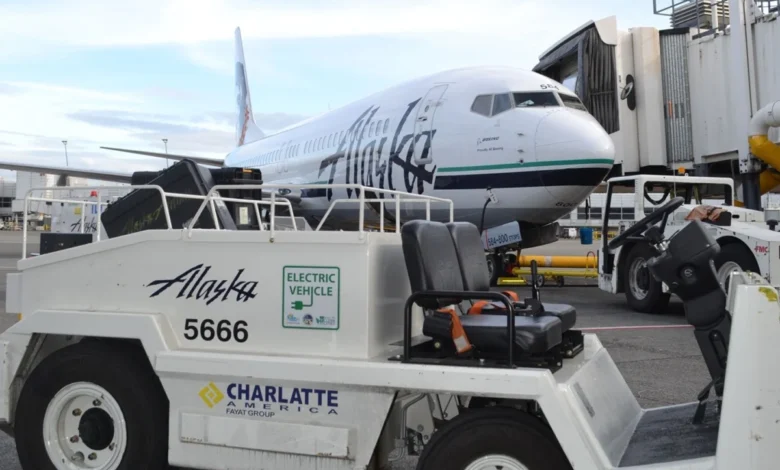
The incident began at approximately 5:30 p.m. local time. Airport security protocols were circumvented when the passenger bypassed standard gate barriers and entered the active ramp area. Once on the tarmac, the suspect commandeered an Alaska Airlines baggage tug—a specialized vehicle used to haul luggage carts between terminals and aircraft. Witnesses and subsequent reports indicate that the suspect drove the vehicle erratically across the ramp area, eventually colliding with an unoccupied support vehicle near Gate 7.
Following the initial collision, the individual abandoned the damaged Alaska Airlines tug and attempted to hijack an American Airlines lavatory service truck. These vehicles, which are essential for the maintenance and sanitation of commercial aircraft, are often left in staging areas near gates. Before the suspect could successfully operate the second vehicle, airport police and law enforcement officers intercepted him. He was taken into custody without further incident and subsequently transported to a local medical facility for a psychiatric and physical evaluation.
Chronology of the Security Breach
The events of October 6 unfolded rapidly, forcing ground crews and air traffic controllers to react to an unpredictable variable on an active airfield.
- 5:30 p.m.: The suspect leaves the secure passenger area near Gate 12, successfully bypassing ground access doors.
- 5:35 p.m.: The suspect gains control of an Alaska Airlines baggage tug and maneuvers it toward the vicinity of Gate 7.
- 5:38 p.m.: The tug collides with a secondary ground support vehicle, causing minor property damage.
- 5:40 p.m.: The suspect abandons the tug and attempts to gain control of an American Airlines lavatory service truck.
- 5:42 p.m.: Airport law enforcement officers respond to the scene and place the suspect under arrest.
- 5:50 p.m.: Ground operations are paused, and a security sweep of the ramp is initiated to clear debris and ensure no other unauthorized individuals are present.
- 6:00 p.m.: Operations resume following the inspection of the taxiway and gate areas.
Official Statements and Regulatory Cooperation
In the immediate aftermath, John Wayne Airport officials confirmed that the incident caused a localized pause in operations, lasting approximately ten minutes. During this window, air traffic controllers issued a ground stop for the specific area to ensure the safety of ground crews and passengers on nearby taxiing aircraft.
Delta Air Lines issued a brief statement regarding the incident, noting, "Delta is cooperating fully with local law enforcement and airport authorities following the incident involving a passenger at John Wayne Airport. We maintain a zero-tolerance policy for unlawful behavior and are conducting our own internal review of the security lapse."
While federal investigators have not yet announced whether the Transportation Security Administration (TSA) or the Federal Bureau of Investigation (FBI) will lead the inquiry, the breach has raised questions regarding physical access controls at the facility. Airport security relies on a "defense-in-depth" strategy, where restricted areas are monitored through a combination of badge access, video surveillance, and human patrol. The ease with which the suspect transitioned between ground vehicles suggests a potential gap in the rapid response or physical locking mechanisms of ground support equipment.
Historical Precedents and Airport Security Vulnerabilities
The incident at John Wayne Airport is not an isolated event; it joins a growing list of airfield incursions that highlight the persistent challenges of securing vast, multi-user airport environments.
In December 2016, a similar incident occurred at Orlando International Airport when a passenger, denied boarding due to erratic behavior, forced his way onto the jet bridge and exited onto the tarmac. He successfully stole a baggage tug and drove it toward the airport’s fire station before being apprehended.
More concerning, perhaps, are the incidents involving vehicles on active taxiways. In December 2025, a contract security guard at John Wayne Airport drove a private sedan onto the tarmac, weaving between taxiing aircraft. Video footage of that incident showed the vehicle narrowly missing ground personnel and aircraft wings. That event was later attributed to a medical episode, underscoring that not all airfield incursions are motivated by malice or theft—some are the result of health-related emergencies or psychological crises.
In another notable case from 2016, a man in Omaha, Nebraska, successfully gained control of a running Southwest Airlines pickup truck. He drove the vehicle directly into the nose gear of a Boeing 737. The collision caused an estimated $1 million in damages and resulted in injuries to both a pilot and a flight attendant. By contrast, the October 6 incident in Orange County did not result in damage to any commercial aircraft, and no injuries were reported among ground staff or flight crews.
Analyzing the Implications for Ground Operations
The "trifecta" attempt—stealing equipment from three different airlines—highlights a logistical reality of modern airports: shared infrastructure. Baggage tugs and lavatory trucks are often staged in common-use areas or shared zones, making them tempting targets for individuals looking to disrupt airport operations.
From a security analysis perspective, this incident raises two primary concerns:
- Access Control Integrity: The ability of a passenger to walk through an access door from a gate area onto the ramp indicates a failure in either the hardware of the door or the underlying security procedures governing gate-to-tarmac transition points.
- Vehicle Security: Ground support equipment (GSE) is frequently left with keys in the ignition to allow for rapid movement and turnaround. While this is an industry standard to ensure efficiency, it leaves the airfield vulnerable to anyone who can cross the perimeter. The costs associated with even minor collisions—such as the one that occurred near Gate 7—can escalate quickly, as any vehicle that strikes an aircraft or a critical support system must be grounded for structural inspection.
The Path Forward
The suspect remains in custody, facing formal charges including vehicle theft, trespassing, and vandalism. As the investigation continues, authorities are expected to examine the surveillance footage from the terminal to determine how the access door was opened.
For the aviation industry, these incidents serve as a recurring reminder of the fragility of the "sterile area" concept. While the focus of airport security has historically been on preventing weapons from entering the cabin, the vulnerability of the ramp—where millions of dollars in equipment and thousands of lives operate in close proximity daily—remains a critical point of concern for airport operators.
Moving forward, John Wayne Airport and other regional hubs may consider increased implementation of automated ignition locks for ground vehicles, enhanced biometric access for ramp doors, and increased frequency of security patrols in high-traffic staging areas. As air travel continues to rebound toward record volumes, the pressure to balance operational efficiency with hardened security measures will remain a central challenge for aviation authorities.
The brief disruption on October 6 concluded without major incident, but it serves as a stark example of how quickly an airport environment can transition from a place of organized transit to a scene of chaotic security failure. As of Wednesday, airport operations have returned to normal, and the investigation is ongoing.