The intersection of international diplomacy, political rhetoric, and modern destination marketing witnessed an extraordinary collision this week when Visit Norway, the Scandinavian nation’s official tourism board, transformed a disparaging remark by former U.S. President Donald Trump into a viral marketing masterclass. Following a turbulent weekend that saw political grievances cross paths with viral digital strategy, the Norwegian destination marketing organization leveraged a derogatory comment about the country’s infrastructure into an unprecedented surge in global web traffic, proving once again that in the digital age, even the most critical insults can be repurposed into high-performing public relations campaigns.
The Genesis of the Controversy: The Nobel Snub and the Michigan Rally
The sequence of events began to unfold over the weekend in the United States, culminating in a public address delivered by Donald Trump during a political rally in Michigan on Sunday. According to reports, the former president expressed deep frustration over the ongoing decisions made by the Oslo-based Norwegian Nobel Committee, which once again bypassed him for the prestigious Nobel Peace Prize. Trump, who has frequently voiced grievances regarding international institutions and foreign entities that fail to align with his political legacy, directed his ire squarely at the Scandinavian nation.
Addressing a packed arena of supporters, Trump did not mince words regarding his disdain for the country, publicly lambasting Norway by referring to it as a "shit house country." Escalating his rhetoric further, he declared to the crowd, "Frankly, Norway sucks." The remarks, captured live on television and rapidly disseminated across social media platforms, immediately drew international media attention, triggering a wave of discussions among political analysts, foreign policy commentators, and global netizens.
While diplomatic channels typically respond to such high-profile verbal attacks with formal statements, measured rebukes, or strategic silence, Norway’s official tourism promotion arm opted for a radically different approach. Rather than engaging in a war of words or issuing a stern diplomatic protest, Visit Norway decided to weaponize humor, leaning directly into the crude terminology used by the American politician to highlight one of the nation’s most unique, albeit unconventional, tourism assets: its world-renowned network of public restrooms.
The Pivot: How Visit Norway Capitalized on the Rhetoric
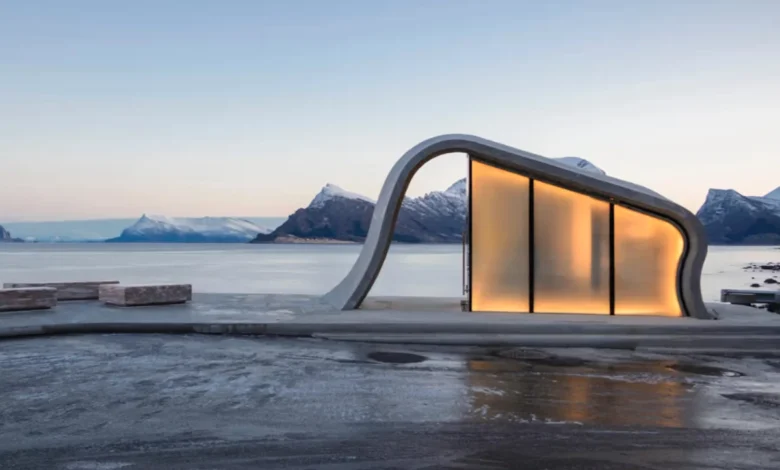
By Monday night, just over 24 hours after Trump’s remarks echoed through the Michigan rally, the digital strategy team at Visit Norway implemented a swift and remarkably clever update to an existing, pre-vetted web page. The original content—a digital guide detailing some of the country’s most architecturally striking and uniquely positioned public toilets situated along Norway’s famous National Scenic Routes—was given a timely, satirical overhaul.
Drawing inspiration from Trump’s signature political slogan, the tourism board tweaked the copy on the webpage to boldly proclaim that Norway is committed to making public restrooms "great again!" The tongue-in-cheek nod to American political discourse instantly resonated with digital audiences, transforming a bureaucratic tourism catalog into a viral sensation.
The web page, which typically received modest, steady traffic from hikers, road-trip enthusiasts, and architecture aficionados looking for practical travel logistics, experienced an immediate and meteoric rise in visibility. By Friday of that same week, analytics reports confirmed that page views had skyrocketed to levels more than 540 times higher than the weekly average recorded prior to the incident.
Tourism officials, maintaining a tone of bemused professionalism, leaned into the unexpected spotlight. Representatives from the organization humorously remarked to media outlets, "What can we say, we do have some of the world’s most beautiful and spectacular toilets," effectively neutralizing the derogatory nature of the original insult by shining a literal spotlight on the country’s meticulous public infrastructure and design excellence.
A Chronological Breakdown of the Event
To fully understand the velocity of this modern public relations phenomenon, it is helpful to examine the precise timeline of events:
- Sunday Afternoon: Donald Trump takes the stage at a political rally in Michigan, launching into a critique of the Norwegian Nobel Committee and subsequently branding Norway as a "shit house country" while declaring that the nation "sucks."
- Sunday Evening: Video clips of the remarks circulate widely on social media platforms including X (formerly Twitter), TikTok, and Facebook, generating intense debate and global media coverage.
- Monday Daytime: Executives and marketing strategists at Visit Norway convene to discuss potential responses, ultimately deciding to bypass traditional diplomatic channels in favor of a playful, consumer-facing digital campaign.
- Monday Night: The designated web page featuring Norway’s scenic public restrooms is updated with satirical phrasing echoing American political slogans, specifically referencing the mission to make restrooms "great again."
- Tuesday through Thursday: The story gains traction across international travel blogs, news aggregators, and social media channels. Users begin sharing screenshots of the modified Visit Norway webpage en masse.
- Friday: Analytics data is compiled, revealing that traffic to the public restroom guide has surged by over 54,000 percent compared to the preceding week, translating to hundreds of thousands of new international visitors exploring the site.
Data and Metrics: The Scale of the Digital Surge
The quantifiable impact of Visit Norway’s agile marketing maneuver offers a fascinating case study in crisis management and digital virality. While negative publicity can often damage a brand or destination, the deliberate subversion of a negative narrative can yield exponential returns when executed with precision and wit.
Prior to the weekend rally, the scenic restroom page was a niche resource, primarily utilized by travelers planning specific driving itineraries through Norway’s fjords and mountain passes. These facilities—many of which are celebrated works of contemporary architecture designed by renowned Scandinavian firms—were already recognized within the architectural community for blending seamlessly into dramatic natural landscapes while offering state-of-the-art sanitary amenities.
However, the infusion of political controversy acted as a powerful catalyst. By Friday afternoon, the page had logged traffic increases exceeding 540 times its baseline volume. More importantly, engagement metrics indicated that visitors were not merely bouncing off the page; many users spent extended periods exploring adjacent links related to Norway’s National Scenic Routes, hotel accommodations, and outdoor adventure packages. This indicates that the viral traffic successfully converted casual rubberneckers into engaged prospective travelers, expanding the top of the tourism funnel on a global scale.
The Broader Context of Norwegian-American Relations
While the digital marketing team turned the incident into a triumph, the underlying political commentary highlights ongoing complexities in international relations and the perception of Nordic nations abroad. Norway, consistently ranked near the top of global indices for quality of life, transparency, happiness, and economic stability, has occasionally found itself the subject of pointed commentary from foreign leaders who view its progressive social democratic model through an ideological lens.
The Nobel Peace Prize, administered by a committee appointed by the Storting (the Norwegian Parliament), has long been a flashpoint for international friction. Although the committee operates independently of the Norwegian government, foreign critics frequently conflate the institution’s decisions with the official stance of the Norwegian state or its populace. Past snubs or perceived oversights of high-profile political figures have occasionally led to verbal reprimands or diplomatic friction, though rarely of the colloquial intensity witnessed in Michigan.
In this instance, the Norwegian public and official bodies largely responded with a mixture of amusement and indifference, viewing the rhetoric as reflective of domestic American political theater rather than a substantive geopolitical dispute. By choosing humor over outrage, Visit Norway effectively insulated the country’s national brand from potential harm, recasting the critique as an absurd talking point that highlighted an unexpected aspect of Norwegian excellence: world-class public infrastructure.
Implications for Destination Marketing and Crisis PR
The success of the "great again" restroom campaign offers several valuable takeaways for destination marketing organizations (DMOs) and public relations professionals operating in an increasingly volatile digital landscape.
First, the incident demonstrates the power of agility. In traditional public relations frameworks, responding to high-level political remarks requires layers of bureaucratic approval, risk assessments, and cautious drafting. By moving swiftly within a 24-hour window, Visit Norway seized control of the narrative before the news cycle could harden around the original insult.
Second, the campaign highlights the efficacy of self-deprecation and humor. Confronted with a crude attack on national dignity, attempting to defend the country through dry economic statistics or formal diplomatic rebukes likely would have yielded minimal engagement. Instead, leaning into the absurdity of the critique disarmed the insult, transforming a moment of potential reputational vulnerability into an unforgettable brand win.
Finally, the episode underscores the enduring value of unique infrastructure assets in tourism promotion. While travelers traditionally seek out beaches, historical monuments, and culinary destinations, Norway’s investment in functional, beautifully designed public amenities along its roadways proved to be a surprising differentiator that captured the global imagination when thrust into the spotlight.
Conclusion
As the digital dust settles on what began as a contentious political grievance in a Midwestern arena, Norway’s tourism sector stands as the ultimate beneficiary of an unintended marketing campaign. By refusing to take the bait of traditional outrage and instead opting for clever, lighthearted digital adaptation, Visit Norway managed to turn a political jab into a masterclass in modern public relations.
The episode will likely be studied in marketing classrooms and PR boardrooms for years to come as a prime example of how digital nimbleness, cultural confidence, and a touch of humor can transform a geopolitical slight into an international tourism triumph. Whether future travelers book a trip to Norway explicitly to experience its architectural marvels of sanitation remains to be seen, but one fact is indisputable: millions of people around the world now know that when it comes to scenic infrastructure, Norway is fully prepared to make public restrooms great again.