NHK Drama The Employee Challenges Workplace Gender Stereotypes and Corporate Culture in Japan

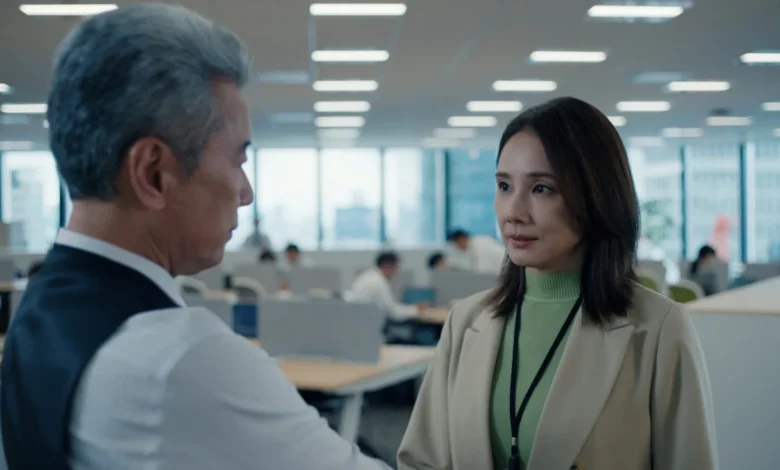
Japan’s public broadcaster NHK has sparked a nationwide conversation regarding gender roles, corporate loyalty, and systemic expectations within modern workspaces through its latest prestige drama series, The Employee. Launched approximately a fortnight ago, the provocative television program confronts what industry insiders describe as the impossible "double bind" professional women face as they navigate traditionally male-dominated career ladders. According to Akiko Ueda, a senior producer within NHK’s content production team, the narrative addresses the psychological trap of internalizing corporate values and tying personal self-worth strictly to institutional approval.
Starring acclaimed actors Yoh Yoshida and Sara Minami, The Employee represents the second major television project to emerge from NHK’s innovative Writers Development Room (WDR). The initiative was established specifically to cultivate fresh creative talent and combat the industry-wide brain drain of young Japanese writers toward manga, video games, and comedy sectors. The first fruit of this initiative, a thrilling series titled 30,000,000 Yen, achieved international recognition last year after being profiled in global media circles for its fast-paced plot and boundary-pushing narrative style.
The Genesis and Evolution of The Employee
The journey of The Employee from a conceptual pitch to a flagship prime-time drama highlights the evolving development strategies at NHK. The project originated as a rudimentary three-line logline that conceptualized a narrative centered not around a corporate office, but within a community of mothers brought together through their children. Despite the domestic premise, senior producers at the public broadcaster recognized a compelling thematic core involving women from diverse backgrounds and varied life experiences intersecting and influencing one another’s perspectives.
During the early developmental stages, the creative team realized that shifting the backdrop from a domestic mothers’ circle to a high-stakes corporate environment would exponentially amplify the narrative’s social resonance. By relocating the characters into the rigid hierarchy of a Japanese corporation, the writers were able to dissect intricate power dynamics, institutional flaws, and systemic barriers rather than focusing solely on interpersonal relationships. This pivot transformed a localized interpersonal drama into a sweeping institutional critique of modern Japanese employment culture.
The series ultimately secured its production greenlight after winning the second-year competition of the NHK Writers Development Room, triumphing over a competitive shortlist of eight alternative scripts evaluated during the previous summer. The collaborative writing team behind the finished product includes Tomomi Naka, Shu Matsui, Tomoe Asaka, and Sou Tateya. Meanwhile, the directorial responsibilities are shared among a capable cohort featuring Keita Hosaka, Keisuke Oshima, and Yuki Nishio, with production spearheaded by Akiko Ueda and Shouta Ishimura.
Plot Dynamics and Character Psychology
The narrative engine of The Employee revolves around Eriko, a dedicated 50-year-old corporate executive hopeful portrayed with emotional gravity by Yoh Yoshida. Eriko has spent decades fiercely battling her way up through the ranks of a deeply entrenched, male-dominated corporate ecosystem. At the outset of the series, she stands on the precipice of professional triumph, leading a massive, high-profile project that promises to secure her long-sought-after seat on the company’s board of directors. Believing she has successfully adhered to every unwritten rule of corporate survival, her carefully constructed world is abruptly upended just moments before the project’s official launch. An anonymous, threatening letter arrives, plunging her career into chaos and forcing her to re-evaluate the organization to which she has dedicated her entire adult life.
Complementing Yoshida’s performance is Sara Minami, who plays Ruri, a character imbued with underlying vulnerabilities that continuously disrupt and reshape Eriko’s corporate reality. According to producer Akiko Ueda, the synergy between the two lead actors elevates the material past conventional television tropes. Yoshida’s earnest portrayal captures a protagonist constantly swaying between corporate righteousness and genuine human morality, while Minami introduces unpredictable dynamics that challenge the established order. The supporting cast members complete an ensemble of multifaceted individuals who resist simplistic categorization as heroes or villains, thereby grounding the fictional narrative in psychological realism.
Tackling the Workplace "Double Bind"
At the heart of The Employee lies a profound sociological exploration of what Akiko Ueda defines as the Japanese professional double bind for women. While modern corporate policies increasingly encourage female leadership and professional advancement, ambitious women frequently discover that demonstrating high competence and assertive leadership can invite subtle social penalties. Society often expects women in leadership positions to soften their ambition, creating a paradoxical environment where they must excel professionally while simultaneously avoiding the appearance of being overly assertive.
This environment fosters a psychological dependency where professionals tie their fundamental sense of self-worth to institutional evaluations, cultivating an intense internal need for corporate recognition and validation. Ueda describes this mechanism as a restrictive and unreasonable situation that systematically alienates individuals from their authentic identities. The creative visionaries behind The Employee sought to dismantle this paradigm by crafting a narrative wherein a protagonist who has allowed her personal value to be dictated entirely by her employer ultimately wages a psychological and professional war against the system to reclaim her autonomy.
By confronting topics such as institutional harassment, the blurry lines dividing perpetrators from victims, and pervasive gender biases, NHK has deliberately stepped into high-stakes social commentary. The production team faced substantial challenges in addressing these sensitive themes authentically without trivializing the lived experiences of modern working professionals. However, the deliberate ambiguity written into the characters has resonated deeply with audiences navigating similar corporate pressures across Japan.
The Broader Strategic Vision of NHK’s Writers Development Room
The ongoing success of The Employee validates the strategic necessity of the NHK Writers Development Room, which was conceived to address structural vulnerabilities within Japan’s television industry. Prior to the establishment of the WDR, broadcasting executives expressed growing concern that aspiring creative talent was bypassing traditional television in favor of more lucrative or flexible digital mediums, such as manga serialization, interactive video game storytelling, and stand-up comedy writing.
To counteract this trend, the public broadcaster engineered an incubator program designed to nurture ambitious, high-concept storytelling that can compete on both domestic and international stages. The inaugural project, 30,000,000 Yen, set a high benchmark by combining rapid pacing with unpredictable plot twists, earning widespread critical acclaim and proving that Japanese public television could produce globally marketable content. The immediate cultural traction achieved by The Employee suggests that the WDR model is successfully capturing the contemporary zeitgeist by addressing urgent domestic socio-economic issues through gripping dramatic formats.
As television critics and viewers continue to debate the themes raised in the ongoing broadcast of The Employee, attention turns to the future of the initiative. While NHK has expressed formal aspirations to launch a third iteration of the Writers Development Room program, official timelines regarding future script submissions or upcoming greenlights remain unconfirmed. Nevertheless, the cultural imprint left by the current drama ensures that conversations surrounding corporate wellness, gender equality, and institutional freedom in the Japanese workplace will remain prominent fixtures in public discourse for the foreseeable future.