Federal Judge Dismisses DOJ Lawsuit Seeking to Delay Alaska Senate Certification Amid Decoy Dan Controversy

The legal and political landscape surrounding Alaska’s high-stakes U.S. Senate election faced intense scrutiny on Sunday after a federal judge dismissed a late-breaking lawsuit filed by the Department of Justice. The federal government’s legal maneuver sought to halt or delay the certification of Democratic candidate Mary Peltola if she emerged victorious in the midterm elections, directly inserting federal oversight into a state-managed electoral process. The core of the controversy involves a confusing ballot arrangement featuring two candidates with nearly identical names: incumbent Republican Senator Dan S. Sullivan and challenger Daniel J. Sullivan Jr., a dynamic that critics and federal prosecutors allege was engineered to siphon votes and manipulate voter intent.
U.S. District Judge Sharon Gleason swiftly rejected the Justice Department’s bid just two days before voters headed to the polls. In her ruling, Judge Gleason concluded that the federal government failed to demonstrate how its proposed investigation could accurately assess voter intent while simultaneously preserving the fundamental secrecy of the ballot. Furthermore, the court emphasized that the requested injunction would represent an inappropriate federal intrusion into the sovereign responsibilities of the state of Alaska to administer its own elections.
Despite the setback, the Justice Department announced its intention to appeal the decision to the 9th U.S. Circuit Court of Appeals. Federal prosecutors argued that Judge Gleason dismissed the case prematurely on procedural grounds without thoroughly addressing core allegations that Daniel J. Sullivan Jr. entered the race specifically to sow confusion among the electorate. As the legal battle escalates, the controversy has transformed Alaska’s Senate race into a national focal point, threatening to alter the balance of power in the United States Senate and raising fundamental questions about election integrity, ballot design, and campaign tactics.
Chronology of the Alaska Senate Controversy
The unfolding drama in Alaska did not materialize overnight; rather, it represents the culmination of months of campaign maneuvering, strategic ballot filings, and explosive investigative reporting.
The controversy gained mainstream traction when The New York Times published a report detailing connections between individuals close to Democratic nominee Mary Peltola’s campaign and the recruitment of Daniel J. Sullivan Jr. to run as a potential spoiler candidate. The presence of a second candidate bearing the exact same surname on the ballot immediately alarmed Republican strategists, who dubbed the phenomenon the "Decoy Dan" scheme.
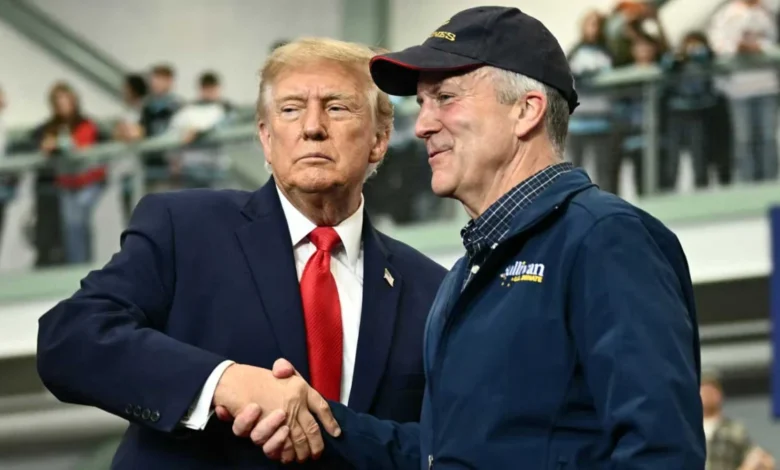
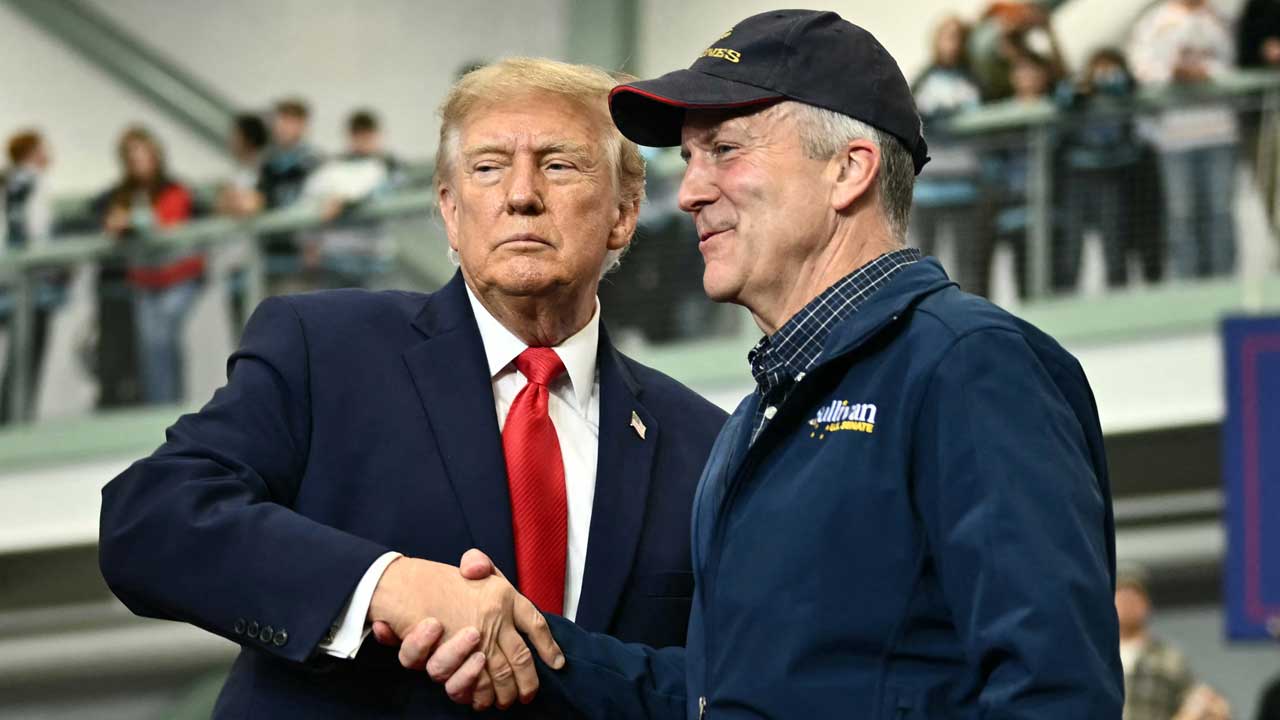
As campaigning entered its final stretch in October, tension mounted across the Last Frontier. On October 13, President Donald Trump traveled to Wasilla, Alaska, to rally support for incumbent Senator Dan S. Sullivan at the Curtis D. Menard Memorial Sports Center, where he sharply criticized any attempts to undermine the Republican incumbent through ballot deception.
As the election date approached, the executive branch escalated its involvement. The Department of Justice launched a federal inquiry into the mechanics of Sullivan Jr.’s candidacy, treating the alleged vote-siphoning effort as a potential violation of federal election norms. This federal intervention culminated in the Sunday lawsuit filed just 48 hours before polls opened, seeking to freeze the final certification of the vote count should Peltola secure a win under Alaska’s unique ranked-choice voting system. Following Judge Gleason’s dismissal of the lawsuit, the DOJ immediately signaled its intent to take the matter to the appellate level, ensuring that the legal cloud over the election will persist long after ballots are cast.
Background Context and Ranked-Choice Voting Mechanics
To fully understand the gravity of the Alaska Senate race, one must examine the state’s distinct electoral framework. Alaska employs a nonpartisan blanket primary followed by a ranked-choice general election, a system approved by voters via a ballot measure in 2020. Under this system, voters rank candidates in order of preference rather than choosing just one. If no candidate secures an outright majority of first-preference votes (more than 50%) in the initial round, an instant runoff process begins. The candidate with the fewest first-round votes is eliminated, and their ballots are redistributed to the remaining candidates based on the voters’ second choices. This process repeats in successive rounds until a candidate achieves a majority.
In a ranked-choice system, the margin of victory often hinges on vote transfers from eliminated candidates, making the presence of minor, independent, or third-party candidates critically important. Political analysts note that introducing a candidate with a nearly identical name to a major party incumbent introduces an unprecedented variable into the runoff calculations. Republican leadership argued that even a small percentage of misplaced votes could artificially swing the redistribution rounds, thereby distorting the true intent of the Alaskan electorate.
Official Responses and Political Fallout
The "Decoy Dan" scandal has triggered sharp divisions across the political spectrum, drawing swift condemnations from national figures and state leaders alike.
Incumbent Senator Dan S. Sullivan has maintained that he will respect and accept the final certified results of Tuesday’s election, despite aggressively condemning his challenger’s strategy. In public statements, the incumbent senator characterized Daniel J. Sullivan Jr.’s entry into the race as a deliberate and bad-faith attempt to confuse voters who intended to cast their ballots for the Republican platform.
Meanwhile, prominent national Republicans have stepped up their rhetoric. Senator Tim Scott publicly declared the alleged vote-siphoning plot a severe offense that warrants deep scrutiny, helping elevate the local dispute into a broader national debate on electoral ethics.
At the state level, Republican Governor Mike Dunleavy took aggressive action by ordering a formal state-level investigation into the revelations published in the media. Governor Dunleavy warned that the episode exposed a glaring systemic vulnerability in how candidate filings are processed, noting that the current regulatory framework leaves election systems susceptible to manipulation hiding in plain sight. Furthermore, the governor strongly suggested that he might exercise executive authority to withhold state certification of a Peltola victory should the ongoing investigations validate claims of electoral interference.
In stark contrast, Democratic nominee Mary Peltola has vehemently denied any personal or campaign involvement in the alleged scheme. Representatives for Peltola have maintained that her campaign operated entirely above board, focusing on issues relevant to working Alaskans, resource development, and infrastructure. Daniel J. Sullivan Jr. has similarly denied coordinating his independent run with Peltola’s campaign, insisting that his candidacy represents a legitimate exercise of his right to run for public office.

Broader Implications for National Politics and Election Integrity
The implications of the Alaska Senate race extend far beyond the state’s borders, carrying significant weight for the national balance of power in Washington. With control of the U.S. Senate razor-thin, every individual seat assumes monumental importance. A victory for either party in Alaska could ultimately tip the scales, determining which political party holds the majority and commands committee chairmanships in the upcoming legislative session.
Beyond the partisan calculus, legal scholars and election administration experts are watching the Alaska case closely for its precedent-setting value regarding federal intervention in state elections. Judge Gleason’s ruling underscores the traditional autonomy granted to states under the U.S. Constitution to manage their own election administration, certifying bodies, and ballot structures. However, the Justice Department’s aggressive pursuit of the case highlights an emerging willingness by federal law enforcement to investigate candidate recruitment strategies and ballot integrity issues under broader civil rights and electoral fairness statutes.
As the 9th Circuit prepares to review the DOJ’s appeal, the immediate future of Alaska’s Senate seat remains shrouded in uncertainty. Whether the courts ultimately greenlight federal interference or defer entirely to state election boards, the 2026 contest in Alaska has already cemented its place as one of the most controversial, legally complex, and fiercely contested elections in modern American political history.
Related posts: