FDA abortion pill mifepristone safety review to continue into 2027 sparking fierce political and legal debate

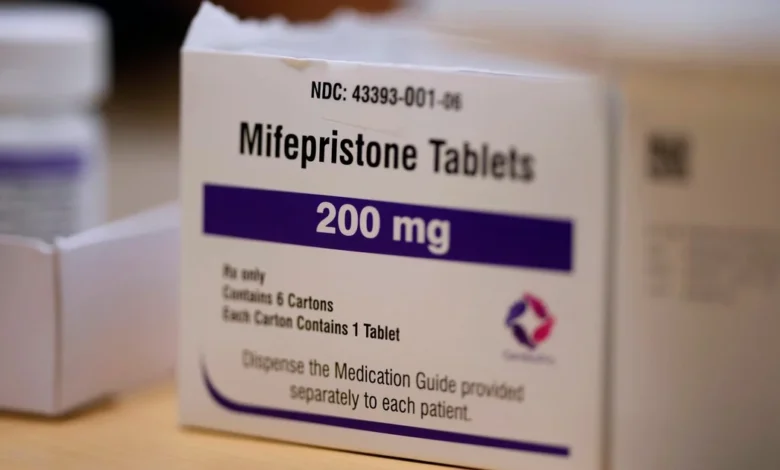
The Food and Drug Administration (FDA) announced this week that its comprehensive safety reevaluation of mifepristone, the primary medication used for medical abortions in the United States, will extend well into the coming year. This update, provided in a formal legal filing late Wednesday, marks a significant development in the ongoing regulatory and judicial battle over reproductive healthcare access. Under the directive of Health Secretary Robert F. Kennedy Jr., the agency is conducting an exhaustive review of the drug’s safety profile, a process that has drawn sharp criticism from anti-abortion advocacy groups who argue the timeline is insufficient, and from reproductive rights organizations who fear the review is a politically motivated attempt to undermine established medical standards.
The timeline established by the FDA indicates that a primary safety study is slated for completion by mid-December of this year. Following this analysis, the agency intends to finalize its comprehensive report no later than March 2027. Only after the release of this report will the agency determine whether to implement new regulatory hurdles, modify the drug’s current prescription protocols, or maintain the status quo.
A History of Regulatory Evolution
Mifepristone, often referred to as the "abortion pill," was first granted FDA approval in 2000 for use in terminating early-stage pregnancies. Over the past two decades, the agency has consistently reaffirmed the drug’s safety and efficacy profile, which is supported by extensive clinical data. Throughout its tenure, the FDA has progressively eased restrictions on the medication, acknowledging its role in modern gynecological care.
The most pivotal shift occurred during the COVID-19 pandemic in 2021, when the agency authorized the prescription of the drug via telehealth and allowed for distribution through the mail. This policy, which was made permanent by the Biden administration in 2023, fundamentally altered the landscape of reproductive healthcare in the United States. By decoupling the drug from in-person clinic visits, the policy ensured that patients in states with restrictive abortion laws could still access medical abortion services, effectively circumventing localized bans.
The Legal Landscape and Federal Oversight
The current FDA review is not occurring in a vacuum; it is the result of a court-ordered mandate stemming from litigation initiated by the state of Louisiana. The state’s lawsuit contends that the federal government’s authorization of mail-order mifepristone directly interferes with state-level abortion prohibitions. The legal argument rests on the premise that federal oversight of the drug should be subordinate to the sovereign authority of states to regulate or ban the procedure within their borders.
The legal journey of this case has been complex. Last month, a three-judge panel for the 5th U.S. Circuit Court of Appeals expressed skepticism regarding the merits of Louisiana’s challenge, particularly focusing on the question of "legal standing"—whether a state has the constitutional authority to sue a federal agency over the regulatory approval of a drug. While the 5th Circuit’s eventual ruling remains pending, the Supreme Court has intervened to block any immediate changes to the drug’s distribution, ensuring that access remains stable while the judiciary deliberates.
Data-Driven Review Methodology
To address the concerns raised by the administration and the courts, the FDA has implemented a "statistical data mining method" aimed at identifying potential safety signals that may have been previously overlooked. This method involves the analysis of massive electronic health records, including incident reports from major health networks and insurance providers. The agency is specifically looking for rare complications or adverse reactions that could inform future regulatory decisions.
In addition to the statistical analysis, the FDA is currently reviewing several formal petitions that propose significant changes to the prescribing and distribution framework of the drug. These petitions generally focus on reversing the 2021 decision that permitted remote prescribing.
Stakeholder Reactions and Political Tensions
The announcement of a 2027 deadline has ignited a firestorm of political reactions. Gavin Oxley, a spokesperson for Americans United for Life, characterized the extension as a failure of leadership. "The administration continues to find itself on the wrong side of women’s health, clearly uninterested in mitigating the ongoing harms caused by the abortion pill," Oxley stated. The organization maintains that the current accessibility of the drug constitutes a public health risk that requires immediate executive intervention.
Conversely, medical experts and reproductive rights advocates argue that the FDA’s review is being used as a tool to advance an ideological agenda rather than a scientific one. Medical professionals note that the two-drug regimen—consisting of mifepristone and misoprostol—is the gold standard for early pregnancy termination and has a well-documented safety record.
Dr. Celine Gounder, a medical correspondent, noted in 2025 that while the FDA could technically impose new restrictions, withdrawing approval entirely would be an "extraordinary step" with profound legal and medical consequences. Such an action would likely trigger immediate litigation from pharmaceutical companies and medical associations, potentially leading to a constitutional crisis regarding the FDA’s authority as a scientific arbiter.
Potential Implications for Healthcare Access
The implications of the FDA’s eventual findings are wide-ranging. While a total ban remains unlikely due to the rigorous scientific data supporting the drug’s safety, analysts suggest that the administration could implement "soft" restrictions that significantly increase the burden on patients and providers. These might include:
- Limiting Telehealth: Requiring in-person consultations, which would effectively reinstate "abortion deserts" in regions where travel to a clinic is cost-prohibitive or physically impossible.
- Scope of Practice Restrictions: Restricting who can prescribe the medication. Currently, physician assistants and nurse practitioners are permitted to prescribe mifepristone; limiting this to physicians-only would significantly reduce the number of clinicians available to provide care, particularly in rural areas.
- Reporting Mandates: Implementing more rigorous and frequent reporting requirements for medical providers, which could create a "chilling effect" on practitioners fearing increased regulatory scrutiny or legal liability.
A Timeline of Key Developments
- September 2000: The FDA grants initial approval for mifepristone.
- December 2021: The FDA permanently allows the distribution of mifepristone via telehealth and mail.
- 2023: The policy of remote prescription is codified as a permanent federal standard.
- 2024–2025: A series of state-led lawsuits, including the Louisiana case, challenges the FDA’s authority.
- October 2026: The FDA formally updates the court, confirming the safety review will continue through March 2027.
- December 2026 (Projected): Completion of the internal safety study.
- March 2027 (Projected): Deadline for the FDA’s final report and subsequent policy decisions.
Economic and Public Health Context
The reliance on mifepristone has grown substantially, with the medication now accounting for the majority of abortions performed in the United States. According to the Guttmacher Institute, medical abortion usage has increased steadily, reflecting both a shift in clinical practice and a response to the legislative environment following the overturning of Roe v. Wade.
Public health analysts emphasize that any disruption to the supply or accessibility of mifepristone would have immediate repercussions for the healthcare system. The drug is not only used for abortions but also for the management of miscarriages. Consequently, policies that restrict the drug’s availability often lead to "collateral damage," where patients suffering from pregnancy loss face increased delays in receiving necessary medical care.
As the FDA continues its review, the agency faces the dual pressure of fulfilling its mandate to protect public health while navigating an intensely polarized political environment. With the 2027 deadline looming, both the medical community and the legal establishment remain on high alert, preparing for a decision that could fundamentally redefine the boundaries of reproductive healthcare in America for years to come. The outcome will likely hinge not only on the "data mining" results the agency is currently gathering but also on the shifting composition of the judiciary and the political priorities of the executive branch.