Global Science Goes Into Exile: Inside the International Effort to Rescue U.S. Climate Data from Political Erasure

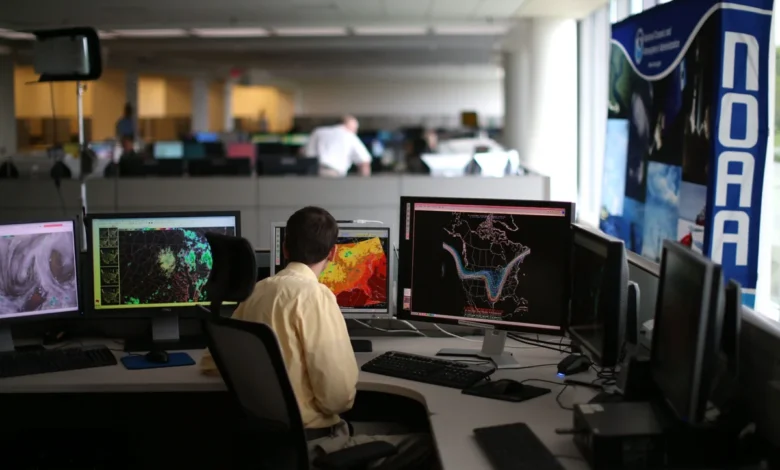
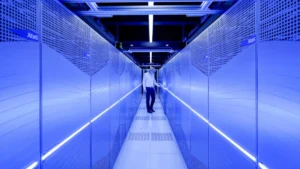
In a modern five-story building located in the historic center of Hamburg, Germany, technicians are carefully positioning heavy metal server racks alongside the rows of hardware that already line the dimly lit corridors of the German Climate Computing Center (DKRZ). As one of the world’s premier repositories for climate simulation data, the DKRZ is expanding its physical footprint not to accommodate domestic research, but to absorb an influx of digital survival cargo from across the Atlantic Ocean. This new equipment is slated to ingest approximately 5 petabytes of storage capacity, complementing the 254 petabytes already archived within its walls. To put this in perspective, a single petabyte represents the storage equivalent of roughly 200 million high-resolution digital images.
While the DKRZ’s primary mandate has historically been to supply high-performance computing resources and secure archiving to the German scientific community, these incoming racks carry a profoundly different and urgent assignment. They are dedicated to safeguarding backup copies of climate simulations produced by American scientists ahead of the pivotal United Nations seventh major climate assessment, scheduled for release in 2029. This transnational data rescue mission has been mobilized to insulate vital scientific research from political interference by the Trump administration. Over the past year, the U.S. executive branch has enacted sweeping budget cuts to climate research, purged scientific reports from agency servers, scrubbed references to human-driven climate change from government websites, and moved to curtail satellite-based Earth monitoring.
The Anatomy of a Political and Institutional Crisis
Trust in the integrity and continuity of U.S. science policy has plummeted to historic lows across Europe, triggering widespread alarm among research institutions and funding bodies. The diplomatic rupture deepened significantly in January, when the U.S. government officially withdrew from both the United Nations Intergovernmental Panel on Climate Change (IPCC) and the UN Framework Convention on Climate Change (UNFCCC). Although American researchers continue to independently contribute to international climate studies, their institutional backing within federal agencies has eroded.
To bridge this widening chasm, the German Research Foundation (DFG)—the nation’s premier science funding organization—established a specialized $35 million funding initiative in late 2025. Designed to foster data resilience, the program acts as a safe harbor for permanently duplicating and storing vital public-domain U.S. datasets. Among these efforts is the DKRZ’s CMIP7-ark project, explicitly conceived as a digital life-boat for American contributions to the upcoming IPCC assessment. Alongside it, six parallel initiatives—such as SHIELD and SEND (Secure Endangered Earth Data)—have been mobilized to rescue endangered environmental archives.
"We cannot simply accept that important contributions might be lost for technical or political reasons," said Christopher Kadow, head of the data analysis division at the DKRZ.

The apprehension motivating these measures is not purely theoretical. Officials at the DFG point to explicit threats of data suppression and ideological manipulation. "The deletion of data has also become a possibility," stated Kathrin Winkler, a program manager at the DFG, warning of a tangible risk that datasets could be altered or restricted to skew scientific findings in politically favorable directions.
Vulnerabilities in the Digital Age: From Hard Drives to the Sneakernet
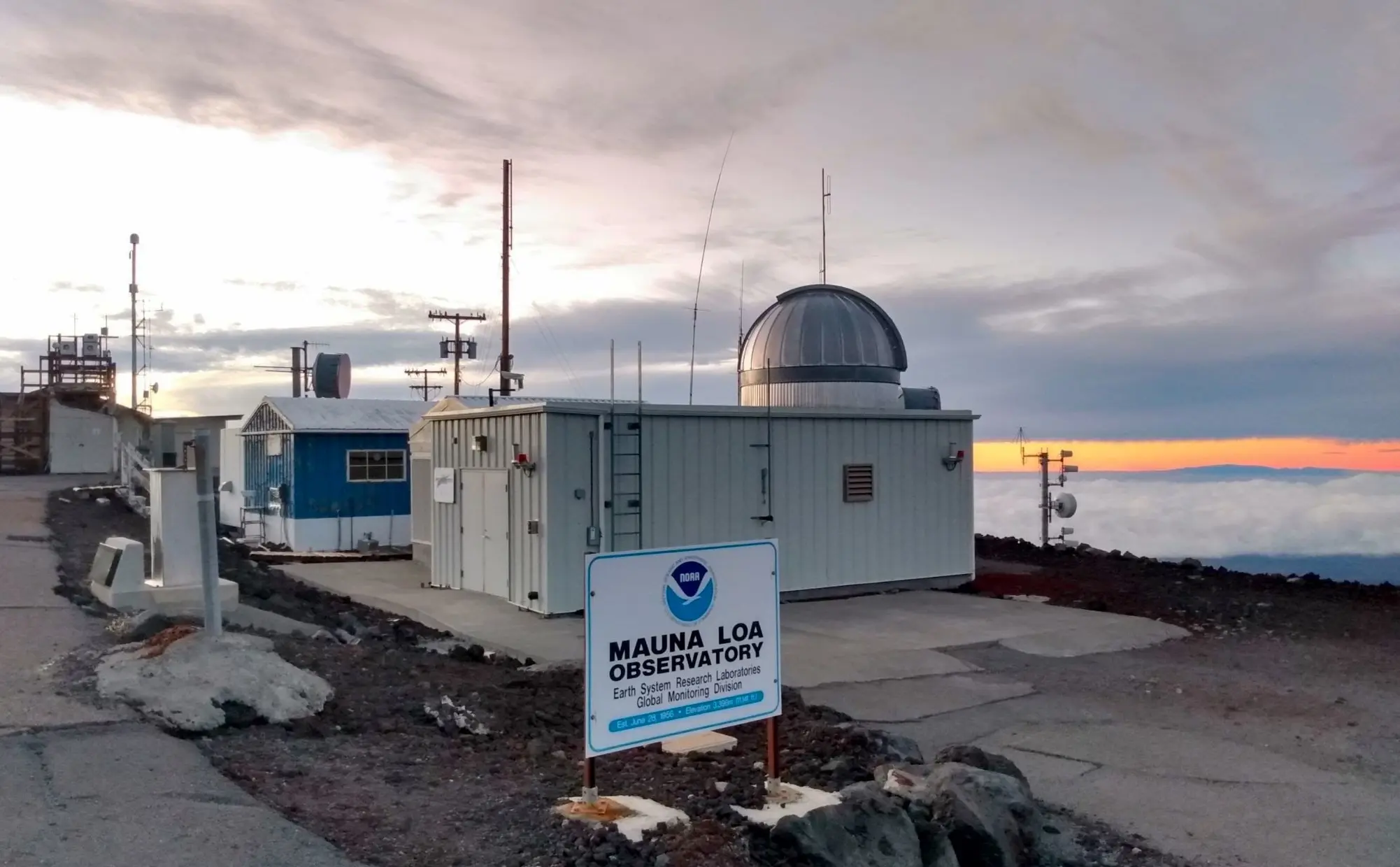
Empirical science relies entirely on the continuous collection, maintenance, and accessibility of historical and contemporary datasets. Environmental, climatic, and ecological research depends heavily on long-term monitoring series, such as the iconic Keeling Curve tracking atmospheric carbon dioxide concentrations at Hawaiʻi’s Mauna Loa Observatory. These records span decades, serving as the backbone of modern climatology. The vulnerability of such infrastructure was underscored when the Trump administration attempted to defund and shutter the Mauna Loa facility, a move ultimately blocked by congressional intervention.
Despite the foundational importance of these datasets, standard scientific protocols have historically neglected off-site redundancy. Most research data is stored locally on hard drives or magnetic tapes at the universities and institutions where it is initially generated. For decades, the assumption of global political stability discouraged the creation of remote backups. Furthermore, moving petabytes of data presents immense logistical challenges. Transmitting such vast volumes over standard internet connections can take months, while leasing dedicated fiber-optic lines is prohibitively expensive. Consequently, the most economically viable method for transferring massive data archives often remains the "sneakernet"—physically transporting hard drives and magnetic tapes by automobile, commercial aircraft, or container ship.
This historical reliance on single-site storage has left global science dangerously exposed to political disruption, cyberattacks, and armed conflict. "If data is stored at only one site, there is a much greater risk of loss from events such as extreme weather or infrastructure failure," noted Eleanor O’Rourke, director of the International Project Office of the Coupled Model Intercomparison Project. Climate models prepared for IPCC evaluations have grown so critical to global safety that storing duplicate copies in overseas repositories is now viewed as an operational necessity.
A Timeline of Institutional Disruption and Rescue Operations
The assumption that publicly funded U.S. scientific data would remain permanently accessible is rapidly unraveling. Because government datasets reside on physical hardware and require active maintenance by specialized personnel, they are vulnerable to administrative neglect, ideological purging, and natural disasters.
A stark illustration of this vulnerability occurred in April 2025, when researchers discovered that approximately 300 federally funded datasets curated over decades by NASA’s Socioeconomic Data and Applications Center (SEDAC) had been abruptly removed. SEDAC served as a vital bridge between Earth sciences and social sciences, integrating remote sensing metrics with demographic, poverty, and infrastructure data. The removal was executed under the directives of the Department of Government Efficiency, headed by Elon Musk.
In response, international academic institutions launched emergency rescue operations, manually scraping active servers before they were entirely taken offline and migrating the archives to the Harvard Dataverse Repository. "Assumptions that U.S. government agencies will store scientific data long-term are proving tenuous at best, given the anti-science predisposition of the current administration," observed Alex de Sherbinin, former manager of SEDAC.
Political interference is mirrored by growing cyber vulnerabilities. Over recent years, research institutions across Europe—including multidisciplinary complexes in Croatia and industrial engineering centers in Germany—have been targeted by sophisticated ransomware attacks aimed at locking files and extorting institutions.
Meanwhile, active warfare has demonstrated the catastrophic cost of localized data loss. In Ukraine, Russian military bombardments have systematically targeted universities and research centers. "Universities and research institutes have been targeted by Russian bombardments, and in some cases they were completely destroyed," said Anastasiia Lutsenko, a Ukrainian researcher at the Max Planck Institute for Innovation and Competition. "The Russians know how much lasting harm they can inflict by attacking science."
To mitigate these losses, international consortia have raced to digitize and evacuate vulnerable records. Prior to the 2022 Russian invasion, a collaborative German-Polish-Ukrainian initiative digitized historical meteorological observations recorded between 1808 and 1880 across eight Ukrainian stations, securing them on servers at the University of Giessen. A similar emergency transfer preserved Ukraine’s contributions to the Global Biodiversity Information Facility after missile strikes impacted facilities near Kharkiv.
The Global Response: Building Scientific Resilience
The urgent need to build structural resilience across the global scientific community brought nearly 100 international experts together in Berlin for a landmark gathering organized by the American Geophysical Union (AGU). Representing more than 60,000 Earth and space scientists worldwide, the AGU has taken a leading role in defending scientific independence against political pressure.
When the U.S. administration declined to dispatch governmental experts to IPCC proceedings, the AGU established the U.S. Academic Alliance for the IPCC, successfully nominating nearly 300 American scientists to serve as authors for the upcoming assessment. During the summer of 2025, the organization also inaugurated its Data Resilience Project, a framework designed to overhaul how global scientific data is organized and protected.
Ben Zaitchik, president-elect of the AGU, emphasized that the scientific community has reached a critical juncture. "We have engaged in triage efforts to ensure data remains usable and accessible," Zaitchik remarked during the Berlin conference. "But we clearly now have arrived at a moment where we must fundamentally reimagine data organization and maintenance for long-term viability and growth."
Proposals emerging from the convening focus on establishing decentralized, cross-border digital pipelines. A newly formed coalition of German national research centers is now offering secure, long-term storage for public-domain data originating from the United States and other volatile regions. Similar defensive archiving is underway elsewhere; Frankfurt’s Senckenberg Natural History Museum is actively archiving wildlife camera trap data from Ukraine and biodiversity records from conflict-torn Yemen.
Broader Implications and Future Horizons
Securing raw data alone is insufficient; digital preservation requires maintaining the specialized software environments and metadata necessary to interpret complex files. Frank Oliver Glöckner, a professor of Earth systems data science at the University of Bremen and head of the Pangaea data repository, stresses the technical complexity of the task. "We’re developing protocols and procedures for exchanging data, distributing multiple copies globally, and ensuring that the data remains analyzable indefinitely," Glöckner explained as his institution prepared to absorb data from an American climate center slated for closure.
Paradoxically, some researchers suggest that the aggressive posture of the Trump administration has inadvertently strengthened global scientific cooperation. Glöckner noted that the political pressure has highlighted the perils of data hoarding, forcing institutions to embrace open science and cross-border collaboration.
Looking ahead, experts emphasize that data vulnerability is not exclusively an American phenomenon. Christopher Kadow of the DKRZ pointed to the rising political influence of far-right, climate-sceptic political factions in Europe—such as the Alternative for Germany (AfD), which recently secured regional electoral victories. "We don’t know what political shifts may occur in Germany," Kadow said. "We aren’t completely protected from risks or developments like those in the U.S. either."
Ultimately, the ongoing scramble to secure climate data underscores a sobering reality for the 21st century: empirical knowledge can no longer rely on geopolitical stability for its survival. By weaving a decentralized global safety net of petabyte-scale archives, the international scientific community is ensuring that the foundational records of our changing planet remain intact, protected against the whims of shifting political regimes and the ravages of conflict.