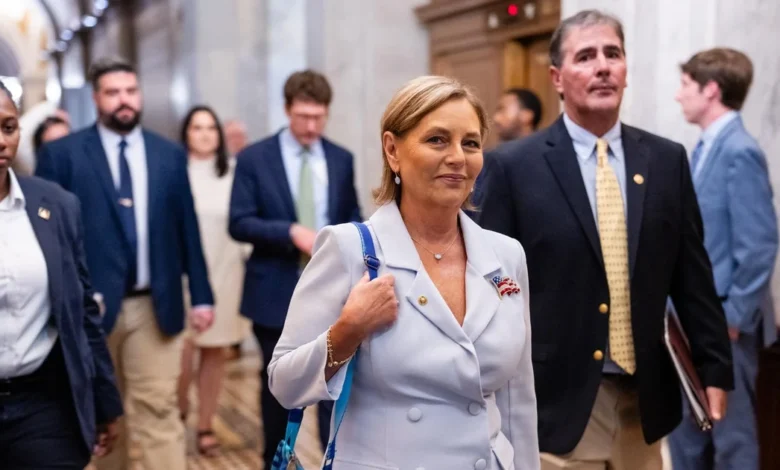
Senator Darline Graham of South Carolina, recently appointed to fill the U.S. Senate vacancy created by the sudden passing of her brother, the venerable Republican Senator Lindsey Graham, is reportedly engaged in substantive deliberations regarding a potential campaign for a full six-year term. These discussions have been significantly bolstered by the public backing of former President Donald Trump, who has pledged his "Complete and Total Endorsement" should she decide to enter the race. The political landscape in South Carolina is rapidly evolving as the state prepares for a special Republican primary on August 11, the victor of which will advance to the November general election to contest the seat.
The revelation of Senator Graham’s serious consideration emerged on Thursday following a pivotal meeting at the White House. Multiple sources familiar with the discussions confirmed to CBS News that the newly sworn-in senator conveyed her intentions to weigh a bid during her visit. This high-profile consultation underscores the immediate and intense focus on the future of this crucial Senate seat and the powerful influence that presidential endorsements continue to wield within the Republican Party, particularly in states with strong conservative bases like South Carolina. The swift transition from appointment to contemplation of a full term highlights the demanding nature of political succession and the strategic maneuvering inherent in such unforeseen circumstances.
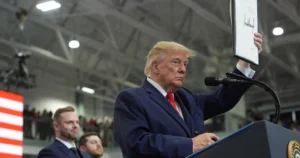
A mere day after her White House engagement, President Trump unequivocally signaled his support via a post on Truth Social. In his characteristic direct style, Trump publicly encouraged Darline Graham to run, praising her as a "spectacular person" and confirming that he had personally urged her to seek the Senate seat during their meeting. "I hope Darline does this, in that there would be nobody better to honor the legacy of her beloved brother, Lindsey," Mr. Trump articulated in his Friday afternoon message, concluding with the emphatic call to action: "RUN, DARLINE, RUN!" This robust endorsement from a figure who remains immensely popular among the Republican electorate in South Carolina immediately positions Darline Graham as a formidable contender, potentially deterring other prospective candidates and consolidating support among the party’s base. The initial report regarding her consideration was first published by Semafor, quickly disseminating the news across national political circles.
A Swift Transition: From Appointment to Contender
The chain of events leading to Darline Graham’s current position unfolded rapidly following the unexpected death of Senator Lindsey Graham. On the preceding Monday, South Carolina Governor Henry McMaster officially appointed Darline Graham to serve the remainder of her brother’s term, which is slated to conclude in early January of the upcoming year. This appointment, a solemn duty for any governor, was met with a mixture of grief for the loss of a long-serving senator and anticipation for the future of the state’s representation.
Just one day later, on Tuesday, Darline Graham, aged 62, was formally sworn into the United States Senate. Her ascension to this esteemed body marked a significant historical milestone for the Palmetto State, as she became the first woman ever to represent South Carolina in the Senate. This historic moment, while overshadowed by the circumstances of her appointment, adds another layer of significance to her potential candidacy for a full term. Her entry into the Senate, though initially as an interim representative, immediately placed her within the national political dialogue, allowing her to gain invaluable experience and build relationships within Washington D.C. that could prove beneficial in an electoral contest.
The reaction from her Senate colleagues has been largely positive and supportive. Senator Tim Scott, also of South Carolina, and notably the chair of the National Republican Senatorial Committee (NRSC), the primary fundraising and strategizing arm for Senate Republicans, expressed an open-minded stance when queried by CBS News on Wednesday. Scott’s remarks, "Darline has so far been off to a remarkable start. Why not her?" reflect a pragmatic acknowledgment of her potential and a willingness within the party to support a candidate who can effectively carry the torch. The NRSC’s backing, or even a tacit approval, would be a critical asset for any candidate seeking to navigate the complexities of a statewide Senate race, providing access to resources, strategic guidance, and a national fundraising network.
The Enduring Legacy of Lindsey Graham and South Carolina’s Political Landscape
Senator Lindsey Graham’s sudden death last weekend sent shockwaves throughout the Senate and the broader political establishment. Having served in the upper chamber since 2003, Graham had built a distinguished career characterized by his active participation in foreign policy debates, his strong conservative principles, and his often-complex relationship with President Trump. He was widely expected to secure his fifth term in the upcoming November general election, a testament to his consistent electoral success and deep roots within South Carolina’s political fabric. His absence leaves a significant void, both in terms of legislative experience and political influence.
South Carolina itself is a deeply conservative state, often referred to as a "red state," where Republican candidates typically enjoy a significant electoral advantage. The state has not elected a Democratic senator since Fritz Hollings in 1998, and its presidential electoral votes have consistently gone to Republican candidates for decades. President Trump’s enduring popularity in the state, evidenced by his strong primary and general election performances, makes his endorsement a particularly potent factor. Any Republican candidate without Trump’s backing would face an uphill battle against one who has it, especially in a primary. This political reality underscores the strategic importance of Darline Graham’s White House meeting and the subsequent public endorsement.
The state’s demographic makeup and political leanings mean that the special Republican primary will likely be the de facto general election for the Senate seat. The winner of the August 11 primary will emerge as the overwhelming favorite in the November general election against any Democratic challenger. This intensifies the competition within the primary itself, as candidates vie for the support of a predominantly conservative and often Trump-aligned electorate.
Darline Graham’s Background and the Path Ahead
Darline Graham’s professional background offers a stark contrast to the typical career path of a U.S. Senator. Prior to her appointment, she had dedicated her career to public service in disability services, most recently serving as the commissioner of the South Carolina Commission for the Blind. This experience, while not in elected office, provides her with a deep understanding of constituent needs and the intricacies of state government bureaucracy. Her work has likely honed her advocacy skills, her ability to navigate complex policy challenges, and her commitment to public welfare—attributes that can resonate with voters seeking authentic representation.
Despite her lack of prior elected office experience, Darline Graham expressed confidence in her ability to fulfill the senatorial role. On Monday, she indicated that with the support of her brother’s seasoned staff, she felt well-equipped to carry out the duties of the office effectively. The continuity offered by retaining Lindsey Graham’s experienced team could provide a crucial advantage, ensuring a smooth transition in constituent services, legislative priorities, and understanding the intricate workings of the Senate. This reliance on established infrastructure could mitigate concerns about her lack of direct political experience among voters and party officials.
The special election calendar demands swift action. The August 11 Republican primary will determine who will carry the party’s banner into the November general election. This truncated timeline leaves little room for extensive campaigning, making name recognition, immediate access to funding, and strong endorsements paramount. Darline Graham benefits significantly from her familial connection to a popular senator and, now, from the explicit endorsement of President Trump. These factors could allow her to quickly consolidate support and funding, potentially circumventing the need for a protracted primary battle.
Broader Implications and Analysis
Darline Graham’s potential candidacy carries several significant implications, both for South Carolina and for the broader national political landscape. Her historic position as the first woman to represent South Carolina in the Senate, even if initially by appointment, is a powerful narrative that could energize various voter blocs. It signals a shift in representation for a state that has historically sent only men to the upper chamber.
The "legacy" aspect, explicitly invoked by President Trump, will undoubtedly be a central theme of any campaign she undertakes. Voters in South Carolina, many of whom admired Lindsey Graham, may see Darline as a direct continuation of his service and conservative values. This emotional connection, coupled with Trump’s endorsement, could create a formidable political force. However, it also opens her to scrutiny regarding her own policy positions and political identity, distinguishing herself while honoring her brother’s memory.
From a national perspective, the outcome of this special election, while unlikely to shift the balance of power in the Senate given South Carolina’s deep red leanings, is still important. It serves as another litmus test for the enduring influence of President Trump’s endorsements and the Republican Party’s internal dynamics. A decisive victory for Darline Graham, particularly with Trump’s backing, would reinforce the former President’s kingmaker status within the party. Conversely, if she were to face an unexpectedly strong challenge, it could signal a more nuanced political environment.
The National Republican Senatorial Committee, under Senator Tim Scott’s leadership, will be closely watching the primary. Their goal is to ensure that the strongest possible Republican candidate emerges from the primary to secure the seat in November. While Scott’s comments indicate openness to Darline Graham, the NRSC’s ultimate support will depend on her viability, fundraising capabilities, and ability to unite the party. Their resources are crucial for navigating the expensive and complex world of statewide campaigns.
As the political season intensifies, all eyes will be on Darline Graham’s final decision. Should she choose to run, her campaign will be a compelling narrative of personal loss, historic firsts, and the powerful forces of political endorsement shaping the future of one of the nation’s most conservative states. The August 11 special primary promises to be a pivotal moment, setting the stage for who will ultimately represent South Carolina for the next six years in the United States Senate.