The Erosion of Academic Freedom: How Fossil Fuel Interests and Political Pressure are Reshaping American Higher Education

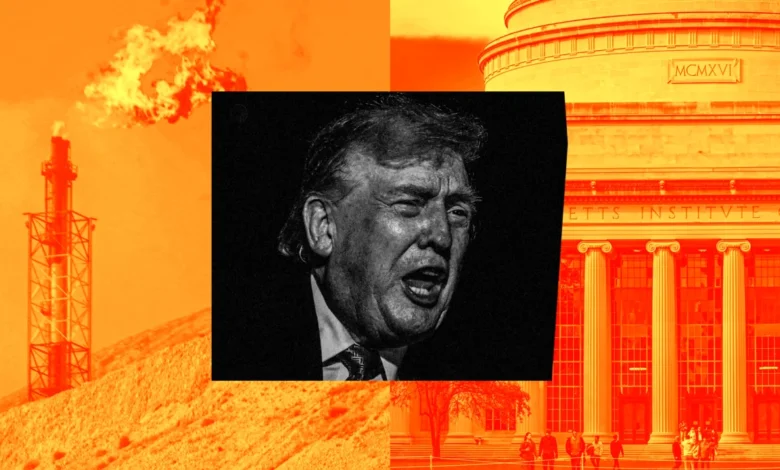
The landscape of American higher education is undergoing a profound and potentially irreversible transformation as the intersection of federal political pressure, corporate funding, and ideological donor networks threatens the long-standing principle of institutional autonomy. A comprehensive new study published in the journal Energy Research & Social Science reveals that the independence of universities—a cornerstone of scientific inquiry and democratic discourse—has been significantly compromised. This erosion is particularly acute within the fields of climate and energy research, where the interests of fossil fuel donors and political mandates often conflict with the objective pursuit of scientific evidence.
The 2025 Turning Point: A Timeline of Institutional Pressure
The current crisis represents an acceleration of trends that have been building for decades, but observers note a distinct shift in intensity beginning in 2025. The Trump administration’s approach to higher education marked a departure from traditional federal oversight, moving toward a model of ideological and financial control.
- 2010–2020: Fossil fuel companies funneled over $700 million into U.S. universities, effectively buying a seat at the table in research planning and, in some cases, curriculum development.
- 2016: The Arizona state legislature established the first publicly funded "libertarian academic center," setting a precedent for state-mandated ideological outposts within public universities.
- 2021–2023: A wave of legislative activity saw more than 150 bills introduced across various state houses aimed at weakening tenure, abolishing faculty senates, and restricting diversity, equity, and inclusion (DEI) initiatives.
- 2025: The federal government initiated a sweeping effort to align university research with administration policy. This included the freezing of billions in research funding and the launching of investigations into 75 separate institutions.
- April 2025: The administration canceled $4 million in climate research grants at Princeton University, citing concerns that such research was fostering "climate anxiety."
- 2025–2026: The current academic year sees $50 million in taxpayer funds allocated to state-sponsored ideological centers, signaling a shift toward centralized political control over campus intellectual life.
The Quantifiable Decline of Autonomy
The Academic Freedom Index (AFI), a rigorous metric used by international scholars to track the ability of faculty to research and teach without external interference, provides a stark visualization of this decline. In 2019, the United States maintained an institutional autonomy score of 3.3 on a four-point scale. By 2025, that figure had plummeted to 1.7. This rapid deterioration suggests that American universities are losing the protective buffer that previously shielded them from the whims of political and financial actors.
Dr. Noel Healy of Salem State University, the lead author of the recent study, notes that this decline is not merely a result of explicit bans on speech, but a byproduct of systemic self-censorship. "You don’t have to ban speech if people fear that speaking up will cost them their funding," Healy explains. "When researchers see their colleagues lose grants or face investigations for studying climate change, they begin to delete specific terminology from their applications. They start deciding it is safer to remain silent."
Corporate Capture and the Normalization of Influence
The influence of the fossil fuel industry on academia is not a modern phenomenon, but its methods have become increasingly sophisticated. Historical records show that electric utilities in the 1920s collaborated with academics to protect monopoly interests, a playbook that fossil fuel companies adopted in the 1950s by funding research specifically designed to sow doubt regarding the public health impacts of their products.
In the modern era, this influence has been institutionalized through donor agreements. When billionaire industrialist David Koch provided over $185 million to the Massachusetts Institute of Technology (MIT), his appointment to the university’s highest governing body raised immediate concerns about the potential for "donor capture." Such agreements often bypass traditional faculty oversight, allowing private interests to influence faculty hiring, course content, and the direction of energy research.
The primary defense offered by institutions like MIT—which has historically resisted divestment from fossil fuel companies—is that engagement with industry is necessary to develop practical climate solutions. The MIT Energy Initiative has consistently maintained that its research findings remain independent of donor influence. However, critics argue that the mere existence of these financial ties provides industry with a "halo effect," granting a veneer of scientific legitimacy to corporate-friendly policies that may undermine more aggressive regulatory approaches to climate change.
Legislative Overreach and the Future of Tenure
Beyond corporate influence, the structural integrity of the university is being challenged by state-level legislation. The effort to abolish tenure is perhaps the most significant threat to academic freedom. Tenure was designed to protect the "inconvenient" researcher from being fired for political or ideological reasons. By targeting tenure, state legislatures are effectively dismantling the mechanism that allows scientists to speak truth to power.
The rise of state-funded libertarian centers within public colleges serves a dual purpose: it creates a platform for specific political ideologies while simultaneously weakening the influence of faculty senates. These centers, which operate with significant taxpayer support, often report directly to political appointees rather than academic administrators, creating a bifurcated governance structure that invites political interference.
Implications for Climate Policy and Public Trust
The central thesis of the study is that the quality of climate policy is inextricably linked to the integrity of the evidence-based research that informs it. When the energy industry influences the questions that researchers are permitted to ask, the resulting policy is fundamentally skewed. If researchers are incentivized to ignore the most disruptive aspects of climate change to secure funding, the political system will naturally gravitate toward incremental solutions rather than the transformative changes required to address the crisis.
The consequences for public trust are severe. As students and the public observe the commercialization of higher education—compounded by the burden of soaring tuition and student debt—the perceived value of academic expertise diminishes. If the university is viewed as an arm of corporate or political interest, its role as a neutral arbiter of facts is compromised.
The Path Toward Reform
The authors of the study argue that restoring public trust requires a radical increase in transparency and a shift in power back to the faculty. Recommendations for reform include:
- Mandatory Transparency: All donor agreements must be made public. Sunshine is the first step in identifying conflicts of interest that threaten the core mission of the university.
- Faculty Veto Power: Faculty committees must be granted the authority to review and reject major gifts that contain conditions undermining academic freedom or research integrity.
- Union Empowerment: Strengthening faculty unions can provide the necessary legal and collective leverage to resist corporate and political encroachment on academic labor.
- Model Policies: Universities should adopt frameworks such as the "UnKoch My Campus" model gift-acceptance policy, which explicitly prohibits donors from exercising control over faculty hiring, course development, or research methodologies.
The study concludes with a sobering warning. Drawing comparisons to international precedents where university legitimacy was systematically dismantled, the authors note that such degradation often precedes "faculty purges, campus closures, and centralized political control." The attack on the American university system is not a peripheral political debate; it is a fundamental challenge to the structure of modern knowledge production. As Dr. Healy emphasizes, "Universities came under attack before those governments had full control, not after." For American higher education, the window for reinforcing institutional autonomy and reclaiming its role as a bastion of independent thought may be closing.