New York City Mayor Zohran Mamdani Targeted by Anti-Israel Protesters During October 7 Anniversary Vigil

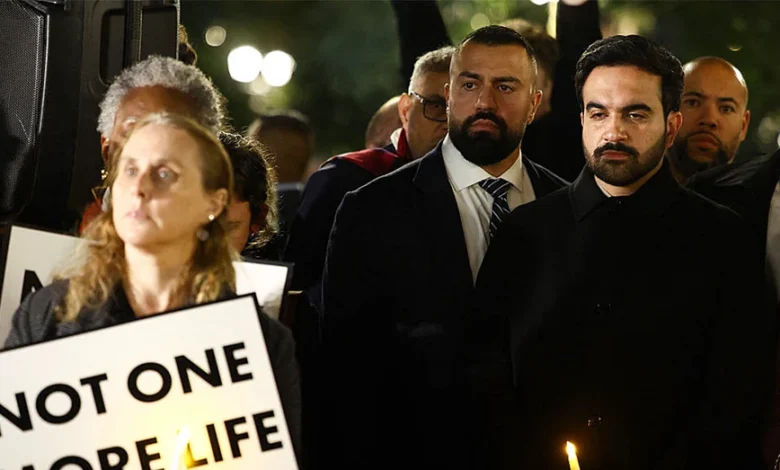
New York City Mayor Zohran Mamdani found himself at the center of intense political fury on Wednesday when a crowd of more than 100 anti-Israel demonstrators targeted him outside a memorial event. The protesters marched from City Hall to Union Square, where the "Israelis for Peace" coalition was hosting a solemn candlelight vigil to mark the solemn anniversary of the October 7, 2023, Hamas terrorist attacks. Despite the mayor’s own long-standing record of criticizing the Israeli government’s military campaign in Gaza, the demonstrators accused him of being a "traitor," orchestrating a "genocide," and attempting to weaponize his identity.
The demonstration underscored the deep polarization surrounding the Israeli-Palestinian conflict within municipal politics in the United States, particularly in a diverse and politically active metropolis like New York City. The confrontation highlighted how local leaders are increasingly caught in the crossfire of international disputes, facing simultaneous pressure from opposing factions over statements, policy decisions, and public appearances.
Chronology and Confrontation at Union Square
The tensions began to escalate late Wednesday afternoon as a coalition of anti-war and pro-Palestinian groups organized a march through Manhattan. The destination of the march coincided with the location of the Israelis for Peace vigil, an evening dedicated to mourning the lives lost during the initial Hamas assault as well as the subsequent bloodshed that has engulfed the region in the months and years following the attack.
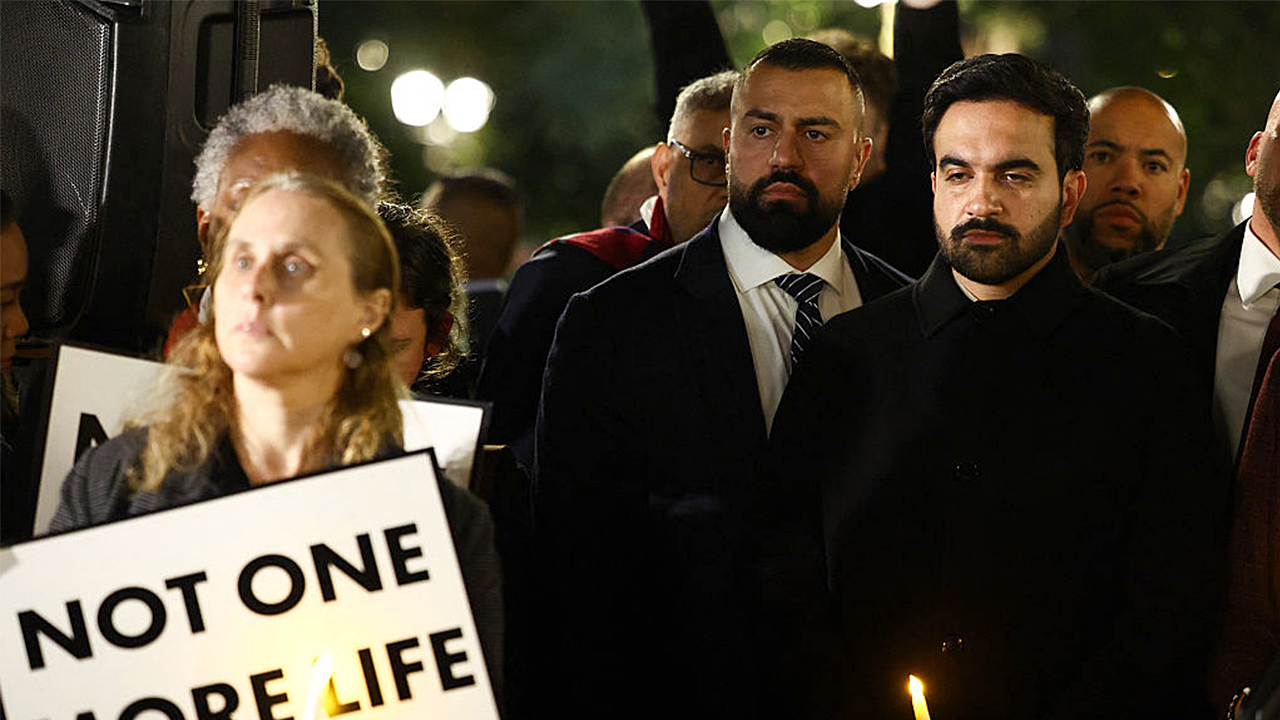
As the vigil commenced behind a perimeter of barricades, the crowd of more than 100 protesters arrived, bringing with them drums, megaphones, and chants designed to drown out the speakers inside the designated area. Mayor Mamdani, who attended the vigil and held a candle in solidarity with those mourning, became the primary focal point of the protesters’ anger.
Dozens of demonstrators surrounded the restricted zone, directing a barrage of hostile rhetoric at the mayor. Chants echoed across Union Square, including, "Zohran, what do you say? How many kids did you kill today?" and "700,000 dead. Mamdani, your hands are red!" Other slogans targeted his personal and political identity, with the crowd shouting, "Traitor, traitor, come on out! You sold all your people out!" and "Zohran, you can’t hide. We charge you with genocide!"
The rhetoric quickly expanded into criticisms of identity politics. Demonstrators shouted statements such as, "We don’t care about where you’re from. You cannot talk about being Muslim anymore. You cannot weaponize being brown anymore. Identity politics can only get you so far."
Adding a personal dimension to the protest, one individual in the crowd stepped forward to claim they were a former intern for Mamdani, publicly declaring that the mayor "was never working for the people."
Broader Demands and Policy Grievances
Beyond the personal attacks leveled against Mayor Mamdani, the demonstrators utilized the platform to voice a series of specific policy demands regarding municipal institutions and real estate operations within New York City.
A central grievance raised by the crowd involved local real estate events that have marketed properties located in Israeli settlements within the West Bank. Protesters characterized these properties as being built on "stolen" Palestinian land and demanded that the mayor take executive or legislative action to halt such commercial activities within city limits. "Mayor Mamdani, take a stand. Stop the sale of stolen land," the group chanted repeatedly throughout the evening.
In addition to real estate concerns, the protesters turned their attention to the higher education sector, specifically demanding the abolition of the City University of New York’s (CUNY) Board of Trustees. The board members are primarily appointed by the mayor and the governor. Protesters have long accused the board of failing to address student demands for institutional divestment from companies with ties to Israel, while also criticizing the administration’s disciplinary measures against student activists involved in anti-Israel demonstrations on CUNY campuses.
Mamdani’s Stance and the Anatomy of the Controversy
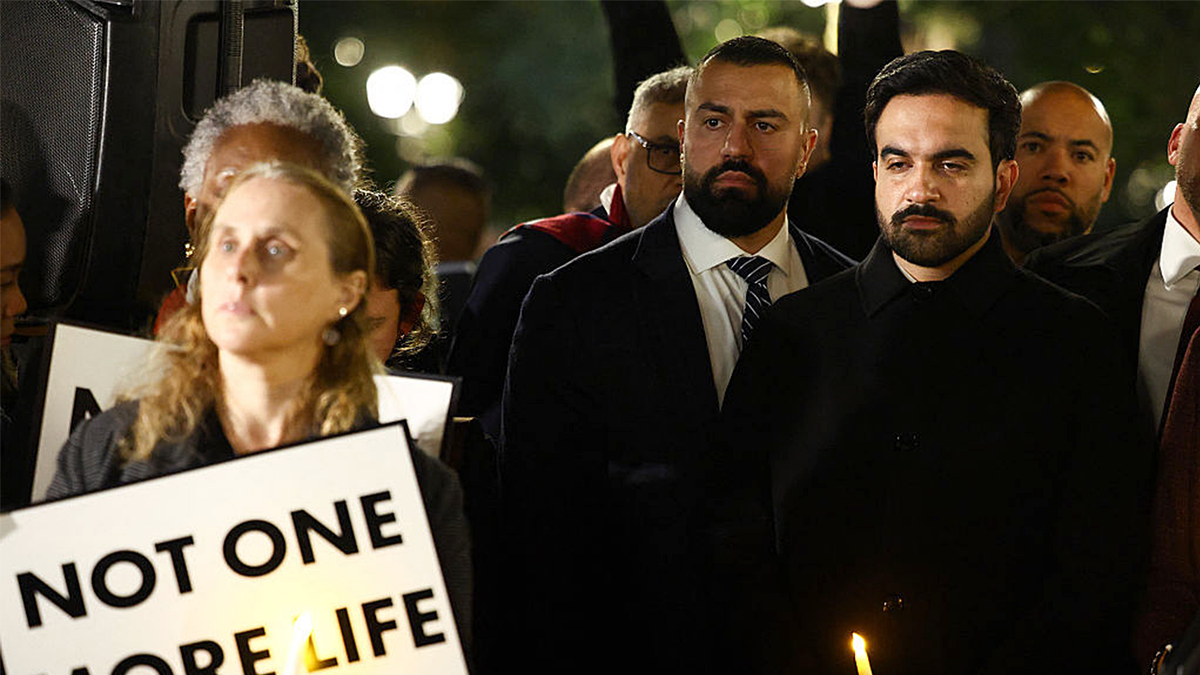
The hostility from anti-Israel demonstrators highlights a complex political balancing act for Mayor Mamdani, who has cultivated a reputation as a progressive critic of Israeli foreign policy. Earlier in the day, Mamdani issued a comprehensive public statement regarding the anniversary of the October 7 attacks, attempting to balance condemnation of Hamas with severe criticism of Israel’s military response.
In his statement, Mamdani described the initial Hamas assault as a "horrific war crime," noting that the suffering of families impacted by the violence must be acknowledged. However, the statement quickly pivoted to a scathing condemnation of the Israeli military’s subsequent operations in Gaza. Mamdani asserted that the violence "did not begin nor end that day," adding that it "continued through the Israeli government’s devastating, ongoing genocide in Gaza in which it has killed more than 74,000 Palestinians — including more than 21,000 children."
The Israeli government has consistently and adamantly rejected allegations of genocide, maintaining that its military operations are directed exclusively at dismantling the infrastructure of Hamas and other designated terrorist organizations. Israeli officials have repeatedly stated that the Israel Defense Forces (IDF) take extensive precautions to mitigate civilian casualties, attributing high death tolls to Hamas’s strategy of embedding military assets within dense urban populations and civilian infrastructure.
Political Fallout and Bipartisan Backlash
Mamdani’s statement, while intended to address multiple facets of the protracted conflict, immediately triggered a fierce political backlash from both sides of the aisle, illustrating the deep sensitivities surrounding the framing of the October 7 anniversary.
Critics from the Jewish community and mainstream political figures condemned the mayor’s phrasing and the timing of his remarks. Among the most prominent critics was U.S. Representative Dan Goldman (D-N.Y.), who called the mayor’s statement "egregious and insulting" in an interview with political media outlets.
"There are 364 days of the year to focus on that. This is a day that should just be focused on what was by all agreement a horrific terror attack," Rep. Goldman stated. "What the mayor’s statement did today was to blame Israelis for the attack that they suffered three years ago. Regardless of what you actually think of the conflict and what’s happened either since or before, there’s no excuse for victim blaming."

The bipartisan condemnation reflects the acute national and local tensions that persist around public discourse regarding the Middle East. For municipal leaders, navigating these competing narratives has become increasingly perilous. While progressive constituents and advocacy groups demand stronger stances against Israeli military actions and domestic economic ties, moderate politicians and Jewish organizations argue that minimizing or contextualizing the events of October 7 on its anniversary crosses a line into unacceptable rhetoric.
Implications for Local Governance and Civil Discourse
The incident at Union Square demonstrates the challenges local governments face as geopolitical conflicts increasingly manifest on American streets. City leaders, law enforcement agencies, and public institutions are forced to manage public safety while balancing the constitutional rights of protesters with the security of public figures and attendees at sensitive cultural and political gatherings.
As the war in the Middle East continues to generate profound emotional and political resonance worldwide, New York City remains a primary stage for demonstrations, counter-protests, and intense ideological battles. The targeting of Mayor Mamdani—a progressive leader sympathetic to Palestinian causes—by hardline anti-Israel protesters illustrates the volatile nature of these movements, where ideological alignment does not necessarily shield public officials from aggressive dissent.
Moving forward, municipal authorities will likely face mounting pressure to address security protocols around memorials, vigils, and politically sensitive real estate or academic forums. The balancing act between protecting free speech and maintaining public order will remain a central test for the administration as the reverberations of the ongoing conflict continue to shape the social and political fabric of New York City.