Top Democratic Operative Argues GOP Missteps and Weak Candidate Choices Open Path to Senate Majority


As the final hours tick down before Tuesday’s high-stakes midterm elections, the battle for control of the United States Senate has intensified dramatically. With Republicans currently defending a razor-thin 53-47 majority in the upper chamber and facing broad projections of losing their narrow hold on the House of Representatives, the pathway to total legislative control remains fiercely contested. According to veteran Democratic strategist Dan Turrentine, a combination of tactical campaign execution by Democrats and significant missteps by the GOP has created a viable, albeit narrow, pathway for Democrats to seize the Senate majority.
In an exclusive interview with digital media outlets, Turrentine—who previously served as chief of staff to Colorado Governor Jared Polis during his tenure in the United States House of Representatives—outlined the shifting landscape of several critical Senate contests. With multiple races trending toward Democratic candidates in the closing stretch, political analysts and campaign operatives alike are bracing for a turbulent election night defined by razor-thin margins and unpredictable voter turnout models.
The Landscape of Competitive Senate Races
The current Senate map presents a challenging defense for Republicans, who must navigate competitive races across traditional battleground states as well as historically deep-red territories. Turrentine highlighted several key contests where Democratic momentum has surprised political handicappers, most notably in North Carolina.
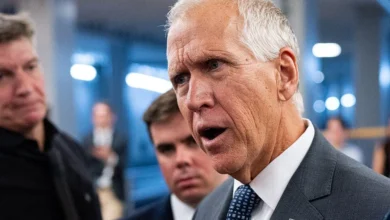
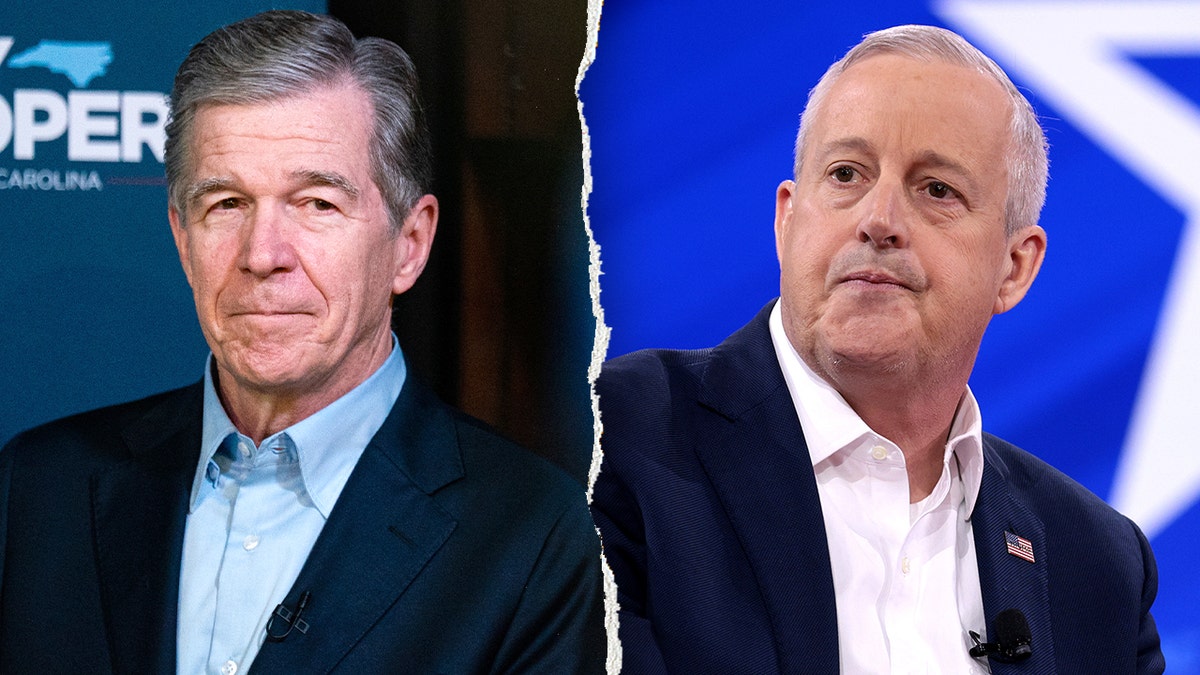
In North Carolina, the retirement of incumbent Republican Senator Thom Tillis has opened an unexpected opportunity for Democrats. Recent public opinion polls indicate that former Democratic Governor Roy Cooper holds a commanding lead over his Republican opponent, former Republican National Committee Chairman Michael Whatley. A flip in North Carolina would represent a monumental shift in the electoral map, neutralizing potential Republican gains elsewhere.

Beyond North Carolina, a series of traditionally safe Republican strongholds have experienced tightening margins. States such as Texas, Kansas, Missouri, and Mississippi—territories typically considered reliably red—have seen unexpected competitiveness. Turrentine pointed directly to candidate quality and regional campaign strategies as primary catalysts for these shifts. He specifically noted high-profile races featuring figures such as Ken Paxton in Texas, Cindy Hyde-Smith in Mississippi, Roger Marshall in Kansas, and Darlene Graham Nordone in South Carolina, who is running for the seat previously held by her late brother, Senator Lindsey Graham.
"If Republicans lose the Senate, it’s likely one of those four loses," Turrentine stated, emphasizing that while broader national dynamics and presidential approval ratings play a role, local candidate vulnerabilities often dictate the outcome of down-ballot races. "While the president’s standing is part of the problem, that last mile comes down to weak candidate quality."
Polling Challenges and the Spectre of Late-Breaking Dynamics
Despite encouraging polling figures for Democrats in various jurisdictions, veteran strategists remain acutely aware of the historical discrepancies between survey data and actual electoral outcomes. Recent election cycles—notably 2016, 2022, and 2024—have demonstrated the persistent difficulty pollsters face when attempting to capture late-breaking voter sentiment and low-propensity electorates.
"Campaigns are terrified about polling," Turrentine remarked, pointing to the structural hurdles modern pollsters encounter. Reaching potential voters has grown increasingly difficult as landline usage declines and voters routinely ignore calls from unrecognized numbers. This communication barrier has fueled anxiety among campaign managers regarding the accuracy of final pre-election projections.
Furthermore, strategists are wrestling with unprecedented voting behaviors, including high volumes of early voting. Questions remain as to whether surging early turnout among Democrats in states like Texas reflects a genuine expansion of the electorate or merely the early accumulation of votes from high-propensity voters who would have cast ballots on Election Day regardless. Conversely, the behavior of frustrated or alienated voters remains an open question, leaving campaigns uncertain about whether a potential "silent majority" might alter the final outcome.
The Alaska Factor and Late Campaign Developments
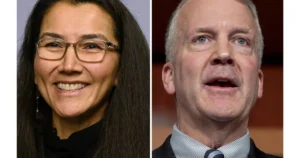
The volatility of the current electoral cycle was further underscored by recent reporting surrounding the Senate race in Alaska. A bombshell investigative report published by The New York Times alleged that the campaign of Democratic Senate candidate Mary Peltola and aligned Democratic operatives covertly assisted in recruiting a candidate named Daniel J. Sullivan to run against incumbent Republican Senator Daniel S. Sullivan. The alleged strategy aimed to siphon or confuse votes intended for the incumbent Republican.
Peltola has strenuously denied any direct involvement or coordination with the competing campaign. Nevertheless, the controversy introduced a fresh wave of uncertainty into a race where Peltola had maintained consistent leads in public polling. Turrentine noted that such late-breaking developments can quickly transform safe leads into toss-up environments, particularly in states where outcomes frequently depend on the decisions of disaffected independent and moderate Republican voters.
"Peltola has led almost every single poll until yesterday," Turrentine observed. "Like so many of these states, Democrats win on disgruntled Republicans. It wouldn’t take much for those voters to say they can’t stomach the Democrat."
Should Alaska slip away from Democratic calculations, the party’s path to a Senate majority narrows significantly. Under such a scenario, Democrats would likely need to sweep key contests in Ohio, Texas, and secure victories in at least one of several remaining toss-up states, including Michigan, Maine, Kansas, or Mississippi.
The Maine Battleground and Leadership Dynamics

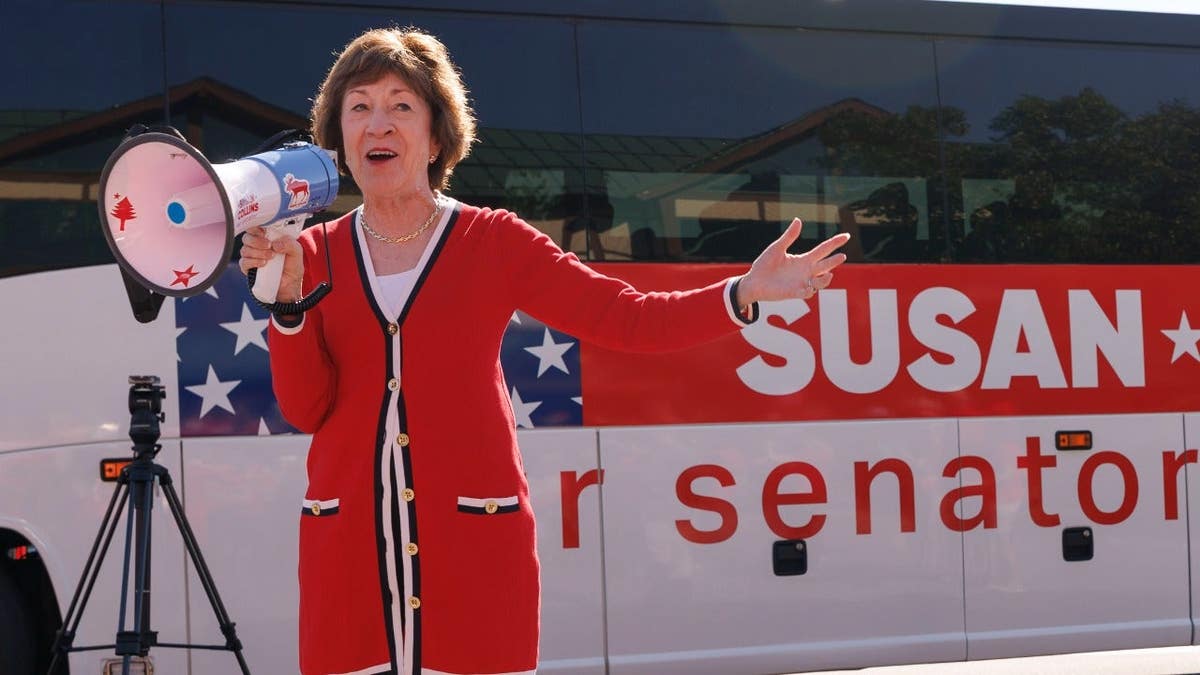
Among the enduring fixtures of Senate electoral politics is the race in Maine, where longtime Republican incumbent Susan Collins faces a formidable challenge from Troy Jackson. Historically, Democratic efforts to unseat Collins have fallen short despite sustained investments of time and resources. Recent polling, however, suggests the race is within the margin of error, with surveys showing a tight contest.
"In Maine, we’ve spent entire careers thinking we’re going to defeat Susan Collins," Turrentine noted. "It feels slightly different this time, but it also doesn’t; she’s within a point or two. No Democrat wants the majority coming down to Maine or Alaska."
Broader Implications for Congressional Leadership
If Democrats successfully navigate the complex map and capture a Senate majority, the party will immediately face internal governance challenges. Analysts note an expanding ideological tension between the moderate wing of the party—vital for winning swing and red-state seats—and an increasingly vocal progressive and socialist base demanding greater policy concessions.
Turrentine highlighted the delicate coalition required to maintain party unity, describing the dual pressure points confronting congressional leadership. "This tension between who will be what I’ll call the majority makers and the base… both feel like, ‘You need me,’ right? A moderate can’t win if the base doesn’t turn out."
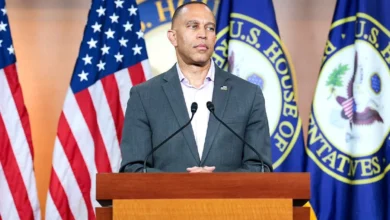
Uncertainty also extends to the House of Representatives, where Minority Leader Hakeem Jeffries is positioned to vie for the speakership if Democrats reclaim the lower chamber. Questions persist regarding the ideological direction Jeffries would pursue, contrasting with the well-established leadership style of former Speaker Nancy Pelosi, who maintained strong ties across all factions of the caucus.
"Nobody knows where Hakeem Jeffries comes down. And no one knows who Hakeem Jeffries is," Turrentine said, pointing out that Jeffries continues to field inquiries from both moderate and progressive members regarding his core legislative priorities. Meanwhile, Senate Minority Leader Chuck Schumer faces his own dynamic challenges, including potential primary pressures from his party’s left flank.
As voters head to the polls on Tuesday, the culmination of months of aggressive campaigning, shifting demographics, and candidate performance evaluations will determine the balance of power in Washington, setting the legislative agenda for the remainder of the decade.