Michigan Senate Candidates Clash Over 9/11 Legacy and Political Rhetoric Twenty-Five Years After the Attacks


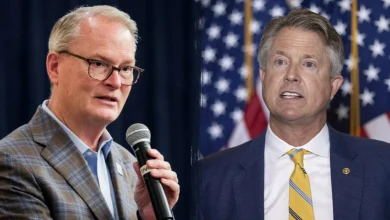
Lansing, Mich. — As the nation marked the 25th anniversary of the September 11, 2001, terrorist attacks this week, the Michigan Senate race between Democratic nominee Abdul El-Sayed and Republican challenger Mike Rogers has intensified into a bitter debate over national identity, historical accountability, and the boundaries of political association. The contest, which remains one of the most closely watched in the country, has shifted from traditional policy debates over the economy and healthcare toward a volatile confrontation centered on the memory of the attacks and the controversial rhetoric of social media figures associated with the candidates.
The friction reached a fever pitch during a town hall meeting in Lansing, where El-Sayed, addressing a demographic of students largely born after the towers fell, observed a moment of silence to commemorate the tragedy. However, the solemnity of the occasion was quickly overshadowed by the ongoing efforts of the Rogers campaign to tether El-Sayed to the past comments of Hasan Piker, a prominent left-wing political streamer. In 2019, Piker ignited national outrage when he remarked that “America deserved 9/11,” a statement that has become a central weapon in the GOP’s electoral arsenal in Michigan.
A Chronology of the Controversy
The tension between the two candidates is not merely a product of the 2026 election cycle but stems from a layered history of voting records and public statements.
- September 11, 2001: The original terrorist attacks occur, fundamentally altering the trajectory of American foreign policy and domestic security.
- 2001–2015: Mike Rogers serves in the U.S. House of Representatives, establishing a record on national security and veterans’ affairs.
- 2010: Congress passes the James Zadroga 9/11 Health and Compensation Act. Rogers casts a vote against the legislation, arguing that it lacked sufficient fiscal oversight and should have been funded through annual appropriations rather than a permanent mandate.
- 2019: Hasan Piker makes his controversial remarks regarding the 9/11 attacks, which he later apologized for, characterizing the language as “inappropriate” and poorly chosen.
- August 2026: As the general election approaches, Republicans intensify efforts to link El-Sayed to Piker, citing their shared appearances during the Democratic primary.
- September 2026: The 25th anniversary serves as a flashpoint, with both campaigns utilizing the occasion to question the other’s fitness for office.
The Legislative Record and Healthcare Debate
The debate over the James Zadroga Act has emerged as a primary point of counter-offense for the El-Sayed campaign. By highlighting Rogers’ 2010 opposition to the bill, El-Sayed is attempting to reframe the narrative from his own associations to the Republican nominee’s legislative history.
“Rather than vote to make sure that the brave first responders who ran into the rubble that day to save lives, rather to make sure that they had healthcare, he voted not once but twice against giving them healthcare,” El-Sayed stated during his Friday town hall.
Rogers has defended his record by pointing to his support for alternative funding models. In a post on the social media platform X, the former congressman emphasized his advocacy for an annual $150 million appropriation to support the needs of survivors and victims’ families. His campaign maintains that his opposition to the Zadroga Act was purely a fiscal stance regarding the long-term impact on the federal budget, and he has explicitly rejected the implication that his vote signified a lack of concern for 9/11 victims.
The Weaponization of Online Rhetoric
The involvement of Hasan Piker represents a broader trend in modern political campaigns: the guilt-by-association strategy involving digital influencers. For the Republican Party, tying El-Sayed to Piker is a method to appeal to suburban and moderate voters who may find the streamer’s commentary on American foreign policy deeply offensive.
During the Republican midterm convention in Dallas, Vice President JD Vance utilized the controversy to paint a broader picture of the Democratic Party’s ideology. "The Democrats are the party of hatred. They’re the party that despises America and the people who built it. They’re the party that can find sympathy for the terrorists who perpetrated 9/11," Vance remarked.
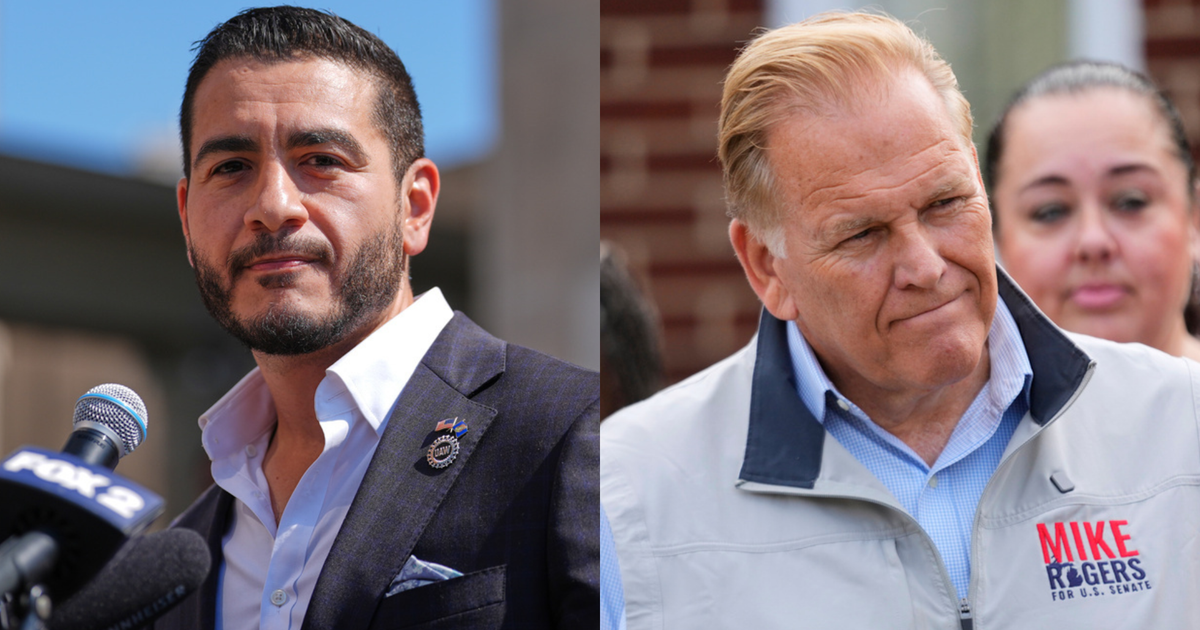
This strategy is bolstered by significant financial backing. The Senate Leadership Fund has earmarked over $45 million in advertising reservations for Michigan, a portion of which is dedicated to highlighting the Piker connection. For his part, El-Sayed has attempted to pivot away from the topic, repeatedly labeling the commentary as “dumb” and urging the press to focus on the substantive issues facing Michiganders, such as the economy and the healthcare system.
Sociopolitical Implications and Voter Sentiment
The intensity of this debate underscores the deep polarization surrounding the legacy of the post-9/11 era. Supporters of El-Sayed, as well as several Muslim advocacy organizations, have argued that the Republican focus on his connections—and by extension, his own past comments on the U.S. response to 9/11—is grounded in Islamophobia.
Tyler Mitchell, a Michigan voter and an Afghanistan War veteran, highlighted the potential backfire effect of this rhetoric. "They look at him, because he’s a Muslim, so they target that with the rhetoric about being dangerous," Mitchell noted. "It’s disrespectful to people’s intellect."
Conversely, the Rogers campaign is leaning heavily on the endorsements and voices of veterans and first responders to validate their critique. Maj. Jon Turnbull, an Afghanistan veteran, stated in a campaign video, "For somebody to support somebody that says that we deserved 9/11 shows their true allegiance, their true loyalties."
Analytical Outlook: The Path to the Senate
The Michigan Senate race remains a critical battleground for control of the upper chamber. With the election just weeks away, both candidates are operating under the assumption that the voter base is split between those focused on historical grievances and national security, and those focused on the immediate economic and social challenges of the present.
The "9/11 issue" serves as a proxy for a much larger argument about how America views its role in the world. El-Sayed’s past assertion that the U.S. response to 9/11 “scarred millions of other people” suggests a platform that seeks to re-evaluate two decades of foreign interventionism. Rogers’ platform, conversely, leans into the traditional post-9/11 security-first consensus, positioning himself as the defender of American exceptionalism and the protector of the nation’s “soul.”
As the campaign enters its final phase, the impact of these exchanges remains to be seen. While GOP strategists believe the focus on Piker and the 9/11 narrative will consolidate their base and sway wavering independents, Democratic strategists argue that the relentless focus on "distractions" by the Rogers campaign is an admission that they lack a compelling solution to the kitchen-table issues—healthcare, inflation, and infrastructure—that actually decide elections in the Great Lakes State.
Ultimately, the controversy serves as a stark reminder that even twenty-five years later, the shadow of September 11 continues to define the boundaries of American political discourse, influencing not only how candidates are judged but how the next generation of voters interprets the country’s modern history.