From Low-A to the Postseason Spotlight: The Unprecedented Rise and Current Recovery of Ryan Weathers

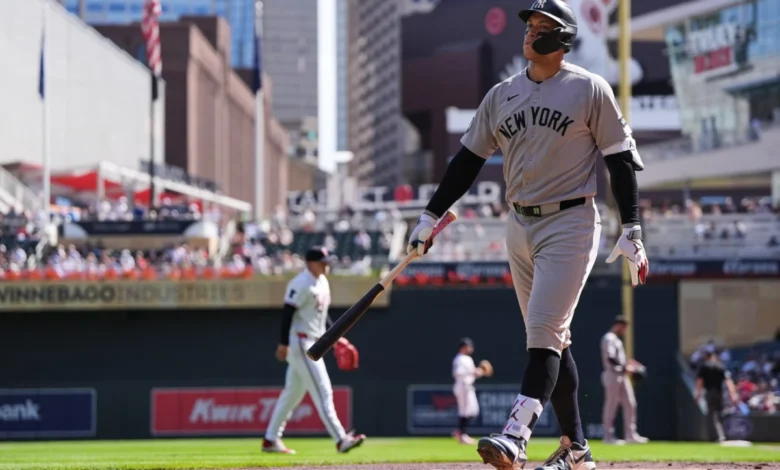
The grueling and meticulous nature of Major League Baseball rehabilitation processes rarely features dramatic shortcuts, yet the New York Yankees find themselves evaluating a potential scenario that defies conventional baseball wisdom. As left-handed pitcher Ryan Weathers works tirelessly to recover from a forearm injury that has sidelined him for over a month, the possibility of his inclusion on the Yankees roster for the American League Wild Card Series remains a topic of intense discussion within the organization’s front office and coaching staff. Even if Weathers successfully navigates this high-stakes medical hurdle and returns to active competition without the benefit of a traditional minor league rehab assignment or a late-season tune-up, the achievement would still pale in comparison to the most surreal chapter of his young professional career.
The baseline of organizational risk currently being debated in the Bronx—such as the hypothetical developmental trajectory of hard-throwing prospect Carlos Lagrange—fades into the background when measured against the unprecedented leap Weathers executed during the pandemic-altered 2020 major league season. For Weathers, making a sudden, high-leverage postseason return after a prolonged absence would merely echo a past that already defies standard baseball logic.
The 2020 Postseason Leap: From Low-A Oblivion to October Classic
To fully grasp the magnitude of the scenario facing Weathers and the Yankees today, one must examine the extraordinary circumstances of October 2020. Two years after the San Diego Padres selected the left-hander out of Loretto High School in Tennessee with the seventh overall pick in the 2018 MLB Draft, Weathers found himself thrust onto the game’s grandest stage under surreal conditions.
At the conclusion of the minor league shutdown caused by the global COVID-19 pandemic, Major League Baseball operated an alternate training site system to keep prospects sharp. Weathers spent his developmental months facing upper-level hitters at the Padres’ alternate site in San Diego, having never thrown a single pitch above the Low-A level in official minor league competition. His competitive resume at the professional level consisted entirely of 14 starts for the Fort Wayne TinCaps in the Midwest League back in 2019, where he posted a 3.84 ERA across 96 innings.
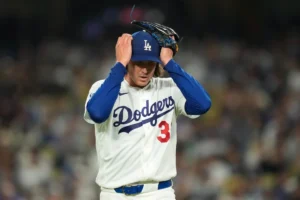
Despite this microscopic sample size of professional experience, the Padres included the then-20-year-old on their postseason roster for the National League Division Series against the powerhouse Los Angeles Dodgers. On October 6, 2020, manager Jayce Tingler called upon the rookie to make his major league debut in relief during Game 1 at Globe Life Field in Arlington, Texas.
The assignment was as daunting as it gets for a debutant: enter the game in the bottom of the sixth inning with the Padres trailing, facing the heart of a fearsome Dodgers batting order that included perennial MVP candidates. Weathers rose to the occasion, retiring Cody Bellinger on a flyout, striking out Chris Taylor, and inducing a groundout from Mookie Betts to pitch a scoreless frame. He ultimately tossed 1 1/3 innings, allowing one hit and striking out one batter in his baptism by fire.
Reflecting on the surreal sequence of events earlier this week, Weathers offered a candid assessment of his introduction to the major leagues.
"I mean, I blacked out when I went out there," Weathers said with a chuckle. "I wasn’t expecting, that year, to be making my debut in the playoffs. But it was a lot of fun."
The Current Recovery Timeline and Yankees Roster Dilemma
Fast forward to the twilight of the 2026 regular season, and Weathers finds himself navigating an entirely different kind of pressure. Acquired by the New York Yankees to bolster their pitching depth, the left-hander suffered a forearm injury that halted his momentum more than a month ago. The exact nature of forearm strains in pitchers demands extreme caution, as the anatomical structure is closely linked to the ulnar collateral ligament, often serving as a precursor to more severe elbow complications.
Throughout September, the Yankees medical and athletic training staff have monitored Weathers’ progress closely. On September 15, the left-hander cleared a crucial milestone in his recovery by completing a targeted throwing program and stepping up his rehab intensity. The overarching goal established by the player and the team’s decision-makers is to evaluate whether Weathers can build up enough arm strength and pitch efficiency to contribute during the upcoming AL Wild Card Series.
The statistical and logistical implications of this potential move present a complex puzzle for Yankees manager Aaron Boone and general manager Brian Cashman. Integrating a pitcher who has not faced live major league hitters in over 30 days directly into a high-leverage postseason series carries inherent risks. Pitch command, velocity recovery, and stamina are notoriously difficult to simulate in controlled bullpen sessions or simulated games. However, the scarcity of reliable left-handed relief options—or multi-inning swingmen—in late-season bullpen configurations often forces front offices to weigh unorthodox solutions.
Comparisons within the organization have inevitably arisen regarding how the Yankees handle young, high-ceiling arms. Discussions surrounding pitching prospects like Carlos Lagrange—whose explosive raw stuff has turned heads in the lower minors—highlight the organization’s willingness to push development envelopes. Yet, injecting a recovering arm directly into the crucible of October baseball represents a significantly higher stakes gamble than managing a prospect’s innings during the dog days of summer.
Broader Implications and Strategic Analysis
The debate surrounding Weathers’ potential availability underscores a broader trend in modern baseball management: the diminishing reliance on traditional developmental timelines in the face of acute organizational need. Historically, front offices adhered strictly to the philosophy that a player required a progression through Double-A and Triple-A, followed by a period of major league adjustment, before being trusted in playoff competition.
The 2020 pandemic season shattered many of those established norms out of sheer necessity, proving that raw stuff and mental composure can occasionally outweigh accrued professional experience. That singular historical anomaly prepared Weathers for scenarios that would overwhelm most athletes. Having made his big league debut against Mookie Betts and the Dodgers with only Low-Inning professional experience under his belt, the psychological hurdle of returning from a month-long injury directly into a playoff series appears far more manageable by comparison.
From a strategic standpoint, a healthy Weathers provides valuable tactical flexibility for the Yankees. Modern postseason pitching strategy places a massive premium on neutralizing dangerous left-handed bats and suppressing opposing sluggers through specialized bullpen deployment. If Weathers can demonstrate during his final rehabilitation sessions that his forearm has fully healed and his velocity sits comfortably within expected parameters, his ability to handle pressure-packed environments becomes an invaluable asset.
As the final week of the regular season unfolds, all eyes in the Yankees organization will remain fixed on the left-hander’s bullpen sessions and recovery metrics. Whether the medical staff ultimately clears him for the Wild Card roster or determines that the risk outweighs the reward, Weathers’ career path remains a testament to the unpredictable, high-velocity nature of professional baseball, where the road to October is rarely drawn in a straight line.
Related posts: