House Democrats are investigating an allegation of sexual harassment against Brian Poindexter

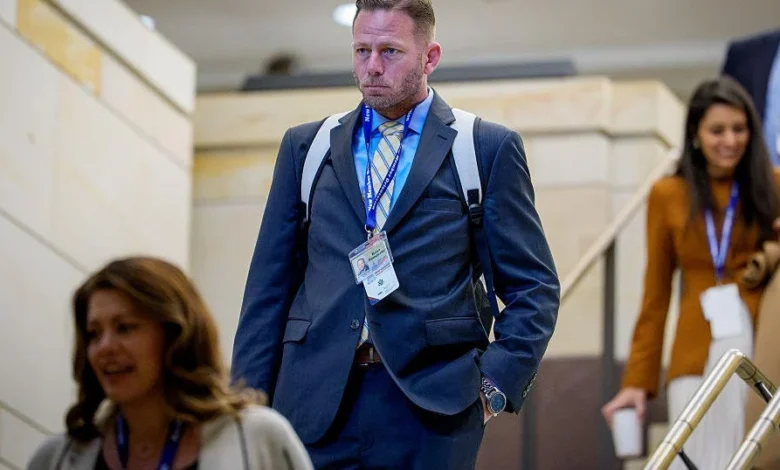
Washington — House Democrats have launched an urgent internal investigation into allegations of sexual harassment leveled against Brian Poindexter, the newly elected representative for Ohio’s 7th Congressional District. Poindexter, a Democrat who secured a high-profile victory last week by defeating embattled incumbent Republican Representative Max Miller, now finds his transition to Capitol Hill overshadowed by formal scrutiny from his own party’s campaign arm.
The Democratic Congressional Campaign Committee (DCCC) confirmed on Friday that it has retained an independent third-party firm to conduct a comprehensive review of the allegations. The mandate for this investigation is to scrutinize any potential instances of inappropriate behavior, conduct rigorous interviews with involved parties, and establish a factual record regarding the incident. This development places the DCCC in a delicate position, as it attempts to maintain institutional integrity while navigating the political consequences of an investigation involving one of its newly elected members.
Chronology of the Allegations
The timeline of the disclosure suggests a rapid escalation in the final days of the 2026 election cycle. According to internal reports, two prominent political action committees—the Blue Dog PAC and the Congressional Progressive Caucus PAC—became aware of an allegation of sexual harassment involving Poindexter shortly before voters headed to the polls.
The PACs issued a joint statement on Friday, detailing their response to the information. They noted that upon receiving the report, they took immediate steps to prioritize the welfare of the individual involved. "We informed the DCCC and connected the individual with legal advocacy and support services so she could determine how she wanted to proceed," the statement read. The PACs further noted that the individual had explicitly requested that the details of the complaint remain confidential at that time to protect her identity and provide her with space to evaluate her legal and personal options.
Following this development, both the Blue Dog PAC and the Congressional Progressive Caucus PAC took the procedural step of rescinding their endorsements of Poindexter, pending the conclusion of the independent investigation. This move signals a significant rift between the candidate and the organizational apparatus that had previously supported his candidacy.
Defense and Campaign Response
A spokesperson for the Poindexter campaign has acknowledged the existence of the complaint while characterizing the underlying incident in starkly different terms. According to the campaign, the event in question was an "innocuous compliment" directed at a campaign volunteer.
"He heard later that it made her feel uncomfortable and he felt awful," the campaign spokesperson stated. "When Brian learned about this, we immediately began to work to get to the bottom of it with an outside HR firm. Neither Brian nor the campaign ever wants anyone to feel uncomfortable."
This defense attempts to frame the incident as a misunderstanding or a lapse in social awareness rather than a pattern of predatory behavior. However, the decision to engage an outside human resources firm early on suggests that the campaign recognized the potential for the incident to become a significant liability. The DCCC’s decision to launch a separate, independent investigation indicates that the campaign’s internal assessment may not be sufficient to satisfy the party’s oversight requirements.
Context: Congressional Misconduct and Institutional Reform
The investigation into Poindexter occurs against a broader, multi-year backdrop of intense scrutiny regarding sexual misconduct on Capitol Hill. Over the past decade, the legislative branch has faced mounting pressure to overhaul its internal procedures for handling such claims.
The Congressional Accountability Act of 1995, which governs how Congress handles workplace complaints, has been subject to multiple reforms, most notably in 2018 following the #MeToo movement. These reforms aimed to simplify the reporting process, provide more robust support for victims, and increase transparency in settlement payments. Despite these changes, critics argue that the system remains opaque and heavily tilted in favor of protecting incumbent power dynamics.
By initiating an independent probe, the DCCC is attempting to demonstrate a "zero-tolerance" policy regarding misconduct. This strategy is designed to insulate the national party from accusations of enabling behavior that could alienate voters or undermine the party’s legislative agenda in the upcoming session.
Supporting Data and Legislative Implications
The political stakes for Ohio’s 7th District are high. The district has been a focal point of electoral competition, and the removal or resignation of a representative-elect would trigger a complex series of constitutional and procedural hurdles. If Poindexter were to face a formal disciplinary process or pressure to resign before being sworn in, it could potentially complicate the Democrats’ efforts to solidify their numbers in the House.
While the DCCC’s investigation is administrative in nature, it carries significant weight. If the independent firm finds evidence of credible sexual harassment, the House Ethics Committee could eventually become involved. Historically, the House has the constitutional authority to expel a member by a two-thirds vote, though such actions are rare and generally reserved for criminal convictions or extreme breaches of conduct.
Analysis: Political Fallout and Party Dynamics
The situation creates a precarious scenario for House Democratic leadership. On one hand, the party must uphold its stated values regarding workplace safety and respect for women. On the other, the party is faced with the reality of an election result that they fought hard to achieve.
Political analysts suggest that the DCCC’s quick public pivot—releasing a statement from Executive Director Julie Merz—is a proactive attempt to control the narrative. By acting decisively, the party leadership hopes to avoid a protracted scandal that could drag into the start of the 119th Congress.
"The DCCC has been made aware of the allegations and takes them seriously," Merz stated. This brief yet firm assertion serves to signal to donors, voters, and stakeholders that the party will not sweep the matter under the rug. However, the success of this strategy depends heavily on the findings of the independent firm. If the investigation concludes that the behavior was merely a misunderstanding, Poindexter may be able to move forward, albeit with diminished political capital. If the findings suggest a more serious pattern of behavior, the calls for his resignation will likely grow louder from both sides of the aisle.
The Role of PACs in Candidate Accountability
The involvement of the Blue Dog PAC and the Congressional Progressive Caucus PAC highlights the increasing influence of interest groups in policing their own endorsees. In the modern political environment, PACs are no longer merely funding vehicles; they act as gatekeepers for party discipline. By pulling their endorsements, these organizations have signaled that their support is conditional on ethical compliance, setting a precedent that other groups may follow.
This case also underscores the vulnerability of campaigns to last-minute disclosures. In the final days of an election, information—whether verified or not—can have an outsized impact on the public perception of a candidate. The fact that this information surfaced just before the election, but was not disclosed publicly until after the results were finalized, raises questions about the timing of the reporting process and the transparency of the information flow between campaigns and oversight committees.
Future Steps
As the investigation moves forward, the focus will shift to the methodology employed by the independent firm. The quality of the interviews, the protection of the anonymity of the accuser, and the impartiality of the final report will be subject to intense scrutiny.
For now, the House Democrats remain in a holding pattern. The party must balance the presumption of innocence for the representative-elect against the imperative to maintain a professional and safe environment for all staff and volunteers. The coming weeks will likely see further disclosures as the investigation proceeds, providing a clearer picture of whether Brian Poindexter’s tenure in the House will be defined by his electoral victory or by the allegations that now threaten to curtail his career before it truly begins.
As the political landscape in Washington braces for the next session, this case serves as a reminder of the fragility of institutional reputations and the enduring challenge of addressing misconduct in the high-pressure, high-stakes environment of American politics. Whether the outcome leads to exoneration or accountability, the process itself will likely serve as a benchmark for how the party handles similar controversies in the future.
Related posts: