GOP Mid-Decade Redistricting Strategy Backfires as Democrats Secure House Control in Historic Electoral Reversal

The 2026 midterm elections have concluded with a significant, if not ironic, shift in the landscape of the United States House of Representatives. Republican efforts to cement their legislative majority through aggressive mid-decade redistricting—a practice historically avoided due to legal volatility and political risk—have largely failed to yield the intended results. Instead, the Republican Party now faces the consequences of the "dummymander," a phenomenon where partisan map-redrawing efforts backfire, inadvertently bolstering the opposition’s electoral prospects or failing to neutralize incumbents. As the dust settles, CBS News estimates that Democrats have secured a decisive majority, projected to hold between 251 and 268 seats in the new Congress.
The Rise and Fall of Mid-Decade Redistricting
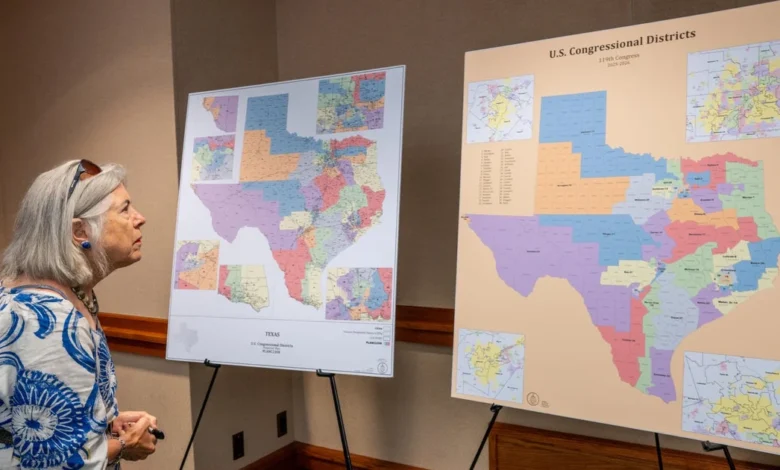
The strategy of altering congressional maps mid-decade gained momentum primarily under the influence of former President Donald Trump, who advocated for state-level legislative interventions to maximize GOP representation. Texas served as the primary testing ground for this approach, with state lawmakers under pressure to net up to five additional seats. However, this strategy required navigating a complex web of constitutional challenges and shifting voter demographics.
Historically, redistricting occurs once every ten years following the decennial census to account for population shifts. Mid-decade adjustments represent a departure from this norm, often requiring state legislatures to expend significant political capital and legal resources. The 2026 cycle saw a flurry of such attempts, from Texas and Ohio to Florida and North Carolina, all predicated on the assumption that tactical line-drawing could insulate the GOP from a shifting national mood.
A State-by-State Analysis of Failed Projections
The results across the country illustrate the limits of gerrymandering when faced with strong voter turnout and demographic volatility.
In Texas, the effort to capitalize on GOP gains in South Texas proved ineffective. Despite an ambitious plan to net five seats, the Republican delegation remained at 24 seats, identical to their pre-election standing, while Democrats picked up a seat to reach 14. This stagnation effectively neutered the GOP’s aggressive map-redrawing, confirming the state as a prime example of a dummymander.
Ohio’s experience followed a similar trajectory. A GOP-controlled commission attempted to target the districts of Democratic Representatives Marcy Kaptur and Greg Landsman. Despite the tactical design of these new boundaries, both incumbents secured victories, alongside other Democratic colleagues. With Republicans winning only seven districts—down from their previous ten—the state has become a major liability for the GOP’s national strategy.
North Carolina’s situation remains fluid but precarious for the Republican party. Despite possessing a veto-proof majority in the statehouse, the GOP’s attempt to excise Democratic Representative Don Davis has not materialized into a seat flip. As of Wednesday, four Democrats have secured their seats, and five others are trending toward Democratic victory. If these projections hold, the North Carolina map will stand as one of the most significant strategic miscalculations of the cycle.
Legal Challenges and Judicial Intervention
The 2026 redistricting cycle was heavily influenced by a series of judicial interventions, most notably a Supreme Court ruling in June regarding the Voting Rights Act. The Court determined that Section 2 of the Act could not be used as a justification for race-conscious map-drawing in Louisiana. While this initially emboldened Republican lawmakers to attempt to eliminate majority-Black districts, the electoral outcome did not follow the mapmakers’ intent.
In Alabama, where Republicans attempted to dismantle two majority-Black districts, the effort failed to dislodge incumbent Democrats, who successfully defended their seats. Similarly, in Tennessee, the attempt to redraw the 9th District in Nashville to favor a Republican challenger has resulted in a runoff, placing the state’s long-term delegation balance in jeopardy.
In Missouri, the story was one of judicial restraint. The Supreme Court blocked multiple attempts by the GOP-led legislature to implement a new map, forcing the state to utilize the 2022 districts. The result was a Democratic flip, shifting the state’s representation from 6-2 to 5-3.
Legislative Failures and Defensive Victories
Not all gerrymandering efforts reached the ballot box. In Indiana, pressure from the national GOP to eliminate the state’s two Democratic representatives was rejected by the Republican-led state Senate, which refused to advance the map. Consequently, the existing boundaries remained, and Democrats managed to flip a third seat, bringing the delegation to 6-3.
South Carolina faced a similar fate; an effort to unseat Democratic Representative Jim Clyburn and push the state to a 7-0 Republican split stalled in the state Senate. The failure of this measure meant that Clyburn retained his seat, and the state’s delegation remains competitive, with two races currently considered toss-ups.
Successful Counter-Strategies
While Republican efforts faltered, Democrats found success in states where they utilized the ballot initiative process to counter-redistrict. In California, Governor Gavin Newsom spearheaded a measure to gain five seats for the Democratic Party. The initiative was overwhelmingly approved by voters, and early results indicate that the strategy was successful, with Democrats maintaining a dominant 42-seat presence and trending toward further gains.
Similarly, in Utah, a judicial decision bypassed the legislature’s partisan map, implementing a configuration that created a Democratic-leaning district in Salt Lake City. The result was a 47-point victory for Democrat Ben McAdams, signaling that judicial intervention remains a potent tool for those seeking to challenge established legislative maps.
In Maryland, the passage of "Question 3" by a 20-point margin provides a glimpse into the future of the state’s representation. By removing constitutional requirements for compact and connected districts, Democrats have cleared the path to redraw the map in a way that may eliminate the state’s sole remaining GOP representative.
Broader Implications for American Politics
The outcome of the 2026 midterms raises fundamental questions about the sustainability of mid-decade redistricting. Political scientists note that the "dummymander" is not merely a statistical anomaly but a reflection of the increasing difficulty of predicting voter behavior in a polarized environment. When maps are drawn to satisfy narrow partisan margins, they often become brittle, collapsing when there is even a slight shift in the electoral tide.
"The 2026 cycle serves as a cautionary tale for state legislatures," noted a policy analyst familiar with the election results. "By attempting to lock in advantages through aggressive line-drawing, parties risk creating districts that are hyper-sensitive to national trends. When those trends shift against the party that drew the maps, the result is a systemic collapse of their representative strength."
Furthermore, the reliance on judicial intervention to settle map disputes suggests that the courts will remain the final arbiter of American electoral geography. As the House prepares for the next session, the focus will likely shift to how these results influence legislative priorities. With a clear Democratic majority, the party is expected to push for federal standards in redistricting to prevent future mid-decade manipulations.
For the Republican Party, the results present a period of deep introspection. The failure of the "Trump-led" redistricting push has not only resulted in a loss of seats but has also forced a conversation about the efficacy of top-down electoral engineering. As the GOP regroups for the 2028 cycle, the "dummymander" of 2026 will likely be cited as a primary reason for the party’s inability to maintain its grip on the House of Representatives.
The data confirms a clear trend: voter agency, when mobilized, continues to defy the best-laid plans of mapmakers. Whether in the legislative halls of Austin, Columbus, or Raleigh, the 2026 midterms have demonstrated that while lines on a map can influence outcomes, they cannot dictate the will of an electorate in flux.