The Complex Legacy and Downfall of Former House Speaker Dennis Hastert: An Accidental Leader Whose Dark Past Stunned Washington

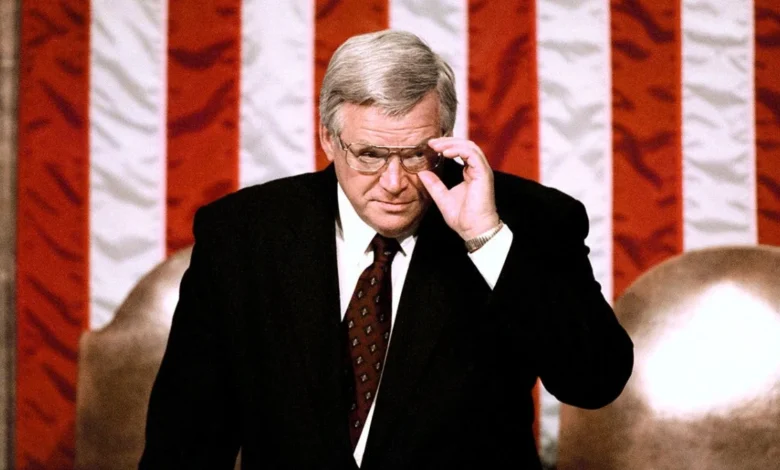
Former House Speaker Dennis Hastert, the longest-serving Republican Speaker in modern American history, occupied a unique and largely understated place in Washington politics for nearly a decade. Rising to power through an unexpected chain of political crises in the late 1990s, Hastert maintained a quiet, low-profile demeanor throughout his tenure from 1999 to 2007. However, years after his retirement from Capitol Hill, his legacy was fundamentally shattered by revelations that exposed him as a serial child molester, making him the highest-ranking U.S. official to ever serve time in federal prison.
The full scope of Hastert’s hidden life did not emerge until 2015, when federal banking regulators flagged suspicious cash withdrawals. Investigations subsequently revealed that the former Speaker had been paying hush money to conceal decades-old sexual misconduct involving underage male students from his time as a high school teacher and wrestling coach in Illinois. This startling disclosure retroactively reframed moments of political turbulence during his speakership, casting a long shadow over one of the most powerful offices in the American government.
The Accidental Rise to Power: December 1998
To understand Hastert’s improbable ascent to the speakership, one must look back to the chaotic political landscape of late 1998. The House of Representatives was locked in a bitter partisan struggle, culminating on December 19, 1998, when lawmakers convened on a Saturday before Christmas to approve articles of impeachment against President Bill Clinton over the Monica Lewinsky scandal. This marked only the second time in U.S. history that the House had impeached a sitting president.
Amid this national drama, the Republican majority was already grappling with internal leadership turmoil. Following losses in the 1998 midterm elections, then-Speaker Newt Gingrich faced severe internal pressure and stepped down. House Republicans selected Louisiana Representative Bob Livingston, then-chairman of the Appropriations Committee, to assume the speakership in January 1999.
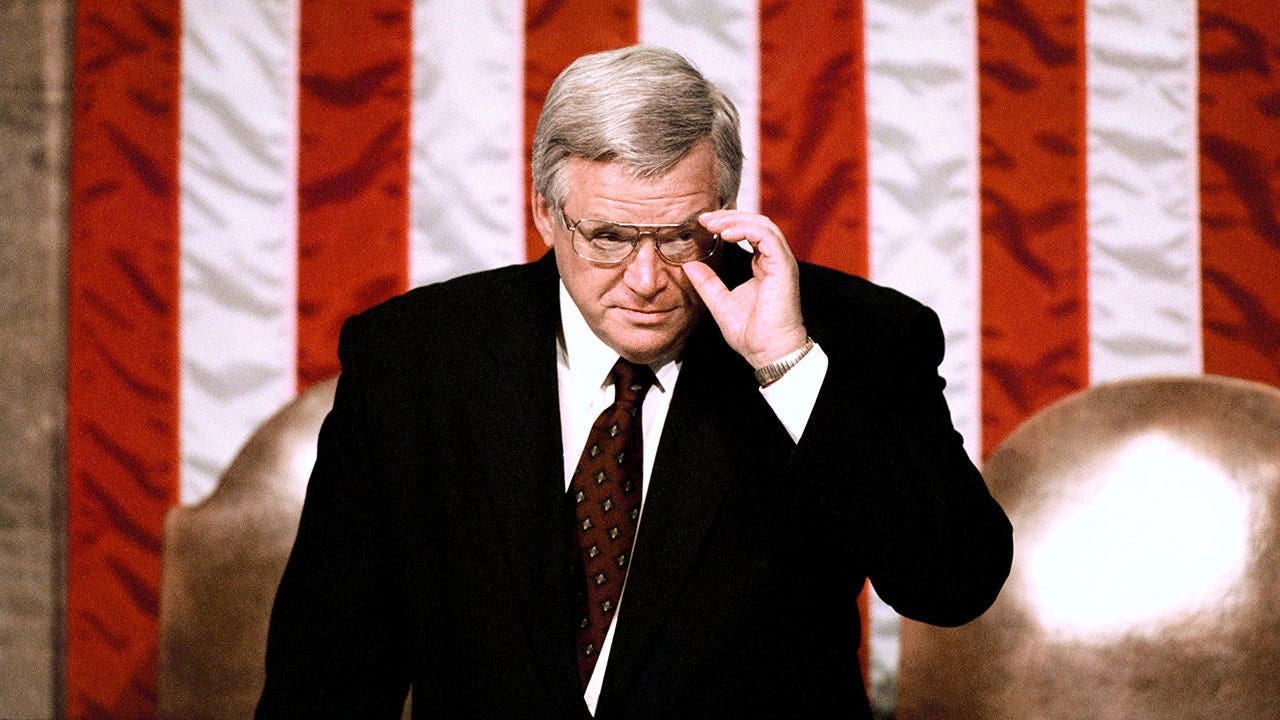
However, the day before the impeachment vote, revelations surfaced regarding Livingston’s own marital infidelity. On the morning of December 19, Livingston took to the House floor to deliver a stunning announcement, calling on President Clinton to resign while simultaneously declaring that he would not seek the speakership and would resign from Congress entirely.
The sudden departure of Livingston left the House Republican conference in disarray. Scrambling to find a replacement while simultaneously managing the presidential impeachment and concurrent military airstrikes in Iraq, party leadership turned to J. Dennis Hastert. At the time, Hastert was a relatively obscure backbencher and Chief Deputy Whip, a role focused primarily on counting floor votes. Largely unknown to the national press corps and subjected to minimal public vetting, Hastert was thrust into the role of Speaker-designate, taking up the gavel in January 1999.
A Quiet Speakership and the 2006 Midterm Meltdown
Hastert governed with a management style that contrasted sharply with the flamboyant media presence of his predecessor, Newt Gingrich. Reluctant to give interviews and rarely seen wandering the Capitol corridors, Hastert frequently described himself as a "listener." During his tenure, the Republican-led House passed major legislative packages, including the Homeland Security Act following the September 11 terrorist attacks and various economic initiatives under President George W. Bush.
By the fall of 2006, however, the political tides had turned dramatically against the Republican majority. Growing public exhaustion with the prolonged war in Iraq, combined with economic anxieties, placed Democrats in a strong position to reclaim the House in the upcoming midterm elections.
The vulnerability of the GOP majority was severely compounded in late September 2006 by the Mark Foley scandal. Reports broke that Representative Mark Foley (R-FL) had sent explicit and inappropriate electronic messages to teenage male pages serving in the U.S. Capitol. The revelation sparked immediate public outrage and put congressional leadership on the defensive just as lawmakers were attempting to adjourn and return to their districts to campaign.
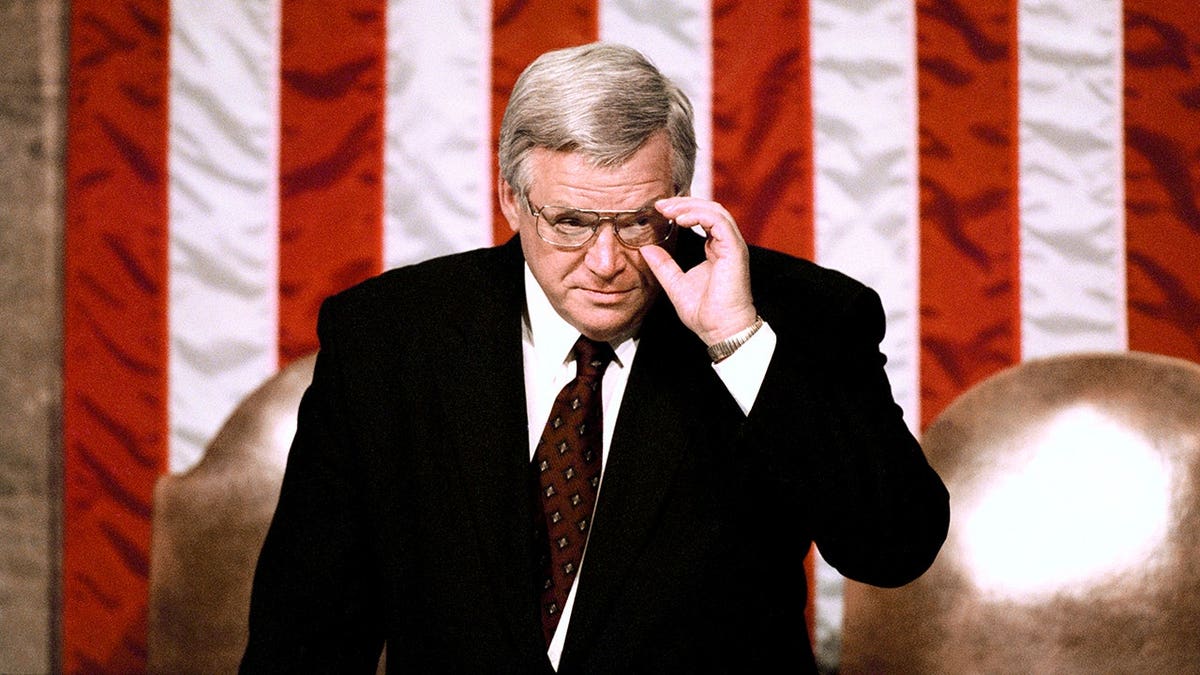
During a hastily arranged press conference on September 29, 2006, Senate Majority Leader Bill Frist and Speaker Hastert attempted to pivot strictly to a newly passed national security bill. When reporters persistently questioned Hastert regarding his handling of the Foley allegations and what supervisory steps leadership had taken, the Speaker offered evasive, minimal responses, stating only that he was not "very happy" about the situation.
The scandal accelerated the erosion of public trust in the Republican congressional leadership. In the November 2006 midterms, Democrats decisively captured the House majority. Recognizing that he lacked the support to secure a leadership role in the incoming Congress, Hastert remained as a rank-and-file member for several months before officially resigning from the House in late 2007.
The 2015 Federal Investigation and Guilty Plea
Following his departure from Congress, Hastert maintained a largely quiet retirement, largely avoiding the public eye. His political legacy remained intact in the public view until May 2015, when a federal grand jury indicted the former Speaker on charges of structuring bank withdrawals to evade federal reporting requirements and making false statements to the FBI.
Federal investigators had initially focused on unusual financial transactions after banks flagged Hastert’s withdrawal of hundreds of thousands of dollars in cash. Prosecutors uncovered that the money was being utilized as hush money to pay off an individual—identified in court records as "Individual A"—to suppress allegations of historical sexual abuse dating back to Hastert’s tenure as a high school teacher and wrestling coach in Kendall County, Illinois, during the 1960s and 1970s.
In July 2015, Hastert pleaded guilty to violating federal banking laws by structuring cash withdrawals to evade bank reporting thresholds. As part of the plea agreement, federal prosecutors dropped the charge of making false statements to investigators.
During the sentencing hearing in federal court, Judge Thomas Durkin characterized Hastert’s actions in severe terms, labeling him a "serial child molester." Hastert himself addressed the court, offering an apology in which he admitted to mistreating student-athletes under his mentorship.
Sentencing and Historical Context
In April 2016, U.S. District Judge Thomas Durkin sentenced Hastert to 15 months in federal prison, alongside two years of supervised release. Because federal guidelines and the nature of the specific banking charges limited the scope of the sentence, the prison term did not directly address the uncharged historical sex abuse allegations, though the court factored the underlying conduct into the sentencing decision.
Hastert served approximately 13 months at a federal medical facility in Rochester, Minnesota, before being transferred to a halfway house and ultimately completing his supervised release. His imprisonment made him the highest-ranking elected official in United States history to serve jail time, an unprecedented milestone that profoundly altered historical evaluations of his legislative career.
Implications and Retrospective Analysis
The downfall of Dennis Hastert prompted extensive introspection within Washington regarding institutional oversight, the vetting of congressional leadership candidates, and the mechanisms available to protect vulnerable individuals within government spaces—such as the historical congressional page program, which was significantly restructured and eventually phased out following the 2006 scandal.
Political analysts and historians note that Hastert’s tenure illustrates the vulnerabilities of a legislative system that occasionally elevates lawmakers to high positions under crisis conditions without exhaustive public scrutiny. While Hastert achieved rare longevity as the longest-serving Republican Speaker of the House, the revelation of his predatory past ultimately redefined his historical standing, transforming a legacy of institutional power into a cautionary tale about hidden misconduct at the highest levels of American governance.
Related posts: