Federal Land Managers Face Legal Challenge Over Controversial Utah Highway Project Threatening Ancient Rock Art in Nine Mile Canyon

Revered by historians, archaeologists, and federal land managers alike as "the world’s longest art gallery," Utah’s Nine Mile Canyon stands as an irreplaceable testament to the American West’s deep historical roots. Stretching approximately 46 miles through the rugged red-rock terrain of eastern Utah, the canyon is globally recognized for its dense concentration of ancient Native American petroglyphs, pictographs, historical dwelling structures, and unique Pioneer-era inscriptions left behind in axle grease. However, this vast open-air museum is now at the center of a high-stakes legal battle. Environmental and historic preservation organizations have launched a formal federal lawsuit to halt a fast-tracked Trump administration-backed initiative to blast, pave, and widen a vital tributary route through the region, transforming a quiet backcountry trail into what critics are calling a heavy-duty "hydrocarbon highway."
The litigation, filed in the U.S. District Court for the District of Utah, targets the Department of the Interior and the Bureau of Land Management (BLM). Brought forward by a coalition consisting of the Nine Mile Canyon Coalition, the Southern Utah Wilderness Alliance (SUWA), and the Center for Biological Diversity, the lawsuit argues that federal authorities illegally circumvented bedrock environmental statutes, statutory public engagement mandates, and historical preservation laws to push the project across the finish line.
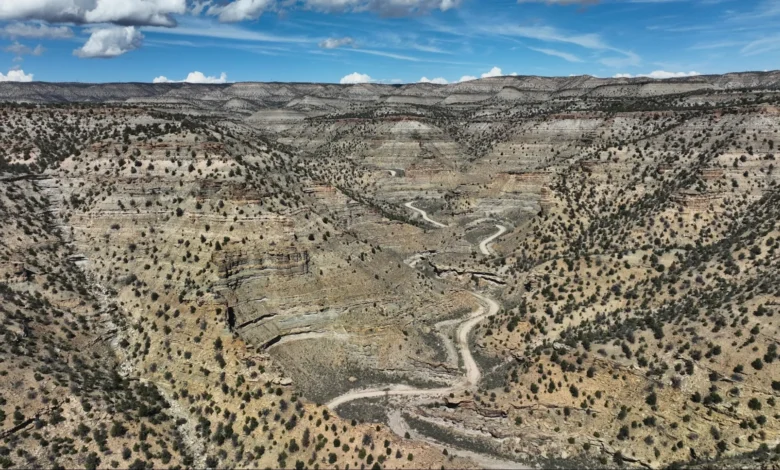
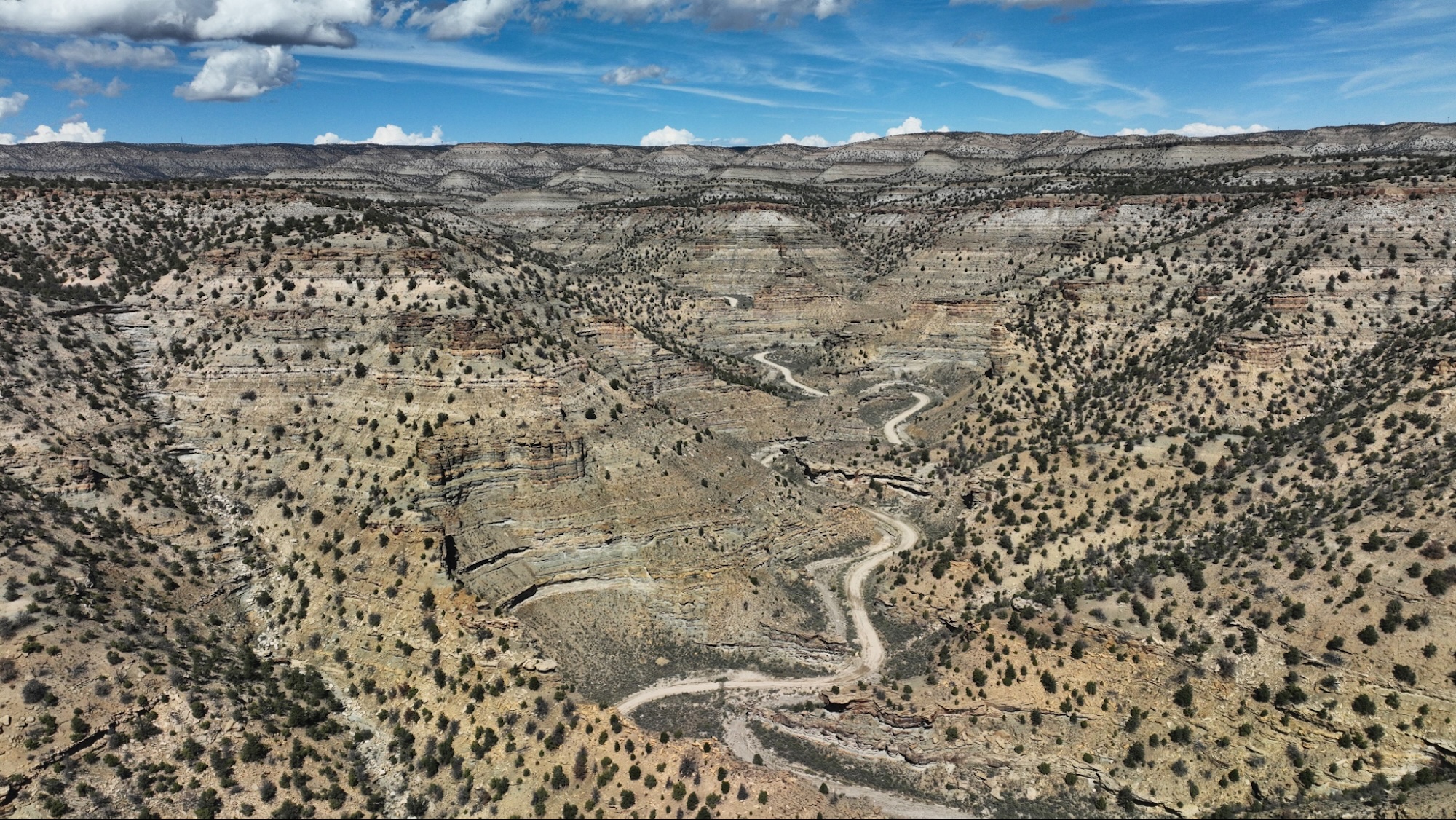
At the heart of the dispute is Gate Canyon, a narrow tributary feeding into Nine Mile Canyon. Under development plans greenlit by federal regulators, the existing winding dirt route known as Wells Draw Road is slated for extensive reconstruction. This includes major dynamiting, straightening of treacherous switchbacks, and paving to accommodate a surge of heavy industrial traffic. Proponents of the upgrade—primarily local county officials and energy development advocates—argue that the modern infrastructure is desperately needed to streamline transport logistics, connect lucrative oil fields in the remote Uinta Basin to regional rail-loading facilities in Carbon County, and improve overall motorist safety.
Conversely, preservationists and tribal advocates contend that the industrialization of the corridor will inflict irreversible harm on both cultural heritage and fragile desert ecosystems. "It’s like constructing a highway through the Louvre Museum," remarked J. Michael Hansen, president of the Nine Mile Canyon Coalition, capturing the existential dread felt by preservation communities across the state.
Chronology of a Controversial Project
The friction surrounding the Gate Canyon corridor is far from a sudden development; it is the culmination of a decade-long tug-of-war between local economic ambitions and conservation imperatives. The timeline of the dispute highlights shifting federal priorities, administrative pauses, and renewed efforts by local special service districts to unlock the economic potential of the energy-rich Uinta Basin.
The genesis of the current conflict dates back to 2015, when Duchesne County officials first formally approached the BLM. Seeking a more direct, efficient path to move heavy machinery, crude oil, and commercial haulers from Uinta Basin oil fields to Carbon County rail links, the county petitioned for a major overhaul of Wells Draw Road through Gate Canyon. Initial BLM evaluations from that era flagged profound sensitivities. Environmental assessments noted that Gate Canyon alone contained at least 47 distinct historic and archaeological sites, with an impressive 43 of those deemed eligible for inclusion on the National Register of Historic Places. Furthermore, early drafts of environmental assessments warned that the corridor served as potential habitat for vulnerable and protected wildlife, including the threatened Mexican spotted owl.
By 2016, the proposal had drawn intense public scrutiny. The BLM received nearly 700 formal public comments during initial scoping periods, with the overwhelming majority expressing profound alarm over potential impacts related to dust, vibration from heavy truck traffic, vandalism of rock art panels, and degradation of scenic values. As public pressure mounted and administrative reviews dragged on, the project effectively stalled.
The debate largely remained in administrative limbo during the presidency of Joe Biden, whose administration generally prioritized stronger ecological reviews and cultural resource protections on public lands. However, following shifts in political momentum, the project experienced a resurgence under the subsequent Trump administration framework. In 2023, after reviewing an amended right-of-way application covering a critical 2.8-mile stretch crossing federal lands, the BLM briefly reopened public comment windows. Once again, the proposal met fierce resistance from conservationists and local heritage defenders. Faced with extensive pushback and the recognized necessity for exhaustive, updated cultural and archaeological surveys, the BLM temporarily shelved the proposal.
The dynamic shifted dramatically in late 2025 and early 2026. In September 2025, a Duchesne County special service district submitted a revised, expedited development plan. The proposal was finalized on April 13, 2026. Moving at an uncharacteristically rapid pace, the BLM formally approved the project just weeks later on April 28, 2026. In its final environmental assessment, the federal agency concluded that the upgraded highway "will not significantly affect" the surrounding environment, local wildlife, recreational opportunities, or the overall quality of life in the region—a determination that immediately triggered the current legal action.
Detailed Scope of the Proposed Infrastructure
The planned industrial corridor is designed to dramatically alter the physical and operational landscape of the region. The project focuses on a 5.3-mile stretch of land jointly managed by the BLM and the Utah Trust Lands Administration (SITLA), with the vast majority of the hazardous switchbacks slated for straightening situated on state-managed parcels.
According to county transport estimates, the completion of the Gate Canyon highway could channel up to 500 heavy industrial trucks per day directly through the narrow confines of Nine Mile Canyon. These vehicles would primarily consist of oil tankers and transport trucks servicing the booming energy extraction sector in the adjacent Uinta Basin.
Local officials, including representatives from Duchesne County, have consistently maintained that the infrastructure modernization is necessary for public safety. The existing dirt track features sharp, unpaved switchbacks, steep inclines, and loose gravel surfaces that present significant hazards during inclement weather, making year-round industrial hauling precarious. Straightening and paving the route, proponents argue, would reduce accident risks, lower vehicle maintenance costs for commercial operators, and provide a more reliable economic conduit for eastern Utah.
However, critics point out that the physical realities of road construction in a narrow canyon—particularly the extensive dynamiting required to blast through solid rock walls—pose an immediate physical threat to artifacts located just feet from the existing right-of-way. Historic surveys from the BLM’s own archives indicate that numerous petroglyph panels and structural ruins stand immediately adjacent to the current roadbed, leaving them acutely vulnerable to fly-rock, heavy equipment operation, and long-term structural destabilization caused by continuous heavy truck vibrations.
Legal Arguments and Allegations of Procedural Shortcuts
In their comprehensive complaint filed in the U.S. District Court for the District of Utah, the plaintiff organizations—the Nine Mile Canyon Coalition, the Southern Utah Wilderness Alliance, and the Center for Biological Diversity—charge that the federal government violated multiple foundational environmental and preservation statutes. Specifically, the lawsuit alleges violations of:
- The National Environmental Policy Act (NEPA), by failing to conduct a thorough, transparent environmental impact statement and by cutting short meaningful public participation.
- The National Historic Preservation Act (NHPA), by signing off on construction plans without completing updated, comprehensive archaeological inventories or adequately consulting with tribal nations and cultural stakeholders.
- The Federal Land Policy and Management Act (FLPMA), by neglecting the agency’s mandate to prevent unnecessary or undue degradation of public lands.
- The Endangered Species Act (ESA), by failing to properly evaluate and mitigate potential harms to threatened species, such as the Mexican spotted owl, whose habitat overlaps with the project footprint.
Furthermore, the lawsuit outlines procedural grievances regarding public transparency. Attorneys for the plaintiffs state that after learning of the resurrected development plan in March 2026, local stakeholders and conservation groups formally requested standard public comment periods and formal consulting status under NEPA guidelines. According to the court filing, these requests were either entirely ignored or explicitly denied by the BLM before the final "Finding of No Significant Impact" was issued in late April.
"This lawsuit challenges the Trump administration’s disgraceful plan to transform a quiet backcountry road into a highway clogged with speeding oil tanker trucks," stated Deeda Seed, senior Utah campaigner at the Center for Biological Diversity. "We’re going to court to protect this irreplaceable cultural treasure and the animals calling it home."
As of press time, representatives for the Bureau of Land Management have declined to comment on pending litigation. The federal defendants have not yet filed their formal response in the U.S. District Court for the District of Utah.
Broader Implications for Public Lands and Heritage Management
The legal showdown over Nine Mile Canyon transcends a local dispute over rural infrastructure; it touches upon fundamental national debates regarding the balance between domestic energy independence, economic development, and the stewardship of public lands.
As energy production in basins across the Intermountain West continues to pressure regional transportation networks, county governments and state trust land managers increasingly view infrastructure modernization as an economic necessity. For rural Utah counties, efficient access to rail hubs translates directly to job creation, local tax revenues, and competitive advantages in national energy markets.
Conversely, conservationists and cultural preservationists argue that once archaeological and ecological resources of this magnitude are compromised or destroyed, they are gone forever. Nine Mile Canyon represents a rare, unbroken physical archive of human habitation spanning thousands of years—from the Fremont and barrier canyon-style rock art created by ancient Indigenous peoples to the rugged trails forged by early European-American settlers.
The outcome of the lawsuit in Utah’s federal court could set a powerful legal precedent for how federal agencies handle administrative fast-tracking, public participation mandates, and cultural resource protections on public lands situated near high-value energy corridors. For now, the fate of the Gate Canyon highway project—and the fragile ancient gallery sitting quietly in the red-rock shadows—rests in the hands of the federal judiciary.