The Silent Invasion: How Illegal Fish Dumping Is Reshaping America’s Pristine Waters

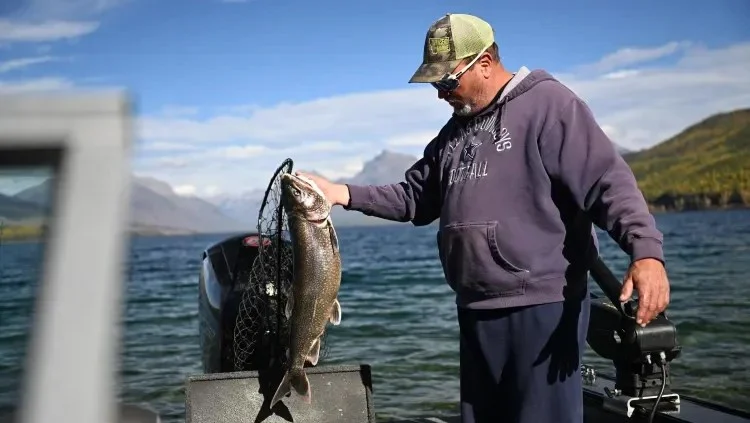
The clandestine practice of "bucket biology"—the unauthorized and often illicit introduction of non-native fish species into lakes, rivers, and streams—has emerged as a significant threat to the ecological integrity of the American West. While often driven by individual anglers seeking to improve their personal fishing experiences, these acts of ecological sabotage carry profound, long-term consequences that reach far beyond the water’s edge, disrupting complex food webs and costing state agencies millions in mitigation efforts.
The phenomenon is characterized by the deliberate, illegal transfer of live fish from one water body to another. By bypassing official wildlife management protocols, perpetrators introduce invasive predators that can decimate native populations, alter water chemistry, and fundamentally change the character of iconic landscapes like those found in Montana’s Glacier National Park and the Flathead Reservation.
A Chronology of Conflict
The history of human-assisted species migration in Montana is marked by a shift from government-sanctioned stocking to illicit individual activity. During the late 19th and early 20th centuries, federal and state wildlife agencies frequently stocked waters with non-native species such as brown trout, rainbow trout, and walleye to bolster recreational angling. These decisions, often made without regard for local aquatic equilibrium, established a precedent that non-native fish were a standard component of the Montana fishing experience.
However, as the ecological costs of these introductions became apparent, state policy evolved. By the 1970s, the Montana Department of Fish, Wildlife, and Parks (FWP) began to pivot away from stocking non-native species in many river systems. This policy shift created a friction point: a segment of the angling population, frustrated by the change in target species, began to take matters into their own hands.
A pivotal moment in the public consciousness occurred in 1992 at Lake Mary Ronan, where an individual was observed dumping yellow perch into the water. The incident led to a successful enforcement action, prompting the state to tighten its legal framework. Today, the intentional introduction of a non-native species is a felony in Montana, carrying potential penalties of up to two years in prison and $25,000 in fines. Despite these stringent laws, the practice persists, fueled by a combination of recreational self-interest and a disregard for environmental stewardship.
The Mechanism of Ecological Disruption
The introduction of a new fish species into an established, delicate ecosystem acts as a catalyst for a "trophic cascade." In a stable lake environment, biological components—from phytoplankton to apex predators—exist in a state of precarious balance. The arrival of an invasive species, such as northern pike or smallmouth bass, disrupts this balance immediately.
The case of Yellowstone Lake serves as a stark historical warning. The introduction of lake trout, an invasive predator, triggered a collapse in the population of native cutthroat trout. The ecological ripple effects were severe: cutthroat trout were a primary food source for at least four mammal species and 16 bird species, including bald eagles and otters. As the cutthroat declined, the birds and mammals dependent on them faced significant dietary shortages. Furthermore, the absence of the native trout’s migration patterns—which served as a critical nutrient transport system—deprived surrounding riparian areas of essential organic matter.
Recent data underscores the scale of these impacts. In a single year during the height of the Yellowstone invasion, it was estimated that the non-native lake trout population consumed between 3 and 4 million native cutthroat trout. Such statistics illustrate why fisheries managers characterize these illegal introductions as "underwater arson"—a single act of recklessness can permanently dismantle an ecosystem that has evolved over thousands of years.
Forensic Investigations and Scientific Monitoring
To combat this, biologists have moved toward sophisticated, evidence-based management. Sam Bourret, a fisheries biologist with the FWP, has gained recognition for pioneering forensic techniques that utilize chemical analysis of otoliths—the calcium carbonate structures in a fish’s inner ear. By analyzing the chemical signatures within these bones, researchers can determine the origin of a specific fish, providing critical intelligence on where illegal introductions might be occurring.
Beyond forensic investigation, data modeling is being employed to predict which lakes are most vulnerable to future bucket biology. By analyzing variables such as elevation, water temperature, and proximity to major roadways, agencies are attempting to allocate resources more effectively to monitor high-risk zones.
However, detection remains the primary challenge. Because aquatic environments are difficult to monitor, the presence of an invasive species is often discovered only after the population has already become self-sustaining. At that stage, eradication is frequently impossible, leaving agencies with the expensive burden of long-term suppression.
Economic and Cultural Implications
The economic toll of bucket biology is substantial. Millions of dollars are diverted annually from state conservation budgets to manage invasive fish populations and attempt to restore native habitats. These funds, which could otherwise support public land access, habitat restoration, or research, are instead spent on containment efforts that often yield only temporary results.
Beyond the financial cost, there is a profound cultural loss. For the Confederated Salish and Kootenai Tribes (CSKT), native species like the bull trout and Westslope cutthroat trout are not merely biological specimens; they are essential components of a cultural heritage that predates European settlement. Rich Janssen, head of the CSKT’s department of natural resources, has noted that the loss of these native species is comparable to the loss of a language—a permanent erasure of ancestral connections to the land and water.
The Regulatory Struggle
Despite the implementation of high-dollar rewards—some exceeding $35,000—for information leading to convictions, no major breakthroughs have occurred. The difficulty in catching offenders in the act, combined with the relative ease of transporting fish, has forced agencies to adopt aggressive, broad-spectrum strategies. These include "open season" policies on invasive species, where anglers are mandated to kill rather than release specific non-native fish, and the exploration of sterile-fish programs that mirror successful initiatives in Washington state.
The rise in the population of the American West has further complicated these efforts. As more individuals move into regions like the Flathead Valley, the human footprint on these pristine waters expands. New development, increased boat traffic, and a influx of residents unfamiliar with local ecological constraints increase the likelihood of both intentional and accidental introductions.
Looking Toward the Future
The challenge of managing aquatic invasive species is set to intensify as climate change continues to alter water temperatures. Warmer waters create new, previously unsuitable habitats for invasive species like smallmouth bass, while simultaneously reducing the cold-water refuges required by native trout.
The future of these ecosystems depends on a combination of increased public awareness, rigorous enforcement, and a fundamental shift in how the public perceives the role of the angler. Education remains a critical, albeit slow-acting, tool. By fostering a deeper understanding of the ecological interdependencies of these lakes, officials hope to transform the culture of angling from one of exploitation to one of stewardship.
Ultimately, the battle against bucket biology is a test of collective responsibility. Whether an ecosystem remains a vibrant, native-supported habitat or devolves into a degraded, simplified version of itself depends on the choices made by the individuals who visit these waters. As the pressure on these habitats mounts, the necessity for a unified approach—combining law enforcement, cutting-edge science, and indigenous knowledge—has never been more urgent. The preservation of the West’s aquatic heritage depends on the recognition that a single bucket of water can contain the seeds of an environmental catastrophe.