The Dangerous Reality of America’s Wildfire Crisis and the Strain on Federal Firefighting Resources

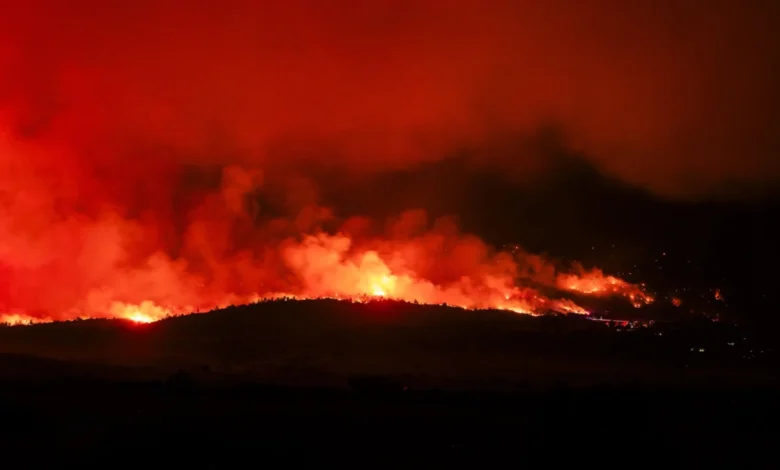
The United States is currently navigating one of the most volatile wildfire seasons in recent history, characterized by an unprecedented convergence of extreme climate-driven fire behavior and a deepening crisis in federal human capital. As the Aspen Acres fire in Colorado—now the eighth-largest in the state’s recorded history—scorches more than 73,000 acres, it serves as a grim centerpiece for a nationwide struggle. Federal firefighters, often operating under immense physical and psychological strain, report that the current federal strategy of "aggressive suppression" is not only unsustainable but is increasingly endangering the lives of those on the front lines.
A Season of Unprecedented Risk and Entrapment
The 2026 fire season has shattered multiple historical benchmarks, placing unprecedented pressure on an already depleted workforce. According to data from the Wildland Fire Lessons Learned Center, firefighters are being overrun by flames at the highest rate in two decades. By mid-August, officials had already documented 12 "entrapments"—a catastrophic scenario where fire behavior overcomes safety zones or cuts off escape routes. This figure is particularly alarming, as it represents a 20-year high for such incidents within a single season.
The human toll has been equally severe. Fourteen on-duty fatalities have been confirmed to date, including the tragic loss of three firefighters battling the Knowles fire in Colorado. Subsequent reports confirmed that a fourth member of that crew succumbed to injuries sustained during the incident, while another remains in critical condition. This event marked the deadliest single entrapment incident in 13 years, highlighting the lethal reality of modern wildfire management.
Chronology of Escalation
The 2026 season did not begin in isolation; it followed a decade of intensifying environmental pressures. The chronology of the current crisis can be traced back to early spring:
- April 2026: Fire crews began early-season assignments as drought conditions persisted across the American West, leading to an exceptionally long fire year.
- July 2026: During congressional testimony, US Forest Service (USFS) Chief Tom Schultz maintained that the agency’s workforce was at full capacity, stating, "We are fully staffed and equipped to respond aggressively to every unplanned ignition."
- August 2026: The frequency of entrapments hit a 20-year record, prompting urgent internal warnings from safety officers regarding a spike in burn injuries.
- September 2026: The nation experienced a record-breaking 48 consecutive days at "Preparedness Level 5" (PL5), the highest possible designation for resource allocation, indicating that nearly all available federal firefighting assets were fully deployed.
By mid-September, total burned acreage reached 8.4 million acres, a staggering 149 percent of the 10-year average. Despite the drop in preparedness levels to PL4 and then PL3 in early September, the cumulative fatigue across the workforce remains a critical concern.
The Conflict Between Strategy and Safety
The federal government, under the guidance of Agriculture Secretary Brooke Rollins and Interior Secretary Doug Burgum, has shifted toward a policy of "fast and full suppression." This mandate prioritizes the immediate containment of every fire, moving away from previous forest management practices that allowed for "managed fires" in remote areas to reduce fuel loads.
While administration officials argue that this aggressive stance is necessary to protect communities and property, many veteran firefighters and ecologists view the policy as a strategic error. Critics, including the nonprofit group Firefighters United for Safety, Ethics and Ecology, argue that forcing crews into "direct attack" strategies in unsuitable terrain is a recipe for disaster.
"Firefighting capacity is kind of like wages, and the fire environment is like inflation—it has not kept up," noted one fire captain based in the Pacific Northwest. The sentiment among the rank-and-file is that the administrative push for total suppression ignores the physical limits of the personnel available.
Legislative and Institutional Scrutiny
The divide between the USFS leadership’s optimistic assessments and the reality on the ground has drawn the attention of the United States Senate. In a joint letter sent in mid-September, Senators Michael Bennet, Alex Padilla, Ron Wyden, Adam Schiff, and John Hickenlooper expressed grave concerns regarding the status of the federal firefighting force.
The senators highlighted that the combined $6 billion suppression budget for the Department of the Interior and the USDA is nearly depleted. Furthermore, the letter pointedly challenged the narrative of being "fully staffed," noting that teams are routinely operating with "temporary supervisory structures" because qualified, experienced personnel are in short supply. The letter serves as a formal acknowledgment of the "high wildland firefighter fatality rate" and calls into question the current operational mandates that demand aggressive action regardless of the lack of veteran leadership.
The Cumulative Impact of Fatigue
The long-term implications of this season extend beyond the immediate loss of life and property. Experts in fire ecology emphasize that the "perfect firestorm" created by climate change is compounding the physiological toll on firefighters. Chronic sleep deprivation, prolonged exposure to heavy smoke, and the constant stress of navigating unpredictable fire behavior have led to what many describe as a "breaking point."
Bobbie Scopa, a retired fire chief and vice-president of Grassroots Wildland Firefighters, argues that the current strategy is fundamentally flawed because it fails to account for the loss of institutional knowledge. "We have had shortages for 20 years—and it’s only gotten worse," Scopa said. "It is not like we are trying to add bureaucracy; we are trying to keep people alive."
When highly skilled taskforce leaders and heavy equipment bosses leave the service due to burnout or safety concerns, they cannot be replaced overnight. The resulting "brain drain" forces agencies to rely on less experienced personnel to manage increasingly complex and dangerous incidents, a dynamic that likely contributes to the rising frequency of accidents.
Analysis: A System at a Crossroads
The tension between the need to protect residential expansion into the "wildland-urban interface" and the physical realities of managing a forest fire is reaching a critical inflection point. The current administration’s insistence on full suppression is a direct response to political pressure to mitigate the economic impacts of fire, yet it may be creating a feedback loop of increased risk.
By suppressing small fires that would naturally clear out undergrowth, the landscape becomes increasingly overloaded with dry fuel, ensuring that when a fire does break out, it is significantly more intense and harder to contain. This cycle, combined with the extreme heat and drought cycles of the climate crisis, suggests that the current staffing model is insufficient for the long-term reality of the American West.
As the 2026 fire season continues, the federal government faces a mounting challenge: how to reconcile its aggressive suppression policies with the safety of a workforce that is, by all accounts, stretched to its absolute limit. Whether the administration will pivot its strategy or continue to prioritize total containment remains the central question for the remainder of the year. For now, the thousands of firefighters still on the front lines remain the primary variable in a, thus far, unforgiving equation.