Senator Chris Van Hollen of Maryland Launches Formal Challenge Against Chuck Schumer for Senate Majority Leader

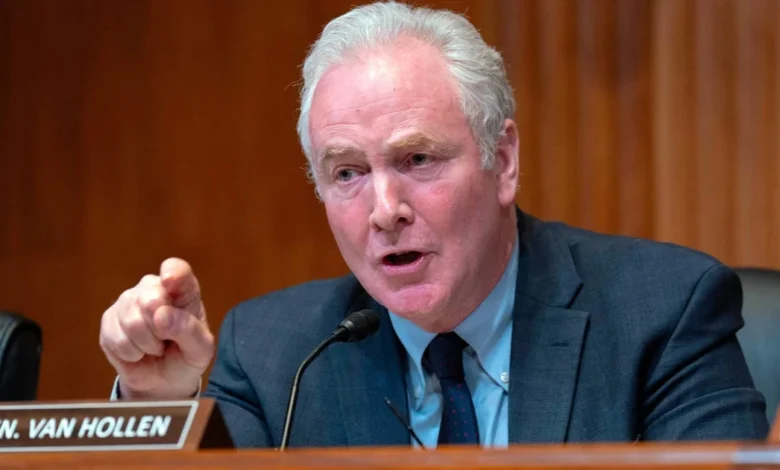
The landscape of the United States Senate underwent a seismic shift on Thursday as Democratic Senator Chris Van Hollen of Maryland officially announced his candidacy for the position of Senate Majority Leader. The move represents the most significant internal challenge to Senate leadership in years, directly confronting the tenure of New York Senator Chuck Schumer following a midterm election cycle that yielded historic, albeit complicated, gains for the Democratic Party.
Van Hollen, a 67-year-old veteran legislator who has served in the Senate since 2017 after a distinguished decade-long tenure in the House of Representatives, framed his campaign as a necessary evolution for the party. In a formal statement released via social media, Van Hollen argued that the American electorate issued a clear mandate in the recent midterm elections to dismantle economic structures he described as "rigged against working people." According to Van Hollen, the party requires a shift in strategic focus and leadership style to effectively address these systemic concerns, emphasizing that his bid is rooted in policy direction rather than personal animus.
The Context of the Leadership Battle
The timing of this announcement follows a week of intense speculation within the halls of Congress. Van Hollen had previously confirmed he was in "listening mode" regarding a potential run, gauging the appetites of his colleagues for a leadership transition. The backdrop for this challenge is a Democratic caucus that has grown increasingly heterogeneous, containing both established institutionalists and a younger, more vocal progressive wing that has become emboldened by recent electoral successes.
Schumer, 75, has occupied the role of party leader for nearly a decade, steering the caucus through the Trump administration, the COVID-19 pandemic, and the Biden presidency. His supporters often point to his legislative dexterity and his role in maintaining party cohesion during high-stakes government funding battles. However, the internal pushback against Schumer began to crystallize in early 2025, when his tactics to avoid a federal government shutdown were met with sharp criticism from the party’s left flank. While Schumer eventually pivoted to lead the caucus through a record-breaking shutdown aimed at protecting health insurance tax credits, the friction highlighted a growing ideological divide regarding the use of the "power of the purse" as a legislative weapon.
A Chronology of Growing Dissent
The path to this leadership contest can be traced through several key political milestones:
- Early 2025: Schumer faces backlash from progressives for his handling of federal funding negotiations, leading to internal concerns regarding his willingness to leverage the debt ceiling and government funding deadlines.
- Late 2025: A pivot in strategy results in a united Democratic front during a government shutdown, temporarily mollifying some critics, but leaving underlying ideological tensions unresolved.
- November 2026: Democrats achieve an unexpectedly strong result in the midterm elections, securing a net gain of eight seats, with the Alaska race still pending.
- November 12, 2026: Following a week of "listening," Chris Van Hollen announces his candidacy for Majority Leader, citing the need for a more aggressive stance on fiscal and foreign policy.
Strategic Differences and Policy Disagreements
The core of the disagreement between Van Hollen and Schumer lies in the methodology of power. In an interview with MS NOW, Van Hollen signaled that his leadership would be defined by a more assertive utilization of Senate leverage. Specifically, he criticized the current leadership for a perceived reluctance to force the hand of the Trump administration on foreign policy, particularly concerning the war in Iran. Van Hollen argued that the upcoming December 11 deadline for government funding should be treated as a definitive leverage point rather than a "finger-in-the-wind issue."
Furthermore, Van Hollen took aim at the institutional practices of the Democratic Senatorial Campaign Committee (DSCC). He expressed frustration with the leader’s tendency to intervene in open primaries, suggesting that such involvement stifles grassroots energy and undermines the party’s democratic integrity. "We shouldn’t have a Democratic leader who is getting involved in picking sides in open Democratic primaries," Van Hollen stated, citing the recent success of Senators-elect Abdul El-Sayed and Peggy Flanagan as evidence that the party can win without traditional establishment interference.
Responses from the Caucus and Leadership
Senator Chuck Schumer was swift in his response to the announcement, maintaining a posture of confidence. In a post on X, Schumer touted the electoral success of the party, noting that the caucus has reached 55 seats and is still climbing. "I’m proud of what we’ve accomplished together," Schumer stated. "I have the votes to continue serving as Democratic Leader."
Kirsten Gillibrand, who chairs the DSCC, has been a vocal defender of Schumer’s record. At a recent press conference, she emphasized that the nine-seat gain in the Senate—a historic achievement in the current political environment—is a testament to Schumer’s strategic acumen. She cautioned that while there is room for debate, the party should remain cognizant of the stability Schumer has provided during a period of high volatility.
However, the opposition is not limited to the progressive fringe. Senator Bernie Sanders of Vermont, a key figure in the party’s left wing, publicly confirmed he would not support Schumer’s reelection as leader. Sanders acknowledged his personal regard for Schumer’s work ethic but insisted that the caucus requires a "vigorous debate" about its future direction. This sentiment was echoed by others, including Senator-elect Adam Hamilton of Kansas, a moderate who has expressed a desire for a concrete, updated plan for the caucus.
Broader Implications for the Democratic Party
The implications of this contest extend far beyond the leadership office. For the Democratic Party, the race serves as a proxy war for the soul of the organization. The caucus is currently at a crossroads, attempting to balance the need for electoral pragmatism—which has delivered significant seat gains—with a demand for ideological purity and more aggressive tactics from its base.
If Van Hollen succeeds, the Senate could see a shift toward more confrontational legislative strategies, particularly regarding budget reconciliation and foreign policy oversight. Such a shift might alienate moderate members who prioritize traditional Senate decorum and bipartisan compromise. Conversely, if Schumer retains his position, he will likely be under immense pressure to accommodate the demands of his detractors, potentially leading to a more fractured, albeit more progressive, legislative agenda.
The outcome of this leadership election, expected to take place next month, will define the trajectory of the Democratic Party for the remainder of the 119th Congress. As the party grapples with the transition from the midterm victory to the governing phase, the choice between the established, results-oriented leadership of Schumer and the reform-minded, aggressive platform of Van Hollen will provide a clear indicator of where the Senate Democratic caucus intends to position itself in an increasingly polarized political environment. The focus now turns to the closed-door whip counts and the private negotiations that will determine which vision wins the support of the majority.