COP31 Climate Summit Opens in Antalya Amid Indigenous Protests and Demands for Action

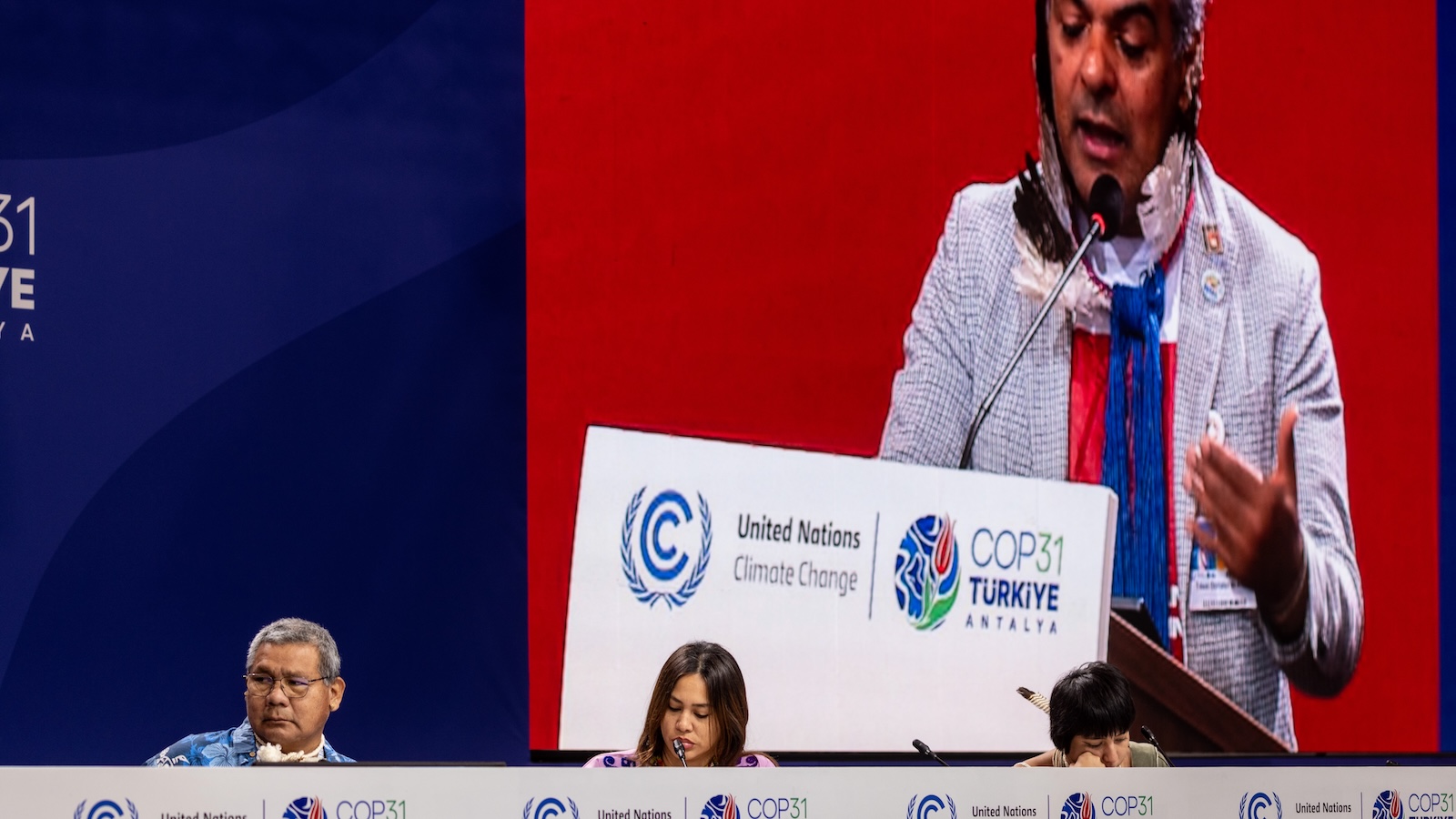
The opening of the United Nations Framework Convention on Climate Change (UNFCCC) annual gathering—known as COP31—in Antalya, Turkey, has brought global climate diplomacy into a critical implementation phase. While last year’s summit in Belém, Brazil, drew historic levels of Indigenous participation and earned the moniker "the Indigenous COP," it was simultaneously marred by frustration, demonstrations, and accusations of systemic exclusion. As delegates convene in Turkey for negotiations running through November 20, Indigenous leaders are utilizing the platform to demand that the sweeping rhetoric of past summits translates into enforceable, immediate procedural reforms and structural authority over global climate strategies.
A Shift from Pledges to Implementation
Unlike previous conferences characterized by ambitious new emissions targets and financial promises, COP31 has been framed as an "implementation" conference. The agenda prioritizes the complex, procedural mechanics required to convert international agreements into concrete domestic policies. However, for the world’s Indigenous communities—who safeguard roughly 80 percent of the planet’s remaining biodiversity—this operational shift serves as a high-stakes test of the global community’s credibility.
Edward Porokwa, a Maasai leader and member of the United Nations Permanent Forum on Indigenous Issues, expressed cautious skepticism regarding the proceedings. “It is still a struggle,” Porokwa noted. “I’m yet to really determine whether there will be any more progress that is made in terms of realization of the rights of Indigenous people.”
This sentiment is rooted in a history of unfulfilled commitments. Advocacy groups are currently pressing member states to honor existing pledges, including securing land rights across 400 million acres in tropical forest nations, disbursing a promised $1.8 billion in targeted climate financing, and strictly enforcing the principle of free, prior, and informed consent (FPIC) for all renewable energy infrastructure projects. Despite these formal agreements, funding streams have moved at a glacial pace, often failing to reach grassroots communities before bureaucratic hurdles intervene. Meanwhile, domestic policy changes—such as recent federal funding cuts in major economies that stripped hundreds of millions of dollars from tribal climate adaptation projects—have severely hamstrung local defense efforts.
Escalating Climate Crises and Mounting Casualties
The urgency driving Indigenous delegations in Antalya is amplified by a devastating sequence of climate-fueled disasters over the past year. From catastrophic flooding in South Asia to historic wildfire seasons in North America and Southeast Asia, the consequences of unchecked global warming have fallen disproportionately on vulnerable ecosystems and Indigenous territories.
In August, catastrophic floods and landslides in Nepal claimed the lives of more than 1,500 people, obliterating entire communities. Biswash Chepang, founder of the Institute for Indigenous Affairs and Development in Nepal, pointed to a massive mountainside collapse along the Nepal-Tibet border as a glaring symptom of planetary distress. “The recent large-scale mountainside collapse on the border of Nepal and Tibet should serve as a wake-up call to the global community,” Chepang said.
Concurrently, Canada endured an unprecedented wildfire season that scorched millions of acres and triggered mass evacuations of First Nations communities, while toxic wildfire smoke across Southeast Asia—particularly in Indonesia—contributed to thousands of premature deaths, widespread school closures, and emergency health declarations. These localized catastrophes are occurring against a backdrop of intensifying macro-climatic phenomena. Climatologists warn that a historically powerful El Niño cycle threatens to unleash heightened rates of famine, heat-induced mortality, and systemic agricultural failure worldwide.
The 1.5°C Threshold and the Cost of Exclusion
The friction at COP31 is further exacerbated by the growing scientific consensus that the central target of the 2015 Paris Agreement—limiting global temperature rise to 1.5 degrees Celsius above pre-industrial levels—is rapidly slipping out of reach. A recent landmark report published by the United Nations Environment Programme (UNEP) stated that staying within the 1.5°C boundary is now virtually impossible under current trajectory models.
For Indigenous participants, this milestone failure is a direct consequence of policymakers systematically sidelining Indigenous ecological knowledge. For decades, scientific studies have demonstrated that Indigenous land stewardship is one of the most effective methodologies for carbon sequestration, ecosystem restoration, and biodiversity preservation. Yet, this expertise has frequently been relegated to the periphery of formal UN negotiations.
“For over thirty years we have brought Indigenous knowledges and sciences to these negotiations,” said Māori activist Quack Pirihi, delivering an opening statement on behalf of the International Indigenous Peoples Forum on Climate Change. “Yet emissions continue to rise, putting 1.5 degrees Celsius beyond reach.”
Navigating Loss, Damage, and Climate Injustice
As mitigation efforts stall, the parallel imperative of securing financial restitution for climate impacts has taken center stage. In October, the newly established Fund for Responding to Loss and Damage approved its first major disbursement: $21.6 million allocated to Nepal. While a welcome development, the figure represents less than 1 percent of the estimated $5 billion in climate-induced damages the nation sustained over the previous year.
Furthermore, the administrative framework required to channel these funds to affected populations remains cumbersome and slow. Critics argue that wealthy industrialized nations—whose historical emissions drove the current climate crisis—continue to treat loss and damage funding as optional humanitarian aid rather than an obligation of climate equity and debt.
“Loss and damage is not simply a question of humanitarian assistance,” Chepang emphasized. “It is also a question of climate responsibility, historical emissions, equity, and the right of affected communities to recover with dignity.”
Beyond financial mechanisms, Indigenous advocates are exploring legal avenues to hold major corporate and state polluters accountable. Bianca Ranson, a Māori board member of the Aotearoa Climate Action Network attending COP31, is utilizing the global stage to spotlight a groundbreaking climate litigation case initiated by her father, Mike Smith. The legal challenge, which seeks to hold major New Zealand corporate emitters liable under traditional Māori customary law, has faced fierce resistance and legislative blocks from the national government.
The Value of Global Solidarity
Despite deep-seated frustrations with the bureaucratic nature of UNFCCC summits and the ongoing threats faced by land defenders worldwide, delegates argue that physical attendance at COP31 remains vital. In an era marked by geopolitical instability, the resurgence of nationalist and far-right politics, and escalating conflicts over natural resources, international convenings offer a crucial venue for coalition-building.
“I think that with the geopolitical moment that we’re in, with the rise of the far right and fascism and war, and the struggles that Indigenous peoples are facing across the globe, it’s a really important place for us to be able to come together, to connect, to strengthen our solidarity,” Ranson noted.
As Antalya hosts negotiations through the remainder of November, the fundamental demand from Indigenous leaders remains uncompromising. The era of non-binding declarations must yield to structural accountability. As Edward Porokwa summarized as sessions got underway: “Now I think it is not time only to talk about the commitment. It is time to change the commitment into practice.”