California Legislation Pioneers Environmental Reparations Through Direct Cash Aid for Inglewood Oil Field Residents

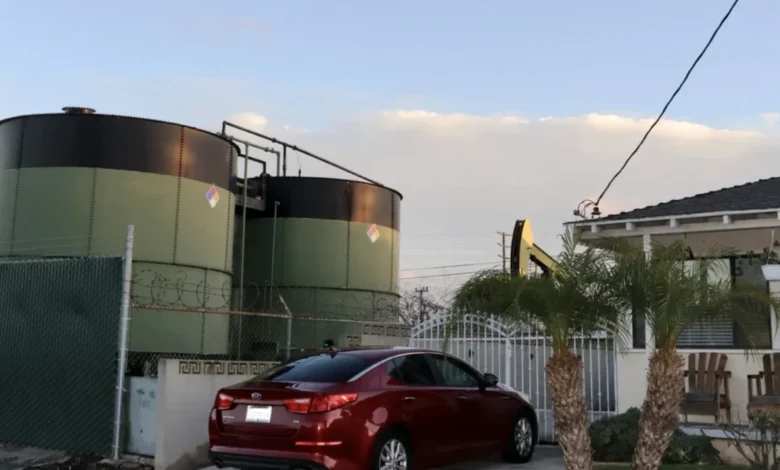
The state of California is on the cusp of codifying a groundbreaking approach to environmental justice as Governor Gavin Newsom prepares to sign Assembly Bill 1661 into law. This legislation represents a significant shift in how the state addresses the legacy of industrial pollution, specifically targeting the communities surrounding the Inglewood Oil Field. Under the provisions of the bill, $5 million in funds—derived from penalties levied against oil companies for operating low-producing, high-polluting wells—will be distributed as direct cash aid to 1,000 households that have suffered documented respiratory or reproductive health impacts due to their proximity to the site.
This policy marks a departure from traditional environmental mitigation, which has historically prioritized site remediation or corporate fines paid into general state coffers. By channeling these funds directly into the pockets of residents in Inglewood, Ladera Heights, and Baldwin Hills, the state is testing a model of "environmental reparations"—an acknowledgment that the economic and physical costs of industrial extraction have been borne disproportionately by Black and low-income communities for over a century.
A Chronology of Industrial Burden and Legislative Action
The Inglewood Oil Field, one of the largest urban drilling sites in the United States, has been a fixture of the Los Angeles landscape for decades. For generations, residents like Regina Martin grew up in the shadow of pumpjacks, often unaware of the link between the persistent sulfurous odors and chronic health conditions such as asthma, cardiac issues, and reproductive complications.
The path to the current legislation began in earnest with a series of community-led advocacy efforts and recent state-level policy shifts:
- 2020–2022: Community organizations, including Black Women for Wellness and various environmental justice coalitions, intensified their lobbying efforts to highlight the correlation between urban oil drilling and public health disparities in South Los Angeles.
- 2024: Governor Newsom signed AB 2716, a landmark piece of legislation that mandated the closure of the Inglewood Oil Field by 2030. This law established a strict penalty structure for operators of low-producing wells, charging them $10,000 per well each month.
- September 2026: The California legislature passed AB 1661, authored by Assemblymember Isaac G. Bryan, to repurpose the revenue generated from these penalties into a "community repair and reinvestment fund."
- October 2026: Governor Newsom is expected to sign the bill, triggering the creation of the distribution framework for the initial $5 million in direct assistance.
Data and Environmental Health Context
The urgency of this legislation is underscored by decades of academic research regarding the health impacts of living near oil and gas infrastructure. Studies consistently demonstrate that proximity to active drilling sites increases the risk of premature birth, low birth weight, and increased exposure to volatile organic compounds (VOCs) and particulate matter (PM2.5).
In the neighborhoods surrounding the Inglewood Oil Field, residents have long reported higher-than-average rates of asthma, particularly among children. While medical records have historically been the gold standard for proving such harm, the sheer prevalence of these conditions in neighborhoods adjacent to the field has created a "lived experience" data set that is increasingly being recognized by policymakers. The $5,000 per-household payment is designed not merely as a medical reimbursement but as an acknowledgment of the broader economic toll—including lost work hours, reduced property values, and the high cost of managing chronic illness in an under-resourced medical environment.
Perspectives from Stakeholders and Advocates
Assemblymember Isaac G. Bryan, who chairs the Assembly’s Natural Resources Committee, has framed the bill as a necessary corrective to corporate negligence. "The company has essentially just been extracting from the community with no investments in the community, no care in the community, and what feels like no regard at times for the broader community," Bryan stated. He emphasizes that the program is intended to be a pilot; if successful, it could provide a roadmap for other regions in the state to hold industrial entities financially accountable for their environmental footprint.
However, the implementation phase remains a point of contention. Advocates such as Tianna Shaw-Wakeman of Black Women for Wellness are calling for a streamlined, accessible application process. A primary concern is that requiring complex medical documentation will exclude the very families most in need of support. "Community members who have been deeply impacted, whose health has been deeply impacted, have never gotten restitution for that in any sort of way," Shaw-Wakeman noted. The coalition is pushing for "self-attestation" models, where the burden of proof is not placed entirely on the shoulders of the victim.
Broader Implications: Beyond the Cash Payment
While the $5 million allocation is a milestone, it is a drop in the bucket relative to the total number of households affected by the Inglewood field. With tens of thousands of people living within the 2.5-mile radius, the limitation to 1,000 households has sparked debate about equity and access.
Furthermore, the bill does not exist in a vacuum. As California moves to phase out oil extraction, a secondary crisis has emerged: the threat of "green gentrification." As oil wells are capped and the land is remediated, property values in the area have begun to climb, potentially displacing the same residents who endured the health impacts of the drilling. Environmental justice leaders argue that the state’s duty does not end with the cessation of drilling; it must include comprehensive land-use policies that prevent the displacement of long-term, low-income residents.
Evaluating the Model of Environmental Reparations
The success of the Inglewood project will likely be measured by three metrics: the ease of the distribution process, the measurable improvement in the quality of life for recipients, and the legal durability of the funding mechanism. California’s recent move to exempt these reparations from state taxation, championed by Assemblymember Tina McKinnor, further signals that the state is positioning itself to treat these payments as a form of restorative justice rather than standard social welfare.
If this experiment proves effective, it will provide a template for other states dealing with the legacy of the fossil fuel industry. It shifts the burden of proof from the community to the corporation, suggesting that the "cost of doing business" must include the cost of human health.
Ultimately, the legislation represents a fundamental shift in the social contract between industrial operators and the communities they occupy. As the state moves toward a post-oil economy, the question of who pays for the past—and how those payments are structured—will continue to define California’s climate agenda. For the residents of Inglewood, the forthcoming payments represent the first tangible acknowledgment that the air they have breathed and the land they have lived on have a cost, and that the time for accountability has finally arrived. Whether this model can scale to address the needs of all impacted residents remains the next great challenge for the state’s environmental policy experts and local administrators.