California Environmental Reparations Bill Moves to Redirect Oil Penalties as Direct Aid to Impacted Inglewood Residents

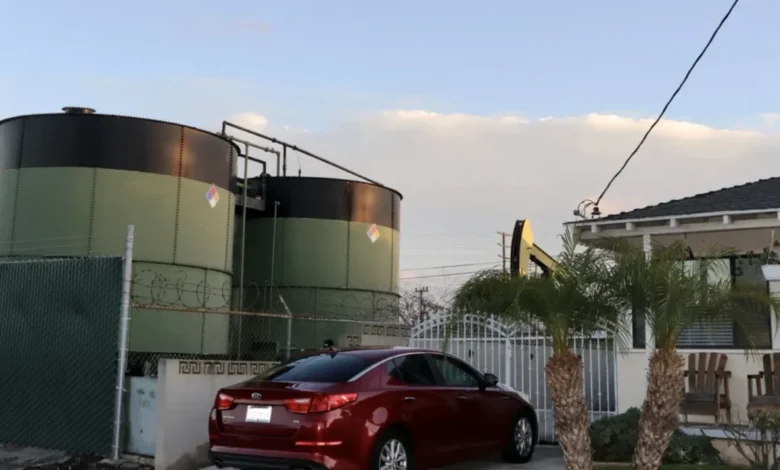
California is on the cusp of a landmark legislative shift that seeks to redefine the relationship between industrial polluters and the frontline communities they have historically marginalized. With the impending signature of Governor Gavin Newsom on Assembly Bill 1661, the state is poised to establish a pioneering financial assistance program that directs $5 million in penalties collected from the Inglewood Oil Field directly into the pockets of 1,000 households suffering from respiratory and reproductive health complications. This policy, widely described by proponents as a form of "environmental reparations," marks a departure from traditional regulatory frameworks that prioritize remediation of land over the direct economic compensation of the individuals whose health has been compromised by industrial activity.
A Legacy of Exposure
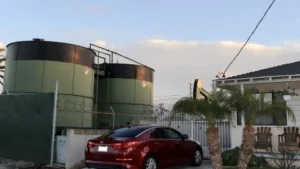
For decades, residents of Inglewood, Baldwin Hills, and Ladera Heights have lived in the shadow of the Inglewood Oil Field, the largest urban drilling site in the United States. For many, like longtime resident Regina Martin, the presence of oil pumpjacks was not a choice but a defining feature of their upbringing. Martin recalls the persistent, sulfurous odor that permeated her neighborhood during the 1950s and 1960s—a sensory constant that she and her peers only later realized was a harbinger of chronic health issues.
Scientific literature has long supported the link between proximity to oil extraction and adverse health outcomes. Studies have consistently demonstrated that residents living near such sites face higher risks of birth complications, childhood development disorders, chronic respiratory illnesses, and various forms of cancer. In Los Angeles, these environmental burdens have historically fallen along racial lines. Due to decades of discriminatory housing practices, including redlining, Black and Brown communities have been disproportionately concentrated in zones adjacent to oil wells, refineries, and major highway corridors.
Legislative Chronology: From Regulation to Restitution
The passage of AB 1661 is the culmination of a multi-year effort by state legislators to hold oil operators accountable for the externalities of their business models. The timeline of this legislative push highlights a growing legislative appetite for aggressive environmental justice policy:
- 2024: Governor Newsom signs AB 2716 into law. This foundational legislation mandates the closure of the Inglewood Oil Field by 2030 and establishes a rigorous penalty structure for "low-producing" wells. The law imposes a $10,000 monthly fine per well on operators to discourage the maintenance of sites that leak methane and other volatile organic compounds.
- Early 2026: Regulatory bodies, utilizing the structure created by AB 2716, begin accumulating significant revenue from the penalties assessed on operators who failed to decommission low-producing wells in a timely manner.
- September 2026: The California Legislature passes AB 1661, authored by Assemblymember Isaac G. Bryan. The bill creates the "community repair and reinvestment fund," a vehicle specifically designed to distribute the collected penalties to residents within a 2.5-mile radius of the field.
- Late 2026: Governor Newsom is expected to sign the bill into law, triggering the implementation phase for the $5 million cash assistance program.
The Economics of Environmental Harm
The financial structure of the bill is designed to bypass traditional bureaucratic hurdles, aiming to provide up to $5,000 per qualifying household. By establishing a fund fueled by the very companies that caused the pollution, the state is effectively internalizing the cost of the environmental damage. Assemblymember Bryan, the first Black legislator to chair the California Assembly’s Natural Resources Committee, argues that this is not merely a government handout but a necessary act of restitution.
"The company has essentially just been extracting from the community with no investments in the community, no care in the community, and what feels like no regard at times for the broader community," Bryan stated. He emphasizes that for families who have seen their household wealth eroded by medical bills and declining property values, these payments represent a long-overdue acknowledgment of the costs borne by the local populace.
To ensure the efficacy of this relief, the state has also passed companion legislation to shield these reparation payments from being classified as taxable income. Assemblymember Tina McKinnor, who spearheaded the tax-shielding bill, noted that the objective is to ensure that recipients receive the full financial benefit of the assistance without triggering secondary tax liabilities.
Challenges in Implementation and Access
While the policy has been lauded by community advocates, experts warn that the true measure of its success will be found in its execution. The primary challenge lies in the application process. With tens of thousands of residents living within the 2.5-mile radius, the limit of 1,000 households creates a significant disparity between demand and supply.
Advocates, including Tianna Shaw-Wakeman of Black Women for Wellness, have cautioned against creating an overly burdensome application process. They argue that requiring medical records—which are often difficult or expensive to obtain—could effectively disqualify the most vulnerable residents, many of whom may suffer from undiagnosed conditions due to lack of access to consistent healthcare. The organization is currently lobbying for a "self-attestation" model, where residents can certify their own health impacts without the need for exhaustive documentation, thereby lowering the barrier to entry.
Broader Implications: A National Model?
The California experiment is being watched closely by environmental justice advocates across the United States. If successful, it could provide a scalable template for other states dealing with the legacy of urban oil and gas extraction. The transition away from fossil fuels is a central pillar of climate policy, but advocates argue that the transition must be "just." This implies that the focus cannot solely be on decommissioning sites; it must also include addressing the intergenerational health and economic impacts that persist long after the pumps stop turning.
However, the risk of "green gentrification" remains a significant concern. As oil wells are shuttered and land is remediated, property values in areas like Inglewood and Baldwin Hills are beginning to rise. There is a palpable fear among local activists that the environmental improvement of the neighborhood could inadvertently drive out the very residents who lived through the decades of pollution, replacing them with wealthier residents who benefit from the newfound air quality.
"We can’t replace toxic oil extraction with gentrification," Shaw-Wakeman said. "There is still a lot more to address beyond those 1,000 households. We’re trying to address the ways in which community members are still being harmed every day."
Conclusion
The passage of AB 1661 signals a profound shift in the legislative philosophy of California. By bridging the gap between public health, environmental justice, and direct economic aid, the state is challenging the status quo of industrial regulation. While $5 million is a fraction of the total economic damage caused by a century of drilling in the Los Angeles basin, the law establishes a vital precedent: that the cost of pollution should be borne by the polluter, and that the benefits of reform should be felt directly by the families who have paid the highest price for the state’s energy history. As the state moves toward a 2030 deadline for the closure of the Inglewood field, this pilot program will serve as a critical case study in whether government-led restitution can truly begin to heal the wounds of the past.
Related posts: