Federal Firefighters Face Unprecedented Risks Amidst Critical Staffing Shortages and Aggressive Containment Mandates

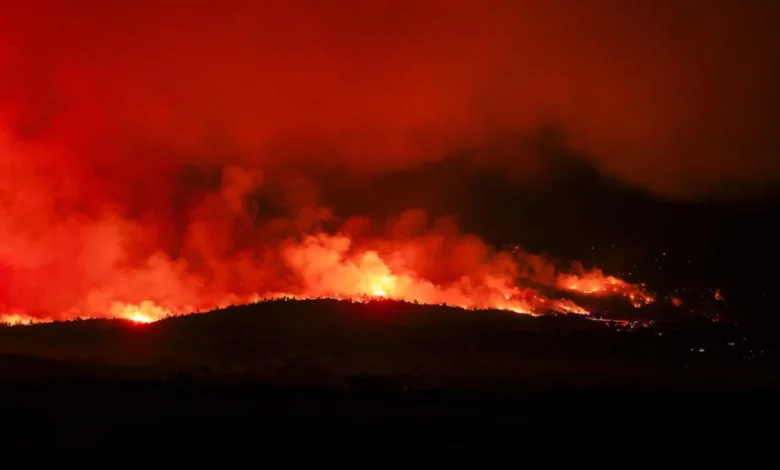
The United States is currently enduring one of the most punishing wildfire seasons in modern history, as federal firefighting agencies grapple with a volatile combination of extreme climate-driven blazes, exhausted personnel, and high-stakes administrative mandates. As of mid-September 2026, the cumulative impact of these fires has reached 149 percent of the 10-year average, with over 8.4 million acres scorched across the American West. Amidst this backdrop, internal reports and testimony from frontline responders indicate that the federal government’s current strategy—characterized by a push for total, aggressive suppression—is placing unsustainable pressure on an already depleted and fatigued workforce.
A Season of Historic Extremes
The 2026 fire season has been defined by its relentless intensity. According to data from the National Interagency Fire Center (NIFC), the nation reached "Preparedness Level 5" (PL5)—the highest tier of emergency resource deployment—for a staggering 48 consecutive days this summer. This duration is nearly double the historical 10-year average for continuous PL5 status, illustrating a sustained level of strain on firefighting infrastructure that has not been witnessed in decades.
The human cost of this escalation has been significant. Fourteen on-duty fatalities have been recorded thus far in 2026, a grim milestone that includes the deaths of three firefighters during the Knowles fire in Colorado. Furthermore, the frequency of "entrapments"—incidents where flames breach safety zones or cut off escape routes—has surged to a 20-year high. By mid-August, at least 12 such life-threatening incidents were documented, underscoring the precarious environment in which crews are being asked to operate.
The Disconnect Between Leadership and the Frontline
A significant point of contention has emerged between the rank-and-file firefighters and the leadership of the United States Forest Service (USFS) and the Department of the Interior. USFS Chief Tom Schultz testified before a congressional subcommittee in July, asserting that the agency’s firefighting force is "fully staffed and equipped to respond aggressively to every unplanned ignition."
However, this narrative of readiness is sharply contradicted by those on the ground. Nine current federal firefighters, speaking on the condition of anonymity, described a reality of chronic understaffing, particularly in specialized leadership roles such as division supervisors and taskforce leaders. These positions require decades of experience and are increasingly difficult to fill. When these roles remain vacant, agencies often rely on temporary, less-qualified personnel to lead complex operations, a practice that veteran fire experts warn is a recipe for disaster.
Bobbie Scopa, a retired fire chief and vice president of the advocacy group Grassroots Wildland Firefighters, emphasized that the lack of leadership depth forces crews to double up on responsibilities. "It is not like we are trying to add bureaucracy; we are trying to keep people alive," Scopa stated, noting that the capacity for firefighting has failed to keep pace with the "inflation" of the current fire environment.
Policy Shifts: The Return to Full Suppression
The Trump administration has mandated a significant strategic pivot, moving away from policies that allowed for "managed fire" or the observation of blazes in remote, low-risk areas. Both Agriculture Secretary Brooke Rollins and Interior Secretary Doug Burgum have issued directives prioritizing "direct attack"—a strategy that involves engaging fires at the front line to smother them immediately.
While agency officials argue that this aggressive stance is necessary to protect communities and property in a warming climate, critics contend that it creates a "feedback loop of catastrophe." Fire ecologists like Timothy Ingalsbee, executive director of Firefighters United for Safety, Ethics and Ecology, argue that by suppressing every ignition, the land accumulates excessive fuels, ensuring that future fires will be even more catastrophic once they inevitably break through.
Moreover, the mandate for full suppression is an economic and physical drain. The combined suppression budget for the federal agencies, totaling approximately $6 billion, is reportedly nearing depletion with significant portions of the fire season still remaining. Critics argue that the administration is spending billions to extinguish the "last two percent" of fires that pose little threat to life or property, while simultaneously exhausting crews who have been on near-continuous assignments since April.
Implications for Future Fire Management
The long-term implications of the 2026 season are being felt throughout the federal workforce. The cumulative effects of smoke inhalation, severe sleep deprivation, and psychological stress have led to a marked decline in operational safety. Experts warn that when firefighters are pushed to their limits, their ability to make critical, split-second decisions diminishes, significantly increasing the likelihood of fatal errors.
In response to these trends, a bipartisan coalition of senators—including Michael Bennet, Alex Padilla, Ron Wyden, Adam Schiff, and John Hickenlooper—penned a letter to the heads of the USDA and the Department of the Interior. The senators expressed "exceptional concern" regarding the high fatality rates and noted that the current operational model is unsustainable. They pointed to the depletion of the suppression budget and the reliance on temporary, insufficient supervisory structures as clear indicators that the current federal strategy requires immediate reevaluation.
Data and Chronology: The Path to Crisis
The trajectory of the 2026 season can be categorized into several critical phases:
- Spring 2026: Firefighting crews began early deployments as drought conditions across the West created an early-start environment.
- Early July: The Aspen Acres fire in Rye, Colorado, burned over 73,000 acres, marking it as one of the largest in state history and signaling the start of a peak season.
- Late July: Congressional testimony from USFS Chief Tom Schultz affirmed a policy of full staffing and aggressive suppression, despite reports of resource shortages.
- Mid-August: The Wildland Fire Lessons Learned Center reported that entrapments hit a 20-year high, reflecting the increased danger of direct-attack strategies in high-intensity conditions.
- September: Despite a drop to Preparedness Level 3, thousands of firefighters remained on the lines, many of whom had been deployed for months without adequate rest, leading to what experts describe as a workforce at the "breaking point."
Analysis: The "Perfect Firestorm"
The situation in 2026 represents a clash between mid-20th-century suppression philosophies and 21st-century environmental realities. The federal government’s insistence on aggressive, total suppression is increasingly viewed by field experts as a political necessity that ignores the ecological reality of modern forest management. By failing to integrate managed fire strategies—which allow for the clearing of hazardous fuels through low-intensity burning—the government may be setting the stage for even larger, more uncontrollable fires in the years to come.
Furthermore, the personnel crisis is not merely a matter of hiring; it is a retention issue rooted in the professionalization of the wildland fire service. As long as the federal government maintains a structure that treats specialized, high-risk labor as a temporary, seasonal resource, the systemic failures described by current and retired firefighters will likely persist.
As the 2026 season winds down, the focus among lawmakers and labor advocates is shifting toward the upcoming budget cycles and the potential for a comprehensive review of the federal firefighting mandate. Whether the administration will adjust its aggressive containment stance remains to be seen, but the consensus among safety advocates is clear: without a strategic shift that prioritizes firefighter safety and acknowledges the limitations of current resources, the cycle of exhaustion, injury, and fatality is destined to repeat in the next fire cycle.
Related posts: