Bannock County Faces a Pivotal Crossroads as It Weighs Reversing a Controversial Ban on Renewable Energy Development

The future of energy policy in Bannock County, Idaho, stands at a critical juncture this autumn as local officials prepare to vote on a landmark ordinance that could dismantle a long-standing ban on utility-scale wind and solar projects. This legislative shift represents more than a simple zoning adjustment; it is a high-stakes test of how rural American communities reconcile deeply held property rights with the urgent, growing demand for electrical infrastructure.

The upcoming vote, which is expected to include provisions for nuclear energy alongside wind and solar, marks a significant reversal from the protectionist stance the county adopted in early 2024. For local leaders, the decision is defined by a tension between the preservation of agricultural heritage and the economic necessity of adapting to a rapidly evolving energy landscape.
A Chronology of Conflict and Legislative Change
The roots of the current controversy trace back to the fall of 2023, when regional anxiety surrounding the massive, 1-gigawatt Lava Ridge Wind Project in southern Idaho prompted a statewide dialogue on land use. Bannock County Commissioner Jeff Hough, who had recently attended an Idaho Association of Counties conference, returned to his district with a profound concern that the county lacked the regulatory framework to prevent developers from bypassing local oversight.

On October 12, 2023, the Bannock County Commission voted unanimously to implement a six-month moratorium on large-scale energy projects. The intent was not to ban development, but to provide a window to draft comprehensive regulations. However, the political climate shifted during the public comment period. A grassroots movement, led by residents such as Rebecca Falcon and Dez Hauser, began to coalesce in the rural communities of south Bannock County, effectively lobbying for a permanent prohibition.
The climax of this period occurred in March 2024, when the commission voted 2-1 to finalize the ban, with Hough serving as the lone dissenter. In the time since that vote, the political landscape has undergone a subtle but notable transformation. Hough has risen to the role of commission chair and has made the overturning of the ordinance a central pillar of his agenda. His persistence is driven by a belief that the county’s initial reaction was an overreach that violates the fundamental American principle of private property rights.

The Economic and Infrastructural Imperative
The push to reverse the ban is underscored by urgent data regarding Idaho’s power grid. Idaho Power, the state’s primary utility provider, has projected a staggering 1-gigawatt increase in electricity demand by 2030—a 26 percent surge from current consumption levels. Experts argue that Bannock County is uniquely positioned to help meet this demand due to the presence of the Populus substation, a vital junction for regional energy transmission.
By siting new power plants near existing infrastructure, developers can significantly reduce transmission costs, providing long-term benefits to utility customers. Beyond regional reliability, the economic case for energy development has become increasingly persuasive. Neighboring Power and Bingham counties have successfully leveraged solar development for tax revenue, seeing combined annual yields exceeding $1.5 million in 2024.

For many local farmers, the economic reality is stark. Prolonged drought conditions, compounded by record-low snowpacks, have rendered traditional grain farming less viable. Landowners like Dale Lish and Lytton Bastian have pointed out that leasing "less productive" or fallow acreage for renewable energy provides a necessary, stable income stream that helps maintain the viability of family farms across generations.
The Opposition: A Question of Land Use and Safety
Despite the potential for economic growth, the opposition remains firm, particularly in southern Bannock County. Residents like Rebecca Falcon express concerns that go beyond aesthetics, citing fears regarding the permanent loss of prime agricultural land, the fire risks associated with lithium-ion battery storage, and the long-term uncertainty of decommissioning agreements.

These anxieties are not unique to Bannock County; they mirror a national trend. According to an analysis by the Daily Yonder and Canary Media, nearly one in four U.S. counties had some form of moratorium or impediment to clean energy development by 2025, with more than 60 percent of those counties classified as rural. Critics of solar development often point to the large surface area required for panels, a narrative that has been frequently echoed in industry-skeptical circles.
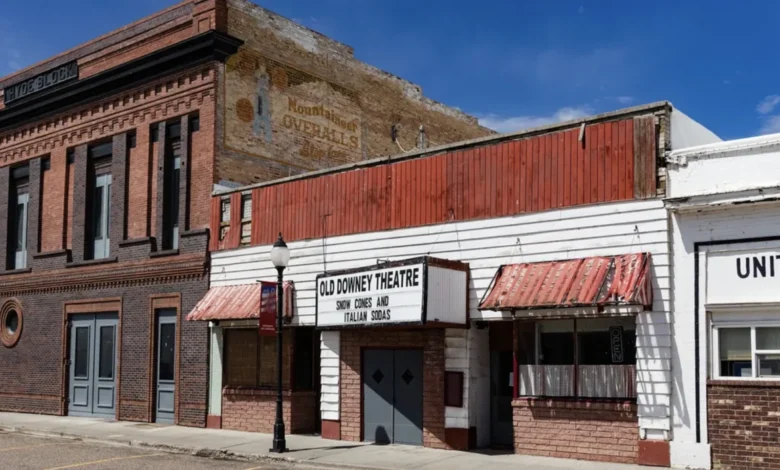
Furthermore, the volunteer fire departments in rural communities like Downey and Lava Hot Springs have raised concerns about their capacity to manage incidents involving large-scale energy storage systems. While developers like Balanced Rock Power have attempted to address these concerns by offering to fund specialized training and equipment, the "no-growth" sentiment remains a potent political force in the region.

The Nuclear Wildcard and Future Energy Policy
A fascinating development in the Bannock County debate is the broad support for nuclear energy, which contrasts sharply with the local hostility toward solar and wind. A 2026 county survey revealed that 90 percent of 700 respondents viewed the nuclear industry favorably. This sentiment is likely influenced by the proximity of the Idaho National Laboratory (INL), a leader in advanced nuclear research.
The potential for small modular reactors (SMRs) and microreactors has offered a compromise that many anti-solar advocates find palatable. For individuals like Falcon, a compact nuclear facility on a small footprint is far more acceptable than a sprawling solar farm. However, energy analysts urge caution. While the prospect of a nuclear-powered future is high-profile, the industry remains in its infancy. With only two next-generation projects having received construction permits in the U.S. to date—and neither yet holding an operating license—the transition to nuclear power is likely at least a decade away.

Commissioner Hough has been pragmatic in his approach, acknowledging that while nuclear energy represents the long-term future, the county requires immediate economic and energy solutions. "Nuclear is 10 years away," Hough noted. "You’ve got to have something to help get you there."
Implications for the Future of Rural Development
The impending vote in Bannock County serves as a microcosm of a much larger national conversation. As the United States moves toward a decarbonized grid, the burden of land use is increasingly falling on rural counties that were not originally designed for industrial-scale energy production.

If the commission votes to lift the ban this fall, it will signal a shift toward a more integrated approach to rural land use, where agriculture and energy generation are viewed as compatible rather than mutually exclusive. Conversely, a decision to maintain the ban would demonstrate the continued influence of local, grassroots land-use movements that prioritize traditional landscape aesthetics and risk aversion over the broader goals of energy security and economic development.
The outcome will be closely watched by policy experts and energy developers nationwide. For the commissioners, the task remains complex. As Ernie Moser, an incumbent commissioner, noted, the decision is not a simple "black-and-white" choice. It involves balancing the immediate needs of a struggling agricultural sector with the long-term responsibility of stewardship.

As the county prepares for the public hearings and the final vote, the divide between those who see the valley as a place to be protected in its current form and those who see it as a landscape capable of fueling the next generation of American energy continues to define the political, economic, and social fabric of Bannock County. The final verdict will determine not only the immediate fiscal trajectory of the region but also its role in the shifting landscape of the American West.