Thune says it’s still an “open question” whether Senate GOP can pass massive defense bill

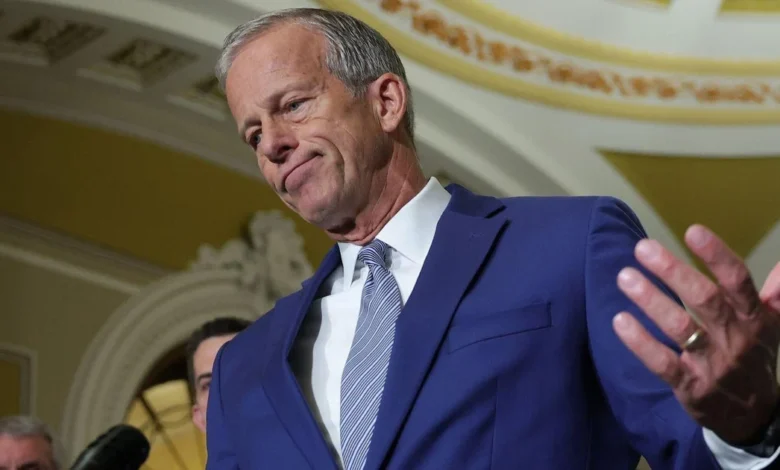
Washington — As the legislative clock ticks down on the current congressional session, Senate Majority Leader John Thune signaled on Wednesday that the Republican conference remains deeply divided over the strategy for passing a $350 billion emergency defense funding request. With only three weeks remaining before the chamber recesses for the winter holidays and the balance of power shifts toward the Democratic caucus in the new year, the urgency to secure this funding has reached a fever pitch.
The Trump administration has been exerting significant pressure on Senate leadership to push the massive defense package through the budget reconciliation process. This legislative mechanism is highly prized by the majority party because it allows for the passage of spending measures with a simple majority vote, thereby bypassing the 60-vote threshold typically required to overcome a filibuster. However, the path forward is fraught with procedural hurdles and internal party skepticism.
The Strategic Dilemma: Reconciliation vs. Regular Order
The decision to utilize reconciliation for a third time under the second Trump administration carries substantial risks. While it would insulate the Pentagon’s $350 billion request from Democratic obstruction, the process is notoriously cumbersome. It invites a "vote-a-rama"—a marathon, overnight session during which the minority party can introduce an unlimited number of amendments. These votes are often designed to force senators into politically uncomfortable positions, creating a grueling environment for a conference that is already struggling to maintain unity.
Senate Budget Committee Chairman Ron Johnson, who would be tasked with orchestrating the reconciliation framework, tempered expectations on Wednesday. While he confirmed that the committee is not "taking it off the table," he indicated that a floor vote is unlikely to materialize this week. The delay suggests a recognition that the necessary 50-vote consensus within the GOP has not yet been achieved.
Senator Thune, navigating the precarious divide between the administration’s demands and his members’ concerns, noted that if the party cannot reach an agreement before the Thanksgiving break, a narrow window remains in early December. "Let’s just say it’s an option," Thune remarked when questioned about the feasibility of initiating the process this week.
The Pentagon’s Case and the "Defense Hawks"
The administration’s lobbying efforts are being spearheaded by Deputy Defense Secretary Steve Feinberg, who held a closed-door briefing with Republican senators on Wednesday. The objective was clear: convince skeptics that the requested $350 billion is not merely a budgetary preference but a national security imperative.
Defense hawks within the Senate have long argued that the U.S. military is currently experiencing a critical depletion of assets. Proponents of the funding argue that the ongoing conflict with Iran has strained military readiness to a breaking point. Thune echoed these sentiments, stating, "We’re running out of everything, and if we’re to defend the country, we need a significant amount of funding for defense, which probably isn’t going to happen through the normal appropriations process of the Democrats."
However, the "normal appropriations" route remains an alternative that some moderate Republicans are eager to explore. By reaching across the aisle, GOP leadership could potentially avoid the procedural agony of reconciliation, though they risk alienating the administration and the hardline conservative base that views cooperation with Democrats on defense as a sign of weakness.
Broader Legislative Context and Prior Precedents
This current impasse is the latest chapter in a year defined by aggressive use of reconciliation. In previous months, the Republican-led Senate successfully navigated President Trump’s comprehensive defense, policy, and tax agenda. Furthermore, the chamber utilized a separate reconciliation measure to bolster the Department of Homeland Security’s immigration enforcement agencies. That move was necessitated by a legislative stalemate that had persisted for months, fueled by Democratic demands for oversight reforms following the high-profile police-involved deaths of two American citizens in Minneapolis earlier this year.
The fatigue from these repeated high-stakes legislative battles is palpable. Senators are wary of another complex reconciliation effort that could derail other end-of-year priorities, including judicial confirmations and the looming federal debt ceiling discussions.
The FAA Funding Dispute
The complexity of the current legislative agenda is compounded by an additional, albeit smaller, request from the Transportation Department. Transportation Secretary Sean Duffy recently petitioned for $50 billion to modernize the Federal Aviation Administration (FAA) systems. This request gained momentum following a catastrophic system outage last week that triggered a rare nationwide ground stop.
Despite the obvious need for infrastructure investment, the reception among Republican senators has been cool. The $50 billion price tag is viewed by many as excessive, and there is little appetite to attach such a controversial funding item to the defense package. The inclusion of non-defense spending often complicates the internal whip count, as it invites criticism regarding fiscal responsibility from the party’s more conservative wing.
Implications of a Lame-Duck Stalemate
The implications of failing to pass the defense package are significant. If the Republican-controlled Senate leaves town without securing these funds, the incoming Democratic majority will have total leverage over the Department of Defense’s budget for the 2027 fiscal year.
For the Trump administration, a failure to secure the $350 billion would represent a major political defeat in the final weeks of their control over the legislative agenda. It would also signal a waning influence over the Senate, as members begin to position themselves for the new political reality of the upcoming year.
"I don’t know that they will [support the defense bill], but we think that we ought to at least explore that possibility," Thune said regarding Democratic participation. This willingness to engage with the opposition reflects a desperate attempt to find a path of least resistance. Yet, as the calendar inches toward the new year, the "consensus view" Thune refers to remains elusive.
Chronology of the Current Legislative Push
- Last Week: A major FAA system outage leads to a nationwide ground stop, sparking calls for a $50 billion infrastructure investment.
- Tuesday, November 17: Transportation Secretary Sean Duffy meets with Senate Republicans to discuss the FAA funding, meeting with widespread skepticism.
- Wednesday, November 18: Deputy Defense Secretary Steve Feinberg holds a closed-door meeting with GOP senators to justify the $350 billion defense request.
- Wednesday, November 18 (Evening): Senator John Thune addresses the press, labeling the path to a reconciliation vote an "open question."
- Late November/Early December: The final window for legislative action before the holiday recess and the subsequent transfer of congressional power.
Conclusion: A Test of Leadership
The coming days will be a critical test for Senator Thune’s leadership. He must balance the administration’s aggressive policy goals with a caucus that is increasingly focused on the transition to the new Congress. If the Republicans decide to proceed with reconciliation, they will be betting that the urgency of the Pentagon’s request can override the political damage caused by a late-night, multi-day voting marathon. If they choose to negotiate with Democrats, they risk a protracted battle that could end in a compromise far short of the administration’s $350 billion goal.
As the Senate remains in session, the eyes of the defense establishment and the broader political class remain fixed on the upper chamber. The outcome of these deliberations will not only shape the military’s capabilities for the coming year but will also define the final legacy of the Republican legislative agenda before the transition of power begins.