The historic election of Sam Forstag in Montana marks the end of a three-decade political drought for Democrats in the state’s US House delegation.


In a landmark shift that has reshaped the political landscape of the American West, Montana voters have elected 32-year-old Sam Forstag to represent the state’s 1st Congressional District. The victory, secured earlier this month, concludes a thirty-year period during which the state had not sent a Democrat to the US House of Representatives—a streak that dated back to the retirement of Pat Williams in 1996. Forstag, a former wildland firefighter and union leader, defeated Republican opponent Aaron Flint, securing 50.3 percent of the vote compared to Flint’s 46.8 percent.
The Rise of a Political Outsider
Sam Forstag’s path to Congress was unconventional. Rather than rising through traditional political circuits, Forstag built his platform on his experiences as a smokejumper and a representative for the National Federation of Federal Employees. In his capacity as a union leader, he represented roughly 800 US Forest Service workers across the Lolo, Bitterroot, and Gallatin national forests. This background provided him with a granular understanding of the systemic challenges facing public lands, including staffing shortages, aging equipment, and the increasingly volatile nature of fire seasons in the Northern Rockies.
Forstag’s campaign strategy focused on bridging the gap between economic anxiety and environmental stewardship. By framing wildfire mitigation as both an ecological necessity and a fiscal imperative, he appealed to a broad coalition of voters. He argued that the current reactive approach to wildfire—characterized by emergency, short-term spending—is economically unsustainable. Instead, he proposed proactive investment in prescribed burning, forest thinning, and competitive wages for firefighters to reduce reliance on dangerous, high-cost overtime shifts.
A Chronology of the 2026 Shift
The momentum toward this outcome began building long before election night. Following the implementation of significant federal workforce cuts during the second Trump administration, morale and operational capacity within the Forest Service and the Department of the Interior hit record lows.

- March 2025: Rep. Bobby Scott (D-Va.) introduces the Protecting the Right to Organize (PRO) Act, signaling a broader national Democratic push to strengthen collective bargaining. Forstag aligns his campaign closely with these labor-centric goals.
- May 2026: Forstag appears alongside Rep. Alexandria Ocasio-Cortez (D-N.Y.) at a rally in Missoula to address union leaders, solidifying his status as a pro-labor candidate.
- November 3, 2026: Election Day. Forstag secures decisive victories in major urban centers, including Missoula County (68.2%) and Gallatin County (59.4%).
- November 12, 2026: Within days of his election, Forstag takes to social media to oppose an Interior Department proposal to reduce federal land holdings, marking his first major act of legislative defiance against the outgoing administration.
Statistical Analysis of the Electoral Map
Forstag’s victory was not a landslide, but rather the result of a calculated consolidation of the state’s growing urban and semi-urban populations. According to unofficial results from the Montana Secretary of State, Forstag garnered 132,003 votes, while Aaron Flint received 122,694. A Libertarian candidate, Nick Sheedy, drew 7,522 votes, a margin that political analysts suggest did not significantly alter the primary outcome.
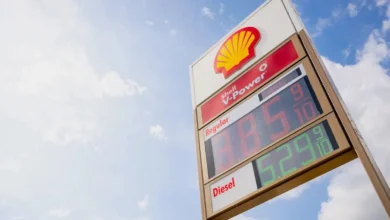
The geography of the vote reveals a clear divide. While rural counties leaned toward the Republican platform, Forstag’s performance in Missoula, Gallatin, and Silver Bow counties provided a critical firewall. The combined net gain in Missoula and Gallatin counties—a margin of 35,226 votes—was the decisive factor in overcoming Flint’s support in the more sparsely populated regions of the district. Political observers, including University of Montana professor Abhishek Chatterjee, point to high gas prices and general economic fatigue as primary drivers for the shift, noting that voters were looking for a candidate who prioritized tangible economic solutions over partisan alignment.
Legislative Priorities and Initial Challenges
As Forstag transitions from the campaign trail to Capitol Hill, his agenda is set to collide with the realities of a divided government. While his initial post-election communications emphasized affordable housing, healthcare, and campaign finance reform, his legislative identity remains tethered to his promise to protect public lands.
Forstag has made it clear that he intends to pursue a seat on the House Natural Resources Committee. His objective is to gain legislative leverage to oversee the Department of the Interior’s five-year strategic plan, which proposes the potential sale of federal land assets to states and private entities. Forstag has already initiated outreach to his Republican colleague, Rep. Troy Downing, seeking common ground on the issue of land preservation. By positioning himself as a pragmatist willing to cross the aisle, Forstag is attempting to preempt the political isolation that often faces freshman representatives in the minority party.
However, political scientists warn that the "power of the purse" is a blunt instrument. While Forstag has the ambition to restore federal agency staffing levels, his ability to execute this will be constrained by the threat of presidential vetoes and the legislative bottleneck of the Senate.

Broader Implications for Public Lands
The stakes for Montana’s public lands are high. Environmental advocates, such as Amy Cilimburg of Climate Smart Missoula, have expressed cautious optimism regarding Forstag’s election. They argue that the degradation of federal agencies over the last two years has left the American West vulnerable to the compounding effects of drought, record temperatures, and shortened snowpack cycles.
"The response to climate risks is to lean into credible science and rebuild our public agencies," Cilimburg stated. For these advocates, Forstag represents a potential conduit for scientific data to reach the legislative floor. His support for modernized timber mills and opposition to fast-tracked environmental exemptions suggests a balanced approach—one that supports the regional timber economy while rejecting the deregulation of protected landscapes.
The Road Ahead
Forstag’s decision to join both the moderate Blue Dog Coalition and the Congressional Progressive Caucus reflects a strategy of broad-tent politics. By positioning himself as a bridge between the party’s different ideological wings, he hopes to maximize his influence on economic policies that impact working families.
The task ahead is immense. As he enters his first term, Forstag must navigate the tension between his campaign promises to labor unions and the environmentalist base that helped propel him to victory. Whether he can secure the funding necessary to rebuild federal land management agencies will be the primary test of his political acumen.
For the people of Montana, the election of Sam Forstag represents a turning point in the state’s federal representation. After three decades of silence in the House, the district has chosen a representative whose professional life was defined by the very landscape he now aims to govern. While the legislative hurdles are significant, his victory has fundamentally altered the discourse surrounding federal land management and the role of the state in protecting its natural resources for the next generation. As the 2027 legislative session approaches, all eyes will be on Washington to see if the former smokejumper can effectively transition from the front lines of forest fires to the front lines of federal policy.