The Supreme Court Confronts the Future of Climate Liability in Suncor Energy v. Boulder

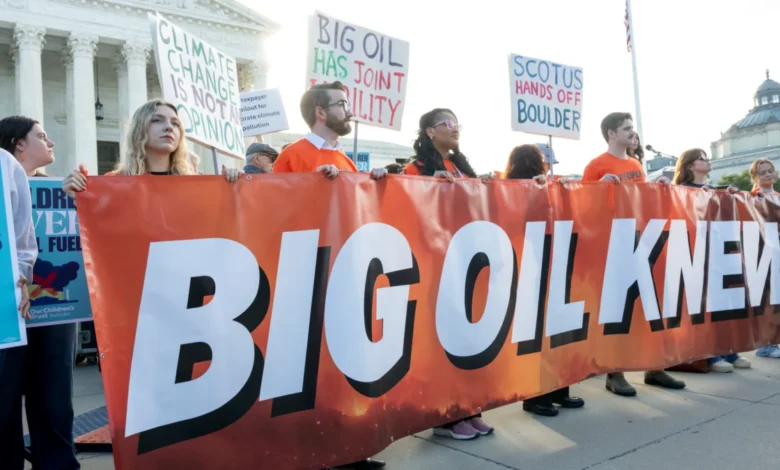
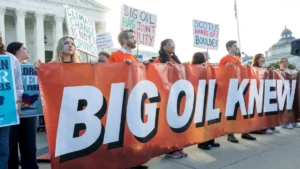
On Monday morning, the steps of the United States Supreme Court served as the stage for a pivotal collision between the judicial system and the accelerating realities of the climate crisis. As the justices heard oral arguments in Suncor Energy v. Boulder, a crowd of roughly one hundred advocates, including climate disaster survivors, Colorado ranchers, and environmental policy experts, gathered to demand that major fossil fuel corporations be held legally and financially accountable for their historical role in exacerbating global warming. The demonstration, organized by the Center for Climate Integrity and Fossil Free Media, underscored the mounting pressure on the judiciary to determine whether local governments possess the legal standing to pursue damages for the catastrophic costs of climate-induced disasters.
The case, which carries profound implications for the future of climate litigation across the United States, centers on a 2018 lawsuit filed by the City and County of Boulder against energy giants Suncor and ExxonMobil. The plaintiffs allege that these companies engaged in a decades-long campaign of deception, intentionally obscuring the risks associated with fossil fuel combustion while actively lobbying against regulatory action.
A Chronology of Conflict: From Disinformation to the Courtroom
The roots of the current legal battle extend far beyond the 2018 filing. The scientific consensus regarding the impact of carbon emissions on global temperature rise was identified by researchers within the fossil fuel industry as early as the late 1960s and 1970s. Internal company documents, many of which have been unearthed by investigative journalists and environmental historians, suggest that executives were aware that the continued burning of oil, gas, and coal would eventually destabilize the climate.
Despite this internal awareness, the industry invested heavily in public relations campaigns designed to sow doubt regarding climate science. This strategy mirrors the tactics historically employed by the tobacco industry to deflect blame for the health crises caused by smoking. The timeline of this systemic obfuscation includes:
- 1968–1975: Fossil fuel research divisions issue internal reports warning of potential atmospheric carbon accumulation and associated global warming.
- 1980s–1990s: Industry groups ramp up lobbying efforts to oppose international climate agreements, such as the Kyoto Protocol, while promoting public skepticism regarding human-caused climate change.
- 2018: The City and County of Boulder, alongside several other Colorado municipalities, initiate legal proceedings against Suncor and ExxonMobil, seeking damages for the infrastructure costs of climate-related extreme weather events.
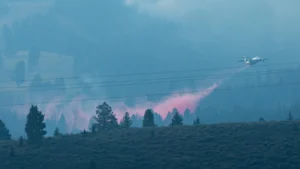
- 2021: The Marshall Fire destroys over 1,000 homes in Boulder County, highlighting the direct financial burden on local governments for fire mitigation, infrastructure repair, and disaster relief.
- 2025: The Eaton Fire in Altadena, California, causes further loss of life and property, reinforcing the call for corporate accountability.
- 2026: The Supreme Court agrees to hear the arguments in Suncor Energy v. Boulder to address jurisdictional questions and the viability of state-level climate litigation.
The Human Cost: Survivors and Farmers Take the Stand
The rally outside the court provided a human counterweight to the complex legal arguments being debated inside. Louie Delaware, who lost his home in the 2021 Marshall Fire, spoke to the crowd about the reality of being displaced for over two years. His testimony serves as a microcosm of the damages the lawsuit aims to address: the tangible, life-altering destruction caused by wildfires that are increasingly frequent and intense due to shifting climate patterns.
Joining him were Zaire Calvin, a survivor of the 2025 Eaton Fire, and regenerative ranchers from Rio Blanco County. The presence of agricultural workers highlighted the often-overlooked economic instability caused by climate change. Dr. Kathryn Bedell, a sixth-generation rancher, provided a stark warning regarding the intersection of climate change and food security. The persistent drought and extreme heat conditions, she noted, are forcing families to sell off livestock that have been managed for generations. Her concerns reflect a broader systemic threat: if the agricultural sector cannot adapt to a rapidly warming environment, the resulting volatility in food prices and supply chain integrity will pose a national security challenge.

Legal Arguments and Judicial Implications
Inside the courtroom, the focus remained on the procedural and jurisdictional merits of the case. The energy industry’s defense team argues that state courts are not the appropriate venue for addressing global climate issues. They contend that the regulation of greenhouse gas emissions is a federal matter, governed by the Clean Air Act, and that allowing municipalities to sue for damages would lead to a chaotic patchwork of inconsistent state-level verdicts.
However, legal scholars point out that the plaintiffs are not seeking to regulate emissions directly. Instead, they are pursuing common-law tort claims, including public nuisance and failure to warn. By framing the lawsuit as a matter of corporate accountability and consumer protection, the plaintiffs hope to bypass federal preemption arguments.
The case also faced a significant procedural moment when Justice Samuel Alito announced an 11th-hour recusal. While the specifics of the recusal were not fully detailed, the move added a layer of uncertainty to an already high-stakes deliberation. With the remaining eight justices set to decide the outcome, the ruling will likely serve as a precedent for dozens of other climate-related lawsuits currently paused in lower courts across the nation, including the high-profile litigation initiated by the state of California.
Broader Impact: The Precedent of Accountability
The implications of Suncor Energy v. Boulder extend to the very architecture of American environmental law. Should the Supreme Court rule in favor of the municipalities, it would effectively open the door to a new era of climate litigation, where the "polluter pays" principle is applied to the fossil fuel industry at the local level. Such a shift would likely force these corporations to internalize the costs of their business models, potentially influencing their future investment strategies and transparency regarding carbon risk.
Former Washington Governor Jay Inslee, a prominent attendee at the rally, emphasized the moral dimension of the case. By framing the industry’s actions as "malignant and malicious," he articulated a sentiment shared by many climate activists: that the legal system is the final recourse for communities bearing the physical and financial scars of climate change.
As the court weighs its decision, the nation remains at a crossroads. The tobacco settlements of the late 1990s, where major manufacturers were forced to pay billions in damages for misleading the public about the health risks of cigarettes, are frequently cited by advocates as a roadmap for the current effort. Whether the judiciary will view climate damage through a similar lens remains the defining question of this legal cycle.
Ultimately, the proceedings in Washington reflect a fundamental shift in how the public perceives corporate responsibility in the 21st century. The demand from the survivors and ranchers is clear: they are seeking not just financial restitution, but an acknowledgment of the truth. As the legal community awaits the final judgment, the case serves as a stark reminder that the costs of climate change are no longer abstract projections—they are being tallied in the destroyed homes of Boulder, the sold-off herds of Colorado, and the corridors of the highest court in the land. The outcome of this case will likely determine whether the American legal system remains a venue for redress for those affected by industrial policy, or if the burden of a changing climate will continue to fall exclusively on the shoulders of the public.
Related posts: