The Great Digital Exodus: Why Global Science Is Racing to Build an Offsite Ark for Climate Data

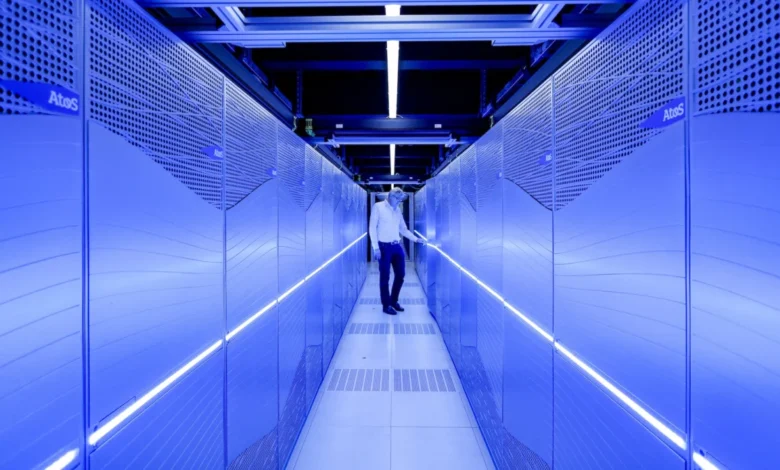
In the heart of Hamburg, Germany, the German Climate Computing Center (DKRZ) is currently executing an unprecedented logistical mission. Within the climate-controlled confines of its five-story facility, technicians are installing massive server racks designed not merely to store local research, but to serve as a digital sanctuary for American climate data. This endeavor, part of a $35 million initiative funded by the German Research Foundation (DFG), represents a paradigm shift in how the international scientific community views data sovereignty. As political hostility toward climate research intensifies in the United States, scientists are moving from a model of passive data storage to a proactive, decentralized, and resilient global infrastructure designed to survive the volatility of domestic politics, cyberwarfare, and physical conflict.
The urgency of this project is underscored by a series of events in the United States that have alarmed the global academic community. Since the beginning of 2025, the U.S. administration has engaged in a systematic campaign to minimize the visibility of climate science. This has included the shuttering of over 100 federal climate studies, the erasure of climate-related terminology from official government websites, and direct attempts to defund critical monitoring infrastructure, such as the Mauna Loa Observatory. Perhaps most damaging was the early 2025 incident involving the Department of Government Efficiency (DOGE), which resulted in the deletion of 300 datasets managed by NASA’s Socioeconomic Data and Applications Center (SEDAC). These datasets, representing decades of integrated remote sensing and socioeconomic research, were saved only through an emergency, last-minute effort by independent researchers who scrambled to migrate the information to the Harvard Dataverse Repository before the servers were wiped.
A Chronology of Scientific Fragility
The current state of emergency has its roots in a long-standing assumption of stability that has defined Western science since the post-World War II era. For decades, the “public domain” nature of taxpayer-funded U.S. climate data was considered a sufficient guarantee of its permanence. However, the events of the last eighteen months have shattered this assumption.
- January 2025: The United States formally withdraws from the UN Intergovernmental Panel on Climate Change (IPCC) and the UN Framework Convention on Climate Change, signaling a departure from global climate cooperation.
- April 2025: The deletion of SEDAC datasets triggers an international panic, leading to the formation of the U.S. Academic Alliance for the IPCC.
- Summer 2025: The American Geophysical Union (AGU) launches the Data Resilience Project, formalizing the effort to establish global, redundant storage sites.
- Late 2025: The German Research Foundation (DFG) allocates $35 million specifically for the "Data Resilience" initiative, creating a legal and technical framework for hosting foreign scientific data.
- March 2026: A summit in Berlin brings together 100 global experts to codify protocols for cross-border data preservation.
The Technical and Physical Challenge of Data Sovereignty
The physical logistics of this initiative are as daunting as the political ones. Climate simulation data is not merely text; it involves petabytes of high-resolution environmental modeling. One petabyte of data is roughly equivalent to 200 million high-resolution photographs. Moving this volume of information requires massive bandwidth, and in many cases, it is more efficient to utilize “sneakernet”—the physical transport of hard drives and magnetic tape via cargo plane or courier—than to attempt a digital transfer over congested international fiber-optic networks.
However, the threat to science is not limited to U.S. policy. The global landscape of research is increasingly fragile. In Ukraine, the ongoing war has forced scientists to prioritize the physical and digital evacuation of meteorological and biodiversity records. When Russian forces targeted research infrastructure, the loss of data was not just a technical failure but a strategic blow to the country’s long-term environmental planning. Organizations like the Senckenberg Natural History Museum in Frankfurt have stepped in to host datasets from Yemen and Ukraine, demonstrating that the need for a "Global Ark" is not confined to any one nation.
Institutional Responses and the Role of the AGU
The American Geophysical Union has emerged as the central clearinghouse for this defensive strategy. By organizing the U.S. Academic Alliance for the IPCC, the AGU has circumvented the loss of government-sanctioned participation, ensuring that American scientists remain primary authors for the upcoming 2029 UN assessment. The organization’s stance is that data is a global public good that transcends the current administration’s agenda.
According to Ben Zaitchik, president-elect of the AGU, the scientific community has reached an inflection point. “We have engaged in triage efforts to ensure data remains usable and accessible,” Zaitchik noted during the Berlin summit. “But we clearly now have arrived at a moment where we must fundamentally reimagine data organization and maintenance for long-term viability and growth.”
This sentiment is echoed by experts at the Alfred Wegener Institute for Polar and Marine Research. Frank Oliver Glöckner, a professor of earth systems data science, is currently leading the integration of data from a U.S. climate research center slated for closure. Glöckner argues that the current political friction, while destructive, has forced a necessary evolution. By breaking the reliance on centralized, government-controlled repositories, scientists are building a "digital pipeline" that can survive local outages, whether caused by political interference or natural disasters.
Broader Implications: A New Era of Decentralization
The implications of this movement are profound. First, it marks the end of the "trust-based" model of research. Historically, scientists assumed that if they published data, the government would keep it accessible. That is no longer a safe assumption. Moving forward, "data redundancy" will likely become a standard requirement for grant funding, similar to the requirements for ethical oversight or data management plans.
Second, the initiative exposes the vulnerability of digital infrastructure in an era of rising authoritarianism. As political parties—such as the AfD in Germany—gain ground on platforms that often include climate skepticism, European scientists are beginning to realize that they, too, are susceptible to the same pressures seen in the United States. The DKRZ and other European centers are already considering "reciprocal backup" agreements, ensuring that if political winds shift in Europe, their data can be hosted in the United States or elsewhere in a secure, neutral environment.
Finally, the initiative is transforming the definition of a "researcher." Scientists are now increasingly required to be data architects and digital security experts. They must not only preserve the raw data but also the specialized software environments required to process it. Without the metadata, the algorithms, and the original software, the petabytes of climate data stored in the DKRZ would be "dark data"—unreadable and effectively useless.
Conclusion: The Future of Global Knowledge
As the racks in Hamburg fill with the backup data of a changing world, the message to political actors is clear: scientific knowledge is increasingly difficult to suppress. The effort to decentralize climate data is an admission that the traditional institutions of science are no longer sufficient to protect the historical record. By creating a distributed network of repositories, the global community is effectively "de-risking" the future of human knowledge.
The transition to this model is expensive and technically demanding, yet it is widely viewed by the scientific community as the only path forward. In a world where environmental and political stability are increasingly questioned, the ability to store, protect, and verify data has become the most vital tool for the scientific method. Whether through the digitization of 19th-century Ukrainian weather logs or the emergency mirroring of NASA datasets, the scientific community is building an infrastructure that, they hope, will outlast the politics of the day.
Related posts: