Can Heathrow Airport Expansion Coexist with the UK Net Zero Target Amid Surging Aviation Emissions

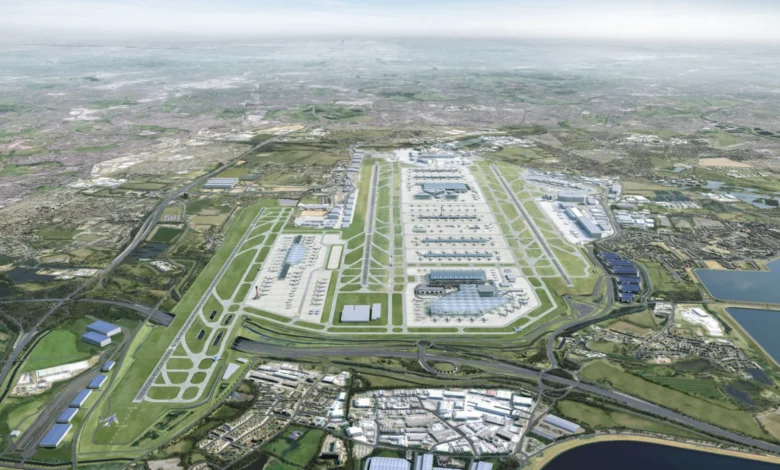
London Heathrow Airport stands at the center of one of the most contentious infrastructure debates in contemporary British history. As the nation grapples with the escalating urgency of the climate crisis, proposals to expand the continent’s busiest aviation hub have once again triggered intense scrutiny. At the core of the controversy is a paradoxical policy challenge: how can the United Kingdom fulfill its legally binding commitment to achieve net-zero carbon emissions by 2050 while simultaneously facilitating a massive increase in commercial air traffic? According to the nation’s official climate advisors, the answer is stark—it cannot, unless the government is willing to curb passenger demand directly.
This sobering assessment was underscored this week by a coalition of prominent UK climate experts, spearheaded by the Climate Change Committee (CCC). Nigel Topping CMG, chair of the committee, delivered a blunt warning regarding the trajectory of aviation pollution. Emissions generated by commercial flights are projected to rise significantly over the coming decades, even if the proposed third runway at Heathrow is never built. Furthermore, the UK currently lacks a credible, actionable strategy to rein in these escalating carbon outputs. This regulatory and operational vacuum poses a severe, systemic threat to the nation’s legally mandated climate targets, rendering any large-scale airport expansion fundamentally incompatible with the journey toward a decarbonized economy.
The debate over Heathrow’s future is not merely a localized planning dispute; it is a critical test case for global aviation. As governments worldwide attempt to balance economic recovery and connectivity with ecological survival, the intersection of massive infrastructure projects and climate policy has never been more fraught. The fundamental tension between unrestricted mobility and planetary boundaries has forced policymakers, industry executives, and environmental advocates into a high-stakes confrontation over who should bear the ultimate cost of greening the skies.
A Decades-Long Battleground: The Chronology of Heathrow Expansion
To understand the gravity of the current warnings, one must examine the protracted history of the Heathrow expansion debate. The controversy spans multiple decades, prime ministerial administrations, and shifting economic landscapes.
The roots of the modern dispute trace back to the early 2000s, when the Labour government under Tony Blair first began exploring options to increase airport capacity in the South East of England. By January 2003, the government published a White Paper outlining support for a third runway at Heathrow, setting off a storm of local opposition and legal challenges. However, following a change in leadership and the election of the Conservative-Liberal Democrat coalition in 2010, the newly formed government officially scrapped the third runway plans, citing environmental concerns and community impact.
The hiatus was short-lived. Recognizing the mounting economic pressures of constrained capacity—which business leaders argued was causing London to lose its competitive edge to European hubs like Frankfurt, Paris, and Amsterdam—the government established the Airports Commission in 2012, chaired by Sir Howard Davies. In July 2015, following an exhaustive three-year study, the Davies Commission unanimously concluded that a third runway at Heathrow was the best option for boosting UK connectivity and trade.
What followed was a slow bureaucratic crawl through parliamentary approvals and judicial reviews. In June 2018, Parliament overwhelmingly voted in favor of the Airports National Policy Statement (ANPS), formally paving the way for Heathrow Airport Limited to submit a development consent order. However, environmental groups, local authorities, and residents immediately launched legal challenges.
In February 2020, the Court of Appeal delivered a landmark ruling declaring the expansion illegal because the government had failed to take into account its commitments under the Paris Agreement on climate change. This appeared to deliver a fatal blow to the project. Yet, just a few months later, in December 2020, the Supreme Court overturned the Court of Appeal’s decision, ruling that the government’s policy framework had indeed been lawful and that environmental obligations had been sufficiently considered at the planning stage.
Just as the legal hurdles seemed cleared, the global aviation industry was struck by the COVID-19 pandemic. Passenger numbers plummeted by over 70% in 2020, plunging Heathrow into severe financial distress and putting expansion plans on an indefinite hiatus. As air travel rebounded post-pandemic, the debate re-emerged, colliding directly with the government’s newly adopted Net Zero Strategy. Today, the conversation has shifted from legal technicalities to a fundamental philosophical question: can the physics of carbon accounting ever align with the economics of airport growth?
The Scale of the Problem: Aviation Emissions and Data
To contextualize the warnings issued by the Climate Change Committee, it is necessary to examine the raw data governing global and domestic aviation emissions. Historically, aviation has accounted for approximately 2.5% of global carbon dioxide emissions. While this figure may appear modest compared to heavy industries like power generation or manufacturing, it fails to capture the true climate impact of flying.
When accounting for non-CO2 effects—such as the formation of condensation trails (contrails) and cirrus clouds, which trap heat in the atmosphere—aviation’s total contribution to global warming is roughly double its direct carbon output. Furthermore, aviation is notoriously difficult to decarbonize. Unlike passenger cars or regional buses, which are rapidly transitioning to battery-electric technology, commercial aircraft require high-density liquid fuels to traverse long distances safely.
In the United Kingdom, aviation represents an even greater proportion of the national carbon footprint. Prior to the pandemic, international and domestic aviation accounted for roughly 7% of total UK greenhouse gas emissions. Under current projections, demand for air travel is expected to recover fully and continue growing over the next thirty years. Without stringent demand-management measures, aviation threatens to consume a disproportionately large share of the UK’s legally binding carbon budgets, which restrict the total amount of greenhouse gases the country can emit during specific multi-year periods.
The UK’s Jet Zero strategy, published by the Department for Transport, relies heavily on speculative technological fixes to square this circle. The strategy banks on the widespread adoption of Sustainable Aviation Fuels (SAF), zero-emission hydrogen-powered aircraft, and radical improvements in air traffic management. However, climate experts point out that these technologies are either in their infancy or face severe supply chain and infrastructure bottlenecks. SAF currently accounts for less than 0.1% of global jet fuel consumption, and scaling production to meet future demand will require trillions of dollars in capital investment, vast amounts of renewable energy, and dedicated agricultural land.
Official Responses and the Clash of Priorities
The friction between the aviation industry and climate regulators has exposed deep divisions within the policymaking apparatus. Nigel Topping’s recent intervention on behalf of the Climate Change Committee highlights a growing frustration among independent scientific advisors who feel that short-term economic arguments are routinely prioritized over long-term planetary survival.
"Government needs to ensure that the aviation industry takes responsibility for the emissions it creates and bears the costs of decarbonisation," Topping asserted during his address. "Those conditions do not exist today."
The core of the CCC’s argument rests on the polluter-pays principle. Currently, international aviation fuel enjoys significant tax exemptions, as it is largely untaxed under global treaties established in the Chicago Convention of 1944. Furthermore, tickets for international flights departing from the UK are exempt from Value Added Tax (VAT), and domestic air passenger duty (APD) structures have historically failed to price the true environmental damage of frequent flying. Without robust economic mechanisms—such as comprehensive carbon pricing, frequent flyer levies, or mandatory blending mandates with punitive non-compliance fees—airlines have little commercial incentive to voluntarily curtail growth.
Conversely, representatives for Heathrow Airport Limited and broader aviation trade bodies argue that restricting expansion will severely damage the UK economy. Proponents of the third runway insist that constraining capacity at the nation’s primary hub will act as a bottleneck on international trade, discourage foreign direct investment, and divert lucrative long-haul routes to rival European hubs that are actively expanding their capacity. Heathrow executives contend that the airport can achieve net-zero operations by 2050 through a combination of airspace modernization, efficient ground operations, and aggressive adoption of SAF, without needing to artificially suppress passenger demand.
Broader Impact, Economic Implications, and Future Outlook
The implications of the Heathrow expansion debate extend far beyond the perimeter fence of the airport. The standoff serves as a bellwether for how the UK—and industrialized economies globally—will navigate the terminal phases of climate policy. As the low-hanging fruit of decarbonization in power generation and domestic heating is harvested, policymakers are increasingly forced to confront politically sensitive sectors like aviation, agriculture, and heavy transport.
If the UK government heeds the advice of the Climate Change Committee and ties airport expansion strictly to proven, measurable emissions reductions, it could establish a powerful global precedent. Such a policy shift would validate the concept of managed demand, signaling that economic growth can no longer be decoupled from finite ecological limits through wishful thinking or reliance on unproven technologies. On the other hand, approving the expansion without guaranteed, verifiable carbon offsets would severely undermine the credibility of the UK’s climate commitments on the international stage, particularly as the nation attempts to position itself as a global leader in environmental diplomacy.
Ultimately, the future of Heathrow Airport and the broader trajectory of British aviation hinge on a fundamental reckoning. The physics of the atmosphere do not negotiate with economic models or political manifestos. As the pressure mounts, the UK government faces a definitive choice: continue down the traditional path of accommodating unconstrained demand while hoping for technological miracles, or grasp the nettle of demand management, placing the true ecological cost of flight squarely at the center of national transport policy.