Ghost Ships and Sunken Treasures: A Global Survey of History’s Most Elusive and Visible Shipwrecks

The maritime world experienced a moment of profound historical resonance in March 2022 when the HMS Endurance, the long-lost vessel of famed explorer Ernest Shackleton, was located nearly two miles beneath the surface of the Weddell Sea. The discovery, facilitated by the Endurance22 expedition, utilized advanced autonomous underwater vehicles to pinpoint the wreck, which had remained remarkably preserved in the frigid, oxygen-deprived waters of the Antarctic for over a century. While the recovery of the Endurance answered one of the greatest mysteries of the "Heroic Age of Antarctic Exploration," it also served as a reminder that the world’s oceans remain the largest repositories of human history. Thousands of vessels, ranging from ancient trading ships to World War II cruisers and colonial-era merchantmen, continue to rest on the seabed, some hidden by miles of water and others visible to the naked eye.
The pursuit of these "ghost ships" involves a complex intersection of high-stakes archaeology, sophisticated technology, and historical detective work. For every successful discovery like the Endurance, there are scores of legendary vessels that continue to elude searchers, often despite multimillion-dollar efforts and decades of research.
The Elusive Flagships of the Age of Discovery
Among the most sought-after wrecks in history is the Santa Maria, the flagship of Christopher Columbus’s 1492 voyage. The vessel’s demise was not the result of a grand naval battle, but rather a lapse in maritime discipline. On Christmas Eve 1492, off the coast of present-day Haiti, Columbus retired to sleep, leaving a cabin boy at the helm. The inexperienced sailor inadvertently steered the ship into a coral reef. While the crew survived and used the ship’s timbers to build the first European settlement in the Americas, La Navidad, the remains of the hull sank into the silt.
In 2014, the archaeological world was briefly electrified when explorer Barry Clifford claimed to have identified the wreck. However, a subsequent investigation by UNESCO concluded that the bronze fasteners and artifacts at the site dated to a much later period, likely the 17th or 18th century. The Santa Maria remains one of history’s most significant missing links, its location obscured by centuries of sediment and shifting coastal topography.
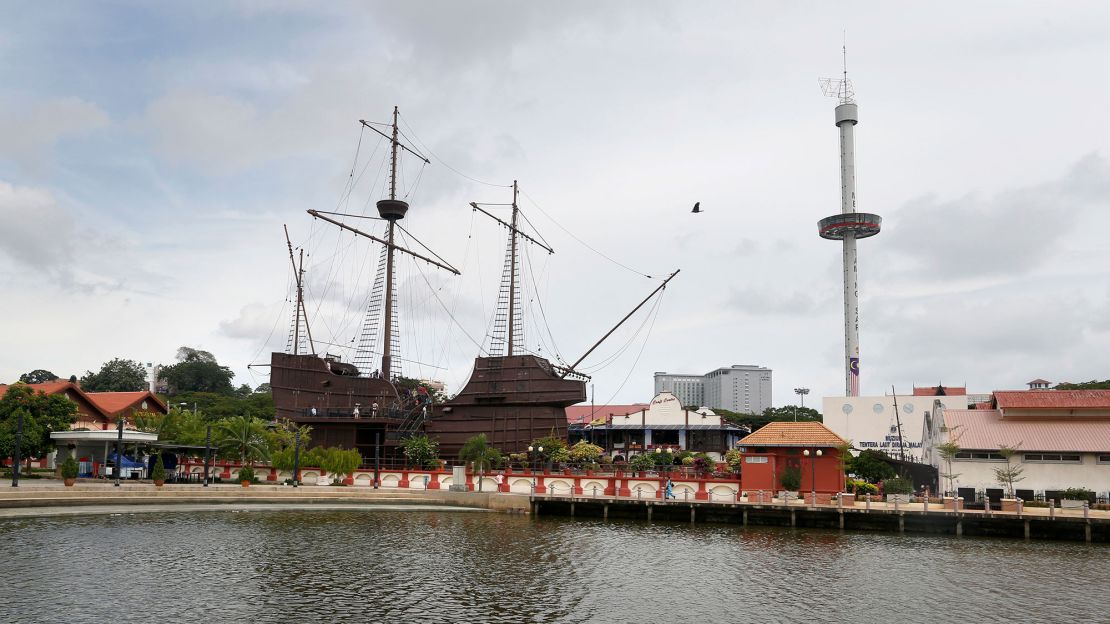
Equally legendary is the Flor de la Mar, a 16th-century Portuguese carrack that represents one of the greatest lost treasures in maritime history. Measuring 118 feet in length and standing over 110 feet high, the ship was a behemoth of its time but notoriously difficult to maneuver. In 1511, while returning from the conquest of Malacca, the ship was caught in a violent storm off the coast of Sumatra. It broke in two, and its cargo—reportedly the personal fortune of the Portuguese Governor Afonso de Albuquerque—was lost. Valued at an estimated $2.6 billion in contemporary currency, the treasure includes gold bullion, precious gemstones, and ornate tributes from the King of Siam. Despite numerous expeditions, the turbulent waters and shifting sands of the Malacca Strait have kept the Flor de la Mar hidden for over 500 years.
Australia’s Titanic and the Enigma of the SS Waratah
In the annals of 20th-century maritime disasters, the SS Waratah stands as a haunting parallel to the Titanic. A passenger-cargo liner designed to link Europe, Africa, and Australia, the Waratah vanished in July 1909 during a voyage from Durban to Cape Town. Unlike the Titanic, which left behind survivors and a known sinking location, the Waratah disappeared without a trace. There were no distress signals, no wreckage, and no bodies recovered from the 211 souls on board.
The disappearance sparked numerous theories, ranging from a sudden "freak wave" in the treacherous Agulhas Current to a catastrophic boiler explosion or a structural failure caused by the ship’s purported "top-heavy" design. For decades, searchers including the late novelist Clive Cussler and the National Underwater and Marine Agency (NUMA) utilized side-scan sonar and magnetometers to scour the South African coast. While several wrecks were located, none proved to be the Waratah. The vessel remains a "ghost ship" of the Southern Ocean, its fate a subject of enduring speculation among maritime historians.
The Scars of Global Conflict: USS Indianapolis and Chuuk Lagoon
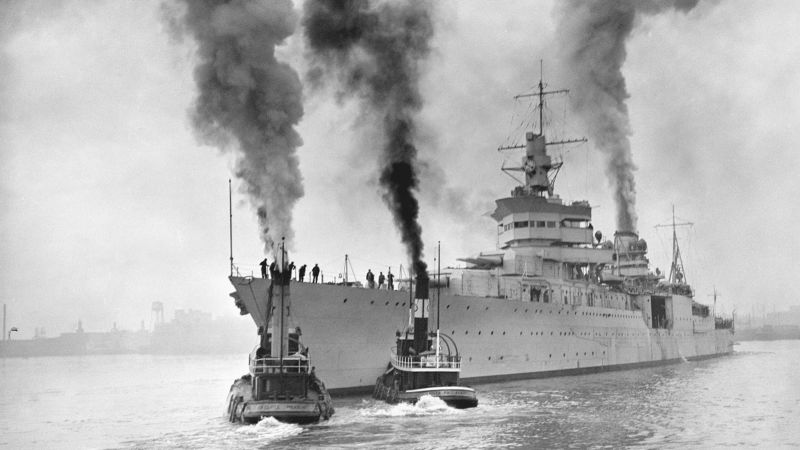
The discovery of the USS Indianapolis in 2017 provided closure to one of the most tragic chapters of World War II. In July 1945, the cruiser completed a top-secret mission to deliver the uranium components of the "Little Boy" atomic bomb to Tinian Island. Shortly after the delivery, the ship was torpedoed by a Japanese submarine in the Philippine Sea. Due to the secrecy of its mission, the ship was not reported missing for several days. Of the nearly 1,200 crew members, only 316 survived the sinking and the subsequent four-day ordeal of shark attacks, dehydration, and exposure.
A team led by Microsoft co-founder Paul Allen eventually located the wreck 18,000 feet below the surface. The depth—nearly three and a half miles—highlights the extreme technological requirements of modern deep-sea archaeology. The Indianapolis now serves as a protected war memorial, resting in the darkness of the Pacific abyss.
While the Indianapolis is hidden by depth, the remnants of the Japanese Imperial Navy at Chuuk Lagoon (formerly Truk Lagoon) in Micronesia offer a more accessible, albeit somber, museum of naval warfare. During Operation Hailstone in 1944, Allied forces sank more than 60 ships and 250 aircraft in the lagoon. Today, the site is a premier destination for technical divers. The wrecks, such as the Nippo Maru and the San Francisco Maru, remain filled with the materiel of war: tanks, trucks, ammunition, and personal effects. These "subaquatic time capsules" provide a visceral look at the scale of Pacific theater operations, though they also pose environmental risks as aging hulls begin to leak fuel oil into the pristine coral ecosystems.
The Archaeology of Suffering: Sunken Slave Ships
In recent years, maritime archaeology has pivoted toward documenting the "triangular trade" and the horrific legacy of the Transatlantic Slave Trade. It is estimated that of the 12,000 vessels involved in the forced transport of 12.5 million Africans, approximately 1,000 were lost at sea.
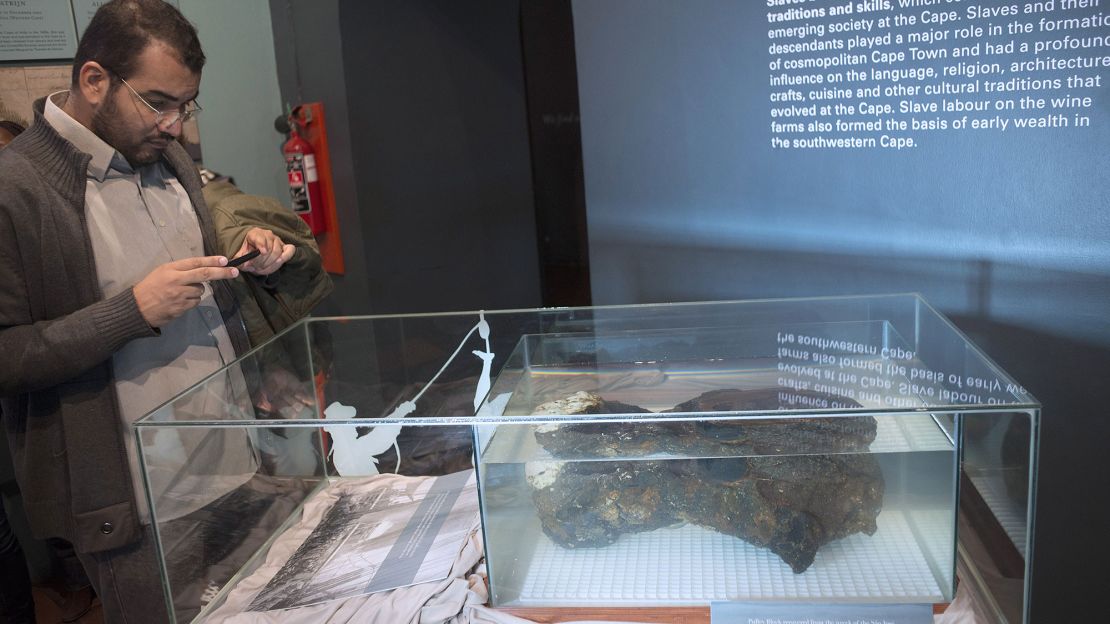
The discovery of the São José Paquete Africa, which sank off the coast of Cape Town in 1794, marked a milestone in this field. The ship was carrying more than 400 enslaved individuals from Mozambique to Brazil when it struck a reef. Through the work of groups like Diving With a Purpose (DWP), archaeologists recovered iron ballasts used to weigh down the ship to compensate for the weight of human "cargo" and rusted shackles.
Similarly, the discovery of the Clotilda in 2019 in the Mobile River, Alabama, provided physical evidence of the last known slave ship to arrive in the United States. The Clotilda was scuttled in 1860, long after the importation of enslaved people was outlawed, in an attempt to destroy evidence of the crime. The recovery of these sites is viewed not merely as a scientific endeavor but as a moral imperative to honor the victims and educate the public on the systemic brutality of the era.
Engineering Marvels and Preserved History: The Vasa and Uluburun
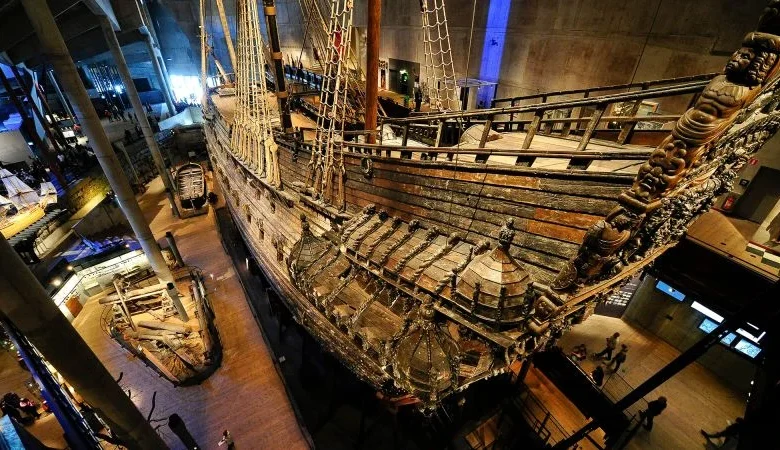
Not all shipwrecks are defined by their elusiveness; some are defined by their miraculous preservation. The Vasa, a Swedish warship built to be the pride of King Gustav II Adolf’s navy, sank on its maiden voyage in 1628, barely 1,300 meters from the dock. The ship was top-heavy and unstable, unable to withstand a minor gust of wind.
Because the Baltic Sea lacks the wood-boring shipworms (teredo navalis) found in saltier oceans, the Vasa remained largely intact for 333 years. When it was raised in 1961, archaeologists found a virtually complete 17th-century vessel, decorated with hundreds of ornate sculptures. Now housed in a dedicated museum in Stockholm, the Vasa has been viewed by over 25 million people, serving as a masterclass in both failed naval engineering and successful archaeological conservation.
Further back in time, the Uluburun shipwreck, discovered by a sponge diver off the coast of Turkey in 1982, offers a window into the Late Bronze Age (c. 1300 BCE). The wreck yielded 10 tons of copper ingots, tin, glass, and exotic goods from at least seven different cultures, proving the existence of a highly sophisticated and interconnected Mediterranean trade network 3,000 years ago. The artifacts are now central to the Bodrum Museum of Underwater Archaeology.
Visible Reminders of Maritime Capriciousness
While some ships require submersibles to reach, others have become permanent fixtures of the coastline. In the River Clyde near Greenock, Scotland, the MV Captayannis—known locally as the "Sugar Boat"—rests on its side in the sandbanks. The Greek freighter sank during a 1974 storm after colliding with a tanker. Because it posed no threat to navigation in its shallow resting place, it was never removed. It now serves as a nesting ground for seabirds and a stark visual reminder of the sea’s power.
In the Solomon Islands, the MS World Discoverer, a cruise ship that struck an unchartered reef in 2000, remains a popular sight for passing vessels. After the passengers were safely evacuated, the ship was steered into Roderick Bay to prevent it from sinking in deep water. It now sits at a 46-degree list, its hull slowly succumbing to tropical rust, a modern memento mori for the tourism industry.
Implications and the Future of Deep-Sea Exploration
The ongoing discovery and study of shipwrecks have profound implications for our understanding of global history, economics, and technology. Each wreck serves as a "closed find"—a snapshot of a specific moment in time, frozen by the sea. As autonomous technology becomes more affordable and sonar resolution improves, the "search area" for legendary wrecks like the Santa Maria or the SS Waratah continues to shrink.
However, these discoveries also raise complex legal and ethical questions regarding "salvage vs. archaeology." The tension between commercial treasure hunters seeking profit and historians seeking knowledge remains a central conflict in maritime law. Furthermore, the preservation of "war graves" ensures that the final resting places of sailors are treated with the necessary dignity. As humanity continues to peer into the depths, the ocean floor remains a vast, silent library, waiting for the next chapter of history to be brought to the surface.