Bipartisan Congressional Leaders Launch Sweeping Investigation into Amateur Athletic Union Over Systemic Sexual Abuse Allegations

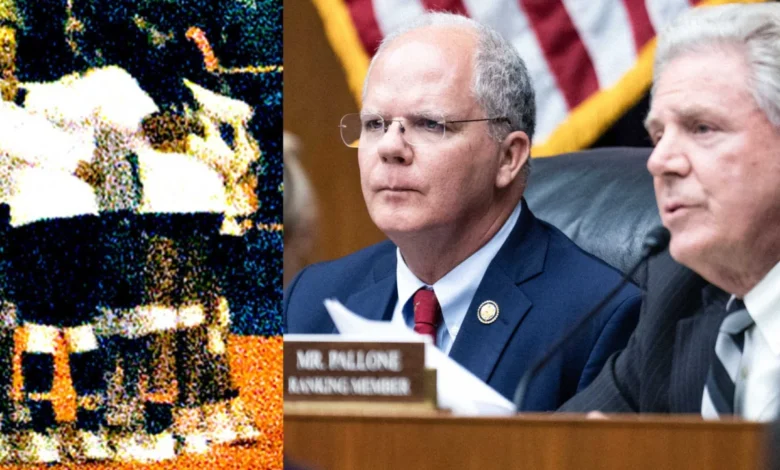
In a significant escalation of federal oversight into youth sports, bipartisan leaders from the House Energy and Commerce Committee have formally launched an inquiry into the Amateur Athletic Union (AAU), citing a long history of institutional failures to protect minors from sexual abuse. The probe, announced this week, follows a damning investigative series by ProPublica and The Washington Post that alleged the organization has consistently misled parents and the public regarding its safety protocols, suppressed reports of misconduct, and utilized confidential arbitration clauses to shield itself from legal scrutiny.
The inquiry, led by Committee Chair Brett Guthrie (R-KY) and Ranking Member Frank Pallone Jr. (D-NJ), demands that AAU President Jo Mirza provide a comprehensive briefing by October 21. The committee is seeking granular data on the volume of abuse allegations received annually, the specific number of coaches disciplined, and evidence of mandatory safety training—information that has remained largely opaque despite the AAU’s status as a pillar of American youth athletics.
A Pattern of Institutional Failure
The Amateur Athletic Union, a massive decentralized organization serving roughly 760,000 athletes and coaches, has long occupied a unique and largely unregulated space in the American sports landscape. While the organization claims to prioritize child safety, critics and investigative journalists have argued that its internal policies are fundamentally broken.
The current congressional scrutiny draws direct parallels to the 2018 investigation into USA Gymnastics, which followed the revelations surrounding the systemic abuse perpetrated by former team doctor Larry Nassar. Members of the House Energy and Commerce Committee noted that they are witnessing "striking similarities" between the failures exposed in the gymnastics scandal and the current environment within the AAU.
The investigation into the AAU has highlighted a recurring theme: the violation of internal pledges. Following a 2011 scandal involving the organization’s CEO and accusations regarding his conduct with young basketball players, the AAU promised a comprehensive overhaul of its safeguarding policies. However, investigators found that these promises have largely gone unfulfilled. Instead of robust prevention, the organization has been accused of operating as a haven for coaches with histories of misconduct, often failing to maintain or publicize lists of banned personnel—a standard practice among other national governing bodies.
Chronology of Crisis and Oversight
The path to this congressional intervention is marked by years of incremental disclosures and frustrated calls for reform.
- 2011: The AAU faces a major crisis involving its then-CEO and allegations of sexual abuse, leading to public promises of institutional reform and the adoption of new safety measures.
- 2018: The U.S. Congress passes the Safe Sport Act in response to the Larry Nassar scandal. The legislation creates the U.S. Center for SafeSport to oversee national governing bodies, but its reach is limited, leaving organizations like the AAU—which are not Olympic-affiliated—largely outside the center’s direct jurisdiction.
- 2018–2023: Evidence continues to emerge regarding the suppression of allegations. Reports surface detailing the handling of misconduct claims against high-ranking AAU executives.
- 2024 (Early): Investigative reporting by ProPublica and The Washington Post provides a systematic breakdown of the AAU’s failure to implement mandatory child abuse prevention training, despite public claims to the contrary.
- October 2024: The House Energy and Commerce Committee officially launches its inquiry, citing the aforementioned reporting and demanding internal documentation and a briefing from the AAU’s leadership.
The Regulatory Gap: Why the AAU Evades Oversight
A central point of contention for lawmakers is the regulatory "gray area" the AAU occupies. The Safe Sport Act of 2018 was designed to professionalize the response to sexual abuse in sports, but its authority is tied to the U.S. Olympic and Paralympic Committee (USOPC). Because the AAU is not a national governing body under the USOPC umbrella, it is not subject to the same rigorous oversight, mandatory reporting requirements, or the centralized disciplinary database managed by the U.S. Center for SafeSport.
However, the 2018 law does contain a provision requiring "all amateur sports organizations" to provide consistent, ongoing training to adult members regarding the prevention and reporting of child abuse. The House committee’s letter explicitly challenges the AAU on this provision, demanding to know how, or if, the organization is meeting this statutory mandate.
Data Transparency and the Culture of Secrecy
For years, the AAU has faced criticism for its use of confidential arbitration. By mandating that disputes—including those involving allegations of sexual abuse—be settled through private arbitration rather than open court proceedings, the organization has effectively prevented the public from gauging the scale of its safety issues.
The committee’s request for data is an attempt to pierce this veil of secrecy. Legislators are specifically demanding:
- Incident Statistics: The total number of sexual abuse allegations reported to the AAU annually for the past decade.
- Disciplinary Records: A full accounting of the number of coaches banned, suspended, or otherwise disciplined for misconduct.
- Training Verification: Proof of the curriculum and completion rates for child abuse prevention training across its regional chapters.
The AAU’s failure to provide this data to journalists previously has fueled the committee’s skepticism. By refusing to disclose these figures, the organization has left parents and local leagues without the necessary tools to perform due diligence on the coaches entrusted with their children.
Official Responses and Industry Reaction
In response to the inquiry, the AAU released a brief, guarded statement: "As always, we will cooperate fully and respond appropriately to any questions or requests from congressional committees or U.S. government agencies."
Previously, the organization maintained that it is "committed to protecting its athletes through comprehensive protection policies overseen by our Compliance Department." The AAU has consistently asserted that it provides a "safe, secure, supportive, and trusted environment" for youth athletes. However, industry stakeholders—including executives from other national governing bodies—have privately and publicly expressed concern that the AAU’s decentralized structure makes uniform enforcement of safety policies nearly impossible without federal intervention.
Implications for Youth Sports Safety
The potential implications of this inquiry are far-reaching. If the House Energy and Commerce Committee finds that the AAU has been negligent in its statutory duties, it could lead to several outcomes:
- Legislative Expansion: Congress may seek to amend the Safe Sport Act to explicitly bring independent youth sports organizations of a certain size under the jurisdiction of the U.S. Center for SafeSport.
- Increased Liability: The revelation of systemic failures could trigger a wave of civil litigation, potentially forcing the organization to dismantle its arbitration-heavy legal strategy.
- Standardization of Safety Protocols: The probe could force a national standard for background checks and coach certifications, effectively ending the era of disparate, localized safety policies.
For the millions of families involved in AAU athletics, the committee’s investigation represents a critical moment of accountability. As Representative Brett Guthrie stated, the committee is not merely seeking information; it is seeking a roadmap for fundamental change. The question remains whether the AAU, a sprawling organization with deep roots in local communities, can be effectively reformed from the outside, or if the findings of this inquiry will necessitate an even more radical restructuring of how youth sports are governed in the United States.
As the October 21 deadline for the briefing approaches, all eyes will be on how the AAU reconciles its public image with the stark realities revealed by investigators. The pressure is no longer just from the media or concerned parents; it is now from the highest levels of the federal government, signaling that the era of institutional silence regarding youth athlete safety may be drawing to a close.
Related posts: