Justice Sotomayor Rebukes Alabama Judge Over Dramatic In-Court Arrest of Tardy Juror That Threatened Capital Trial Fairness

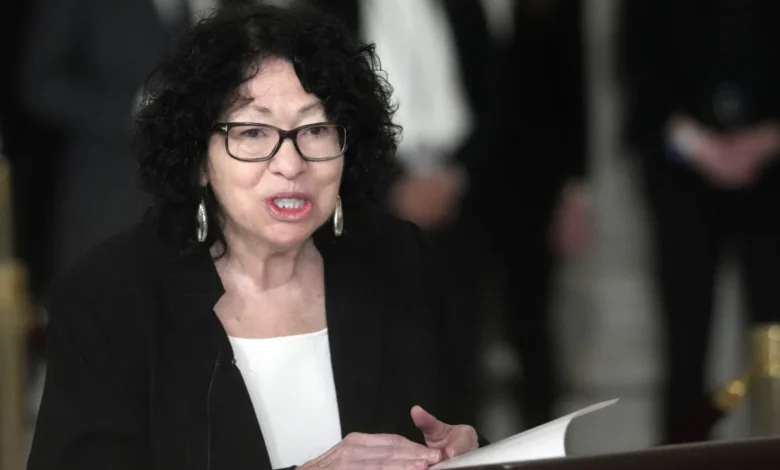
U.S. Supreme Court Justice Sonia Sotomayor issued a sharp warning on Monday regarding judicial overreach, specifically criticizing an Alabama trial judge who ordered the public arrest of a prospective juror for arriving late. While the high court ultimately declined to hear the capital murder appeal in the case of Steven Mulkey, Sotomayor used her written statement to highlight the hidden dangers that theatrical or heavy-handed courtroom management poses to a defendant’s constitutional right to an impartial jury.
The commentary shines a light on a delicate intersection of judicial authority, courtroom decorum, and due process rights. Legal scholars and civil liberties advocates have long debated the boundaries of a judge’s contempt powers, but Sotomayor’s intervention elevates the discussion to the national stage, emphasizing how visible intimidation tactics can poison the well of an entire jury pool.
The Incident in Question: A Tardy Arrival Met with Extreme Measures
The controversy stems from events that transpired in April 2023 within the 10th Judicial Circuit Court of Alabama. During the proceedings for a high-stakes capital murder trial against defendant Steven Mulkey, a prospective juror arrived late to the courthouse. Rather than handling the tardiness through standard administrative penalties or a private reprimand, Judge Alaric May took immediate and severe action.
Judge May held the tardy individual in contempt of court and ordered their arrest, executing the measure directly in front of the entire assembly of prospective jurors. For the assembled citizens—many of whom were already experiencing anxiety about participating in a murder trial—the spectacle of a peer being led away in handcuffs or detained by law enforcement for a scheduling mishap created an atmosphere of palpable fear.
According to subsequent court filings and reporting by Law360, the chilling effect was immediate. Several members of the prospective jury pool later expressed genuine apprehension that they, too, might face criminal penalties or judicial wrath if their voir dire answers or eventual verdicts displeased the presiding judge.
Supreme Court Action and Sotomayor’s Concurring Opinion
Steven Mulkey’s defense attorneys eventually appealed the case, arguing that the public arrest of the prospective juror created a coercive environment that fundamentally deprived their client of a fair trial under the Sixth and Fourteenth Amendments. They contended that a jury pool terrorized by the judge’s display of power could not be expected to act as an independent and objective body of fact-finders.
On Monday, the U.S. Supreme Court formally denied Mulkey’s petition for a writ of certiorari, meaning the justices chose not to review the lower court’s rulings. However, Justice Sotomayor authored a concurring opinion to explain the denial while simultaneously issuing a pointed rebuke of Judge May’s actions.
Sotomayor clarified that she concurred with the decision to deny certiorari solely because Mulkey’s defense counsel failed to make a contemporaneous objection when the arrest occurred during the trial. Under standard appellate procedure, the failure to object in a timely manner at the trial level typically bars a defendant from raising the issue on appeal.
Despite declining to take up the case, Sotomayor refused to let the underlying judicial conduct pass without critique. She cautioned trial judges nationwide to be far more mindful of how their public actions reverberate through the courtroom and influence the psychology of the jury.
“The record here amply demonstrates how a judge’s conduct can have a profoundly negative impact on members of the jury pool,” Sotomayor wrote. “Such conduct may affect not only what potential jurors are willing to say in front of the judge but also whether they will apply their independent judgment instead of following what they perceive the judge may personally think.”
The justice emphasized that when jurors become intimidated, their primary motivation shifts from executing their solemn oath to weigh evidence impartially to simply self-preservation—guessing what verdict or posture the judge desires in order to avoid drawing negative attention.
Chronology of the Case and Legal Proceedings
To understand how the issue traveled from an Alabama courtroom to the highest court in the nation, it is helpful to examine the timeline of the legal challenge:
- April 2023: Judge Alaric May presides over the capital murder trial of Steven Mulkey in Alabama’s 10th Judicial Circuit. During jury selection, a prospective juror arrives late, leading Judge May to hold the individual in contempt and order an immediate arrest in full view of the jury pool.
- Post-Trial Phase: Mulkey is convicted. Defense counsel navigates post-trial motions and state-level appeals. While the issue of the juror’s arrest is noted, appellate hurdles—including the lack of a timely trial-level objection—complicate the challenge.
- State Appellate Review: Alabama appellate courts uphold the conviction, finding no reversible error under the specific procedural posture of the case.
- October 6, 2026: The U.S. Supreme Court formally denies the petition for a writ of certiorari in Mulkey v. Alabama. Justice Sotomayor issues her concurring opinion, highlighting the dangers of judicial intimidation of jury pools while explaining why the procedural default prevented the court from granting review.
The Broader Implications: Judicial Temperament and Jury Integrity
Legal experts point out that Sotomayor’s statement serves as a powerful advisory opinion, carrying weight across state and federal jurisdictions even though it was attached to a denied petition. Trial judges possess broad discretion to maintain order and enforce rules within their courtrooms, including the power of civil and criminal contempt. However, that discretion is not boundless and must be weighed against the constitutional imperative of a fair trial.
Contempt powers are traditionally designed to ensure the dignified and efficient administration of justice, not to act as a mechanism of terror. When a judge uses heavy-handed tactics openly, it disrupts the delicate psychological balance required for a fair trial. Jurors must feel secure in their autonomy, knowing they can deliberate freely, voice dissenting opinions during deliberations, and question state or defense narratives without fear of retribution from the bench.
Furthermore, the incident underscores the critical importance of trial counsel remaining vigilant. The Supreme Court’s inability to grant relief to Mulkey ultimately hinged on a procedural technicality—his lawyers’ failure to object on the record at the exact moment the arrest occurred. This serves as a stark reminder to litigators of the necessity to preserve constitutional claims immediately, even when challenging a sitting judge in real time feels daunting.
As courts nationwide grapple with post-pandemic backlogs, rising tensions, and administrative pressures, judicial temperament remains a central pillar of public trust in the legal system. Justice Sotomayor’s intervention ensures that while Steven Mulkey’s specific appeal ends at the high court’s threshold, the broader conversation regarding courtroom equity, judicial restraint, and the sanctity of the jury box will continue to resonate throughout the American judiciary.