The Supreme Court Faces a Landmark Climate Liability Showdown as Colorado Ranchers and Corporations Square Off


The United States Supreme Court is poised to hear oral arguments this week in a case that represents a pivotal intersection between climate science, corporate accountability, and the limits of state-level judicial authority. The case, Suncor Energy v. Boulder, marks the culmination of an eight-year legal battle between the City and County of Boulder, Colorado, and two energy giants, Suncor Energy and Exxon Mobil Corporation. At its core, the dispute is not merely about the reality of climate change, but about whether state courts possess the jurisdiction to hold private corporations financially liable for the systemic costs associated with climate-induced disasters.
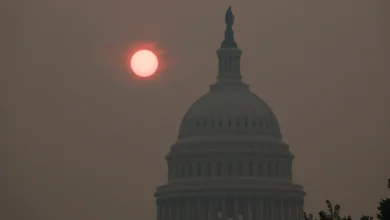
For individuals like Deirdre Macnab, a regenerative cattle rancher who has witnessed the physical and economic erosion of her community, the courtroom arguments are a matter of survival. Following one of the most catastrophic wildfire seasons in Colorado history in 2025—which saw thousands of acres scorched, livestock decimated, and the region choked by toxic, persistent smoke—ranchers and local officials are seeking to shift the financial burden of disaster mitigation away from taxpayers and onto the entities they allege knowingly exacerbated the crisis.
A Chronology of the Legal Conflict
The roots of the current Supreme Court case trace back to 2018, when the City and County of Boulder filed their original complaint. The litigation was part of a broader wave of "climate accountability" lawsuits across the United States, modeled after historical tobacco and asbestos litigation.
- 2018: The City and County of Boulder files suit against Suncor and Exxon, alleging that the companies engaged in deceptive marketing and public relations campaigns that obscured the dangers of fossil fuel combustion.
- 2019–2024: The case undergoes years of procedural maneuvering, primarily focused on whether the lawsuit should be heard in federal or state court. Energy companies consistently argued for federal jurisdiction, hoping to see the case dismissed under federal statutes, while local governments fought to maintain the suit in state courts, where they argued that local tort law applies.
- 2025: A record-breaking wildfire season devastates Rio Blanco County and surrounding areas, intensifying local support for the lawsuit and highlighting the staggering costs of climate adaptation.
- 2026: The Supreme Court grants certiorari, setting the stage for the oral arguments currently unfolding. Notably, Justice Samuel Alito announced an 11th-hour recusal, leaving eight justices to deliberate on the matter.
The Economic Burden of a Changing Climate
The financial stakes for the state of Colorado are profound. Independent economic analyses suggest that the state faces as much as $37 billion in climate-related damages and adaptation costs by 2050. These costs include everything from infrastructure repairs following extreme flooding to the long-term management of drought-stressed water supplies and the massive fire suppression efforts required to protect rural communities.
Boulder’s legal argument hinges on the assertion that these costs are an unfair burden for local taxpayers to shoulder alone. They contend that while local governments have the duty to respond to climate emergencies, the energy companies that profited from the production and promotion of fossil fuels should be held accountable for the specific, measurable damages caused by their products.
"Every single rancher can tell stories about how their operations have been impacted and in some cases ended," says Macnab. For the cattle industry, the intersection of extreme heat and prolonged drought has made traditional grazing patterns unsustainable, forcing many to liquidate their herds or abandon their land entirely.
The Core Legal Argument: Preemption vs. Tort Law
The defense strategy employed by Suncor and Exxon rests heavily on the concept of "federal preemption." They argue that the Clean Air Act creates a comprehensive federal framework for regulating greenhouse gas emissions and that individual states cannot create a patchwork of liability standards that effectively bypass or undermine federal policy. In their view, the lawsuit is a "surreptitious attempt" by local governments to regulate global energy markets and atmospheric emissions through the back door of the court system.
Conversely, legal scholars and plaintiffs argue that this interpretation is a fundamental misunderstanding of tort law. Professor Alejandro Camacho of UCLA argues that the case is not about setting national emissions standards or deciding the future of energy policy; it is about providing a venue for victims of damage to seek compensation. "It is not about whether climate change is real," Camacho notes. "It’s about whether a state court may hear an ordinary damages claim."
The argument for the plaintiffs is bolstered by the fact that no federal statute currently provides a clear mechanism for local communities to recover damages for climate-induced harm. If the Supreme Court rules in favor of the corporations, it could potentially strip states of the power to pursue similar litigation, not only in climate cases but in a wide array of other fields, including pharmaceutical liability, consumer protection, and even technology-based torts involving social media harms.
Official Responses and Institutional Support
The political landscape surrounding the case has been sharply divided. The current federal administration, through the Department of Justice, has signaled strong support for the energy companies, having submitted an unsolicited brief urging the court to rule in favor of Suncor and Exxon. This alignment reflects a broader administrative effort to curtail the authority of federal agencies like the EPA to regulate carbon emissions, effectively attempting to close off both the regulatory and the judicial paths to climate accountability.
On the other side, an influential coalition has emerged in support of Boulder. This group includes former Republican and Democratic EPA administrators, several Democratic members of Congress, and a coalition of federally recognized Indigenous tribes. These groups argue that shielding corporations from the consequences of their historical deception sets a dangerous precedent for corporate governance and public health.
Furthermore, investigative reports, such as those from Consumer Watchdog, have cast doubt on the impartiality of the industry’s supporting briefs. Their analysis suggests that a significant majority of the amici curiae briefs filed on behalf of Suncor and Exxon were authored by organizations with direct financial ties to the fossil fuel industry, suggesting a coordinated, well-funded effort to influence judicial opinion.
Broader Implications for American Jurisprudence
The ruling in Suncor v. Boulder is expected to be one of the most consequential decisions in modern environmental law. A broad ruling in favor of the energy companies would likely trigger a domino effect, resulting in the dismissal of dozens of similar climate cases pending in courts across the country. Such a decision would solidify the "preemption" defense, creating a high barrier to entry for any future litigation against large-scale industries that impact the environment.
However, a narrow ruling—or a decision that the court lacks the jurisdiction to hear the case entirely—could keep the window open for local governments to pursue damages in state courts. This would turn the tide in the "climate accountability" movement, potentially leading to a decade of discovery and litigation that could force oil companies to reveal internal documents regarding their historical knowledge of climate risks, much like the tobacco industry was forced to do in the 1990s.
Beyond the environment, legal experts worry about the secondary effects of a broad ruling on the American legal system. "It swallows up all of state tort law that involves any kind of international company," says Professor Camacho. If the Supreme Court determines that state-level courts cannot hear claims involving companies that operate globally, the legal recourse available to the average citizen for harm caused by corporations could be severely restricted.
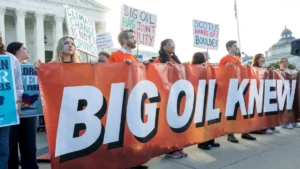
As the justices deliberate, the public gaze remains fixed on the Supreme Court. For the residents of Colorado, the outcome is not just about the legal technicalities of the Clean Air Act; it is about the tangible reality of a world that is becoming harder to live in. As Deirdre Macnab prepares to join the crowds outside the court, she encapsulates the frustration of many: "Government can’t fix everything, but it’s the tool we have to hold the private sector accountable." Whether that tool remains available to them will depend on the final decision, expected sometime next year.