The Disconnect in Rural America: Trump’s Healthcare Policies Face Skepticism Despite Strong Support for the MAHA Movement

Nearly half of all rural voters strongly identify with the principles of the Make America Healthy Again (MAHA) movement, an expansive political campaign championed by the Trump administration. However, a comprehensive new national survey reveals a striking paradox: an overwhelming majority of these same voters believe that President Donald Trump’s actual healthcare and wellness policies have generated little to no positive impact within their local communities.
The findings, derived from an extensive collaborative poll conducted by The Associated Press and KFF, illuminate a complex psychological and political landscape across rural America. This vital voting bloc—which has consistently served as a foundational pillar for Republican electoral victories in recent years—expressed a distinct sense of disillusionment regarding federal policy execution, even as they remain fiercely committed to the core cultural and dietary tenets of the MAHA platform led by Health and Human Services Secretary Robert F. Kennedy Jr.
The Scope of Rural Disillusionment with Federal Policy
According to the national survey, which sampled more than 2,000 registered rural voters, approximately 8 in 10 respondents reported that the Trump administration’s overarching health policies have either exerted a negative effect or yielded no tangible impact whatsoever on the health and longevity of residents in their local areas. Surprisingly, this sentiment is not limited to political opponents; even among staunch supporters of the MAHA movement, an estimated 68% share this critical assessment.
This data exposes an apparent disconnect between the high-profile branding of the administration’s health initiatives and the lived realities of Americans residing outside major metropolitan hubs. For many rural residents, high costs, structural deficits in care infrastructure, and mounting economic pressures continue to overshadow legislative declarations originating in Washington, D.C.
Grassroots Perspectives from America’s Heartland
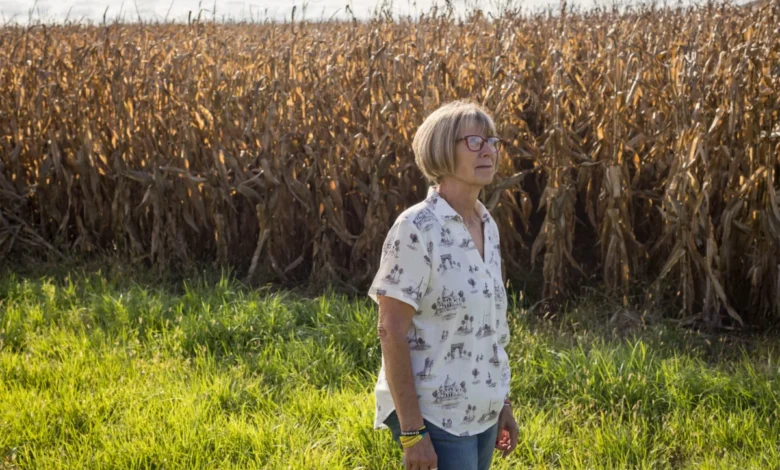
The nuanced reality of this political and social phenomenon is reflected in the experiences of citizens like Mike Jager, a 58-year-old registered Republican and pastor living in Sumner, Iowa. Jager describes his home as being situated “less than a quarter mile from where the corn ends and the city begins.” Surrounded by vast tracts of farmland, Jager has watched family members and close neighbors contract chronic illnesses and severe diseases, a trend he attributes directly to long-term environmental exposure to agricultural chemicals and the pervasive consumption of ultraprocessed foods.
While Jager notes that the Trump administration’s federal health policies have produced only “minimal” impact on his immediate community, he remains an optimistic advocate of the administration’s direction, largely due to the efforts of Health Secretary Robert F. Kennedy Jr.
“It’s a beginning,” Jager said, characterizing the policy shift. “It’s a big ship to try and turn around and course-correct.”

Jager’s alignment with the movement extends beyond rhetoric. During the Republican gubernatorial primary in Iowa, he cast his ballot for Zach Lahn, a local businessman and farmer who campaigned explicitly on a MAHA platform and successfully defeated Trump-backed U.S. Rep. Feenstra. Jager plans to maintain his support for Lahn in the upcoming general election.
Conversely, the movement evokes deep anxiety among others in the agricultural heartland. Donna Klocke, a 71-year-old Democrat residing on a 200-acre farm in Carroll County, Iowa, lost her husband to cancer after decades of agricultural labor. Klocke points out that cancer rates are distressingly common throughout her farming community, where the widespread use of chemical fertilizers, pesticides, and intensive agricultural practices is a routine part of daily operations.
While Klocke acknowledges that the underlying goals of the MAHA movement—such as eating cleaner and reducing environmental toxins—sound appealing in theory, she rejects the movement’s association with figures like Kennedy, whose historical anti-vaccine activism and recent public messaging regarding childhood immunizations continue to spark intense controversy.
“Measles are coming back and polio,” Klocke warned. “It’s the measles that really gets me. It’s like, do you not understand how dangerous it is?”
A Timeline of the MAHA Movement and Political Integration
The intersection of populist health advocacy and mainstream conservative politics has evolved rapidly over recent election cycles, creating a distinct political timeline:
- Pre-2024: Robert F. Kennedy Jr. establishes a prominent national platform as an independent political figure and prominent critic of conventional federal health guidelines, pharmaceutical dependencies, and processed food conglomerates, laying the groundwork for the anti-establishment health movement.
- 2024 Presidential Campaign: Donald Trump strategically integrates key elements of Kennedy’s health platform into his national platform, officially branding the initiative as "Make America Healthy Again" (MAHA) to galvanize anti-establishment populist energy.
- May 2026: In a signal of alignment between state and federal populism, Health Secretary Robert F. Kennedy Jr. travels to Iowa to participate in a high-profile MAHA bill signing alongside Republican Governor Kim Reynolds.
- June 2026: Iowa Republican primary elections see local MAHA-aligned candidates, such as businessman and farmer Zach Lahn, secure major victories over establishment-backed incumbents, demonstrating the down-ballot political traction of the movement.
- August 2026: Kennedy campaigns extensively in rural districts to shore up voter enthusiasm ahead of critical midterm elections, participating in community outreach events while public opinion data begins to quantify the gap between federal messaging and local outcomes.
- August 12–24, 2026: The KFF-AP Rural Voters Survey is fielded, capturing a comprehensive snapshot of rural sentiment regarding healthcare costs, provider shortages, and the practical implementation of MAHA policies.
Deepening Structural Deficits in Rural Healthcare Access
Beyond ideological debates over diet and pharmaceuticals, the survey data underscores profound structural anxieties regarding the fundamental mechanics of healthcare delivery in rural America.
Approximately half of all rural survey respondents reported that their local communities suffer from a critical shortage of physicians and primary care providers. The deficit is perceived as even more acute within the behavioral and mental health sectors, where rural populations have historically faced severe service gaps. Furthermore, the proportion of rural voters reporting a complete absence of local hospitals has surged dramatically, climbing to 35% in the recent survey compared to just 21% when a similar question was posed in a 2017 KFF-Washington Post study.
Economic strain remains the dominant daily concern for rural households. More than six in ten rural voters indicated that they are deeply worried about the escalating costs of healthcare, out-of-pocket medical expenses, prescription drugs, and basic living necessities like gas and groceries.

This financial anxiety correlates strongly with insurance status. Working-age rural residents enrolled in Medicaid reported the highest levels of economic distress, with 80% expressing acute worry over healthcare costs. This vulnerability has been exacerbated by federal legislative changes; last year, congressional Republicans passed a major tax and spending bill that mandated stricter eligibility requirements and slashed projected federal Medicaid spending by more than $900 billion over the coming decade. Similarly, 77% of rural residents who purchase individual health insurance plans through Affordable Care Act (ACA) marketplaces reported significant anxiety regarding affordability and coverage limits.
In Lipan, Texas, a rural community west of Dallas, Kim Solis and her husband operate a small home-remodeling business and rely on the ACA marketplace for health coverage. Following recent policy and premium adjustments under the Trump administration, Solis noted that their monthly premium jumped from zero to $166, while copays escalated and individual deductibles increased by $2,000 each.
“Certainly, we’d be in a world of hurt trying to take money out of savings or getting it out of our 401(k) just to be able to do something about it,” Solis said.
The Divergence Between Federal Messaging and Economic Reality
David Peterson, a professor of political science at Iowa State University, points out that the survey results capture a very real cognitive dissonance felt by rural constituents. Voters are increasingly noticing what he describes as a “weird split in the Trump administration” between the systemic, populist critiques raised by figures like Kennedy—such as targeting corporate agricultural practices and ultraprocessed food manufacturers—and the broader economic realities generated by traditional conservative fiscal policies.
“It’s this mix of things coming out of D.C., out of different pieces of the administration, that’s confusing people,” Peterson explained. He noted that in states like Iowa, where soaring cancer rates have generated intense public concern, the populist framing of public health resonates deeply with citizens looking to challenge powerful corporate lobbies. However, the simultaneous pressure of rising consumer prices creates a persistent friction point. When healthy food options become financially prohibitive due to broader inflationary trends or administration policies, consumers find themselves trapped between their ideological aspirations and their personal budgets.
Despite these economic hurdles, cultural alignment with the administration remains robust among core constituencies. Alma Johnson, a 65-year-old night security worker at a Kentucky horse farm who has consistently voted for Trump since 2016, stated that her overall cost of living has improved, even as specific expenses have fluctuated. While Johnson does not identify as a blind partisan, she warmly embraces the MAHA platform—particularly its focus on reforming federal nutrition assistance programs like SNAP to restrict the purchase of junk food.
Yet, like many of her rural peers, Johnson admits that the daily impact of federal health policies remains largely imperceptible. “It takes a long time to change people, their habits, their thoughts, or the things they do,” she observed.
Methodological Context of the Survey
The KFF-AP Rural Voters Survey was administered online and via telephone between August 12 and August 24, surveying 2,241 registered voters residing in rural census tracts across the United States. Utilizing rural-urban commuting area codes defined by the U.S. Department of Agriculture, the survey combined probability-based panel sampling with registration-based voter files. The overall findings carry a margin of sampling error of plus or minus 3 percentage points for the full sample, with wider margins applicable to specific demographic and regional subgroups.