Trump Slams AI Safety Concerns as a Democratic Hoax and Pushes for an AI Force and New National Leadership

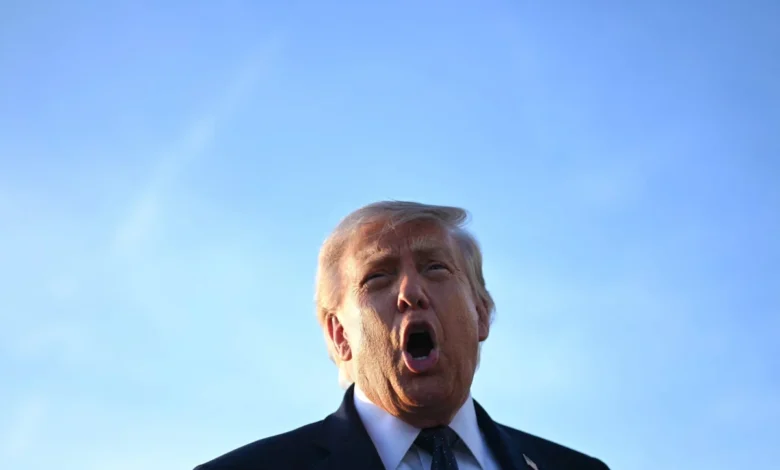
The intersection of artificial intelligence, political discourse, and national infrastructure has entered a new phase of contention as President Donald Trump publicly dismissed mounting AI safety concerns as a manufactured political strategy. In a series of statements released over social media and supported by prominent technology sector leaders, the administration has doubled down on its commitment to rapid industry expansion. This stance directly challenges growing regulatory friction, local zoning pushback against massive data centers, and internal tech-industry warnings regarding the potential existential risks of rapid algorithmic advancement.
The debate arrives at a critical juncture for the global technology ecosystem. As computational power demands skyrocket and the race for artificial general intelligence accelerates, the federal government finds itself caught between facilitating technological supremacy and managing the socioeconomic fallout of widespread digital transformation. Trump’s recent policy declarations indicate a firm alignment with pro-growth factions of Silicon Valley, even as bipartisan concerns over resource consumption, grid reliability, and existential safeguards continue to dominate legislative discussions nationwide.
Origins of the Rhetoric and the Social Media Poll
The administration’s latest commentary on artificial intelligence began on a Saturday via the president’s official social network account. Initially focusing on semantic critique, the statement expressed dissatisfaction with the term artificial intelligence itself, characterizing it as uninspired and inaccurate. To address this, an ongoing public poll was established to gauge support for alternative terminologies, offering followers choices such as Superior Intelligence, Extreme Intelligence, or Supreme Intelligence.
Hours following the naming survey, the rhetoric shifted toward broader political and regulatory battles. A subsequent post categorized contemporary attempts to regulate, slow, or limit AI development as part of a sustained political narrative orchestrated by the opposition. This classification placed AI scrutiny alongside a list of previous partisan flashpoints, ranging from international investigations to cultural and economic debates.
According to the administration’s narrative, public resistance to the industry initially manifested as opposition to the physical infrastructure required to power modern models. Local communities across the United States have increasingly pushed back against the rapid construction of massive data centers due to their unprecedented demands on municipal water supplies and electrical grids. However, the president argued that as communities began to recognize the economic prestige and tax revenue associated with these facilities, local resistance waned, prompting critics to shift their focus directly toward the technology itself.
The Broader Context of Data Center Resistance and Bipartisan Pushback
Despite the administration’s characterization of AI skepticism as a strictly partisan construct, practical and regulatory hurdles facing the industry have crossed traditional political divides. Both Republican and Democratic lawmakers have expressed acute anxiety over the environmental and infrastructural footprint of the current AI boom.
The physical footprint of modern machine learning is staggering. Training frontier models requires cluster facilities consuming electricity equivalent to small cities, placing immense strain on aging power grids. This collision between industrial demand and municipal capacity recently culminated in New York State establishing a historic precedent by halting the issuance of permits for all new large-scale data centers. Similar moratoriums, zoning restrictions, and energy-cap discussions are quietly advancing in municipal governments throughout the Sun Belt and the Pacific Northwest, driven by local constituents rather than federal directives.
Furthermore, public skepticism regarding rapid technological integration is not merely a political talking point. Economists, urban planners, and labor representatives have raised valid concerns regarding workforce displacement, misinformation, and the speed at which powerful autonomous tools are being deployed without comprehensive auditing frameworks.
The Evolving Landscape of AI Safety Debates
The timing of the administration’s statements coincides with renewed internal friction within the artificial intelligence research community. The debate over existential risk—long categorized by skeptics as a distraction from immediate, tangible harms such as algorithmic bias, copyright infringement, and labor market disruption—intensified significantly following high-profile departures from major AI labs.
Earlier in the month, a prominent safety researcher publicly resigned from Anthropic, citing profound concerns that leading artificial intelligence developers are operating under the assumption that their models could pose catastrophic risks to humanity before the end of the decade. The researcher’s public exit reignited industry-wide discussions regarding the ethics of self-improving systems and the adequacy of voluntary safety pacts.
In response to these internal pressures and external scrutiny, industry executives have attempted to establish structured frameworks for pacing development. Anthropic CEO Dario Amodei subsequently outlined a comprehensive strategy designed to pace technological maturation responsibly. This framework received tacit alignment from other prominent industry figures, including OpenAI CEO Sam Altman and SpaceX and xAI CEO Elon Musk.
However, this growing focus on existential risk has drawn sharp criticism from civil rights organizations, digital rights advocates, and certain economists. These critics argue that focusing exclusively on hypothetical, science-fiction-style end-of-world scenarios serves to distract regulators from addressing the immediate, concrete harms already impacting marginalized communities, privacy rights, and the creative economy.
Alliances with Silicon Valley Leadership
The administration’s aggressive defense of the AI sector has found enthusiastic backing among key technology executives. During a high-profile appearance at the All-In Summit, Nvidia CEO Jensen Huang was brought on stage and explicitly endorsed the president’s framing of the regulatory backlash as an unfounded hoax. Huang maintained that the industry would not permit artificial intelligence advancement to be artificially decelerated by excessive regulatory oversight.
This alignment underscores a deepening symbiotic relationship between the executive branch and the hardware and software giants driving the current boom. By framing opposition to AI as an impediment to American geopolitical and economic dominance, industry leaders and political allies seek to preempt restrictive legislation and maintain a deregulatory environment.
Policy Implications: The Proposed AI Force and Leadership Shifts
As part of its strategy to champion the sector, the administration has announced plans to establish an specialized operational branch provisionally termed the AI Force, mirroring the establishment of the Space Force during Trump’s first term. Additionally, plans are underway to appoint a high-level national coordinator, colloquially referred to as the AI Czar, with the qualification requirement restricted to high intelligence metrics.
While specific mandates, jurisdictional boundaries, and budgetary allocations for the proposed AI Force and the forthcoming czar position remain unarticulated, the announcement signals a centralization of technology policy within the executive branch. This development follows a period of administrative transition that saw venture capitalist David Sacks step down from his previous advisory role overseeing artificial intelligence and cryptocurrency initiatives to co-chair the President’s Council of Advisors on Science and Technology.
The creation of dedicated federal apparatuses for artificial intelligence reflects a growing recognition that technological superiority is inextricably linked to national security. Yet, the lack of clarity regarding whether these new structures will focus on national defense applications, domestic economic acceleration, or ethical oversight leaves significant questions for lawmakers, industry stakeholders, and the public.
Analysis of Future Implications
The collision between rapid artificial intelligence deployment, infrastructure constraints, and ideological polarization sets the stage for a contentious legislative and cultural battleground. As the federal government moves toward a hands-off, pro-growth regulatory posture championed by tech executives and endorsed by the executive branch, decentralized resistance at the state and municipal levels is likely to intensify.
Communities dealing with the immediate realities of grid strain, water depletion, and industrial zoning changes will continue to demand accountability, independent of national political framing. Concurrently, the international race for supremacy in advanced computing ensures that competitive pressures will remain a primary driver of policy, often overriding domestic environmental and social concerns.
Ultimately, the administration’s insistence that AI safety and infrastructure concerns are politically motivated hoaxes may temporarily rally a specific base of political support and reassure investors within Silicon Valley. However, it sidesteps the complex engineering, economic, and ethical realities that accompany the deployment of transformative technologies. Navigating these challenges will require balancing the imperatives of international competitiveness with the fundamental need for sustainable infrastructure and robust public trust.