The Regulatory Paradox: Why Oklahoma’s Watchdog Allows a Serial Polluter to Operate with Impunity

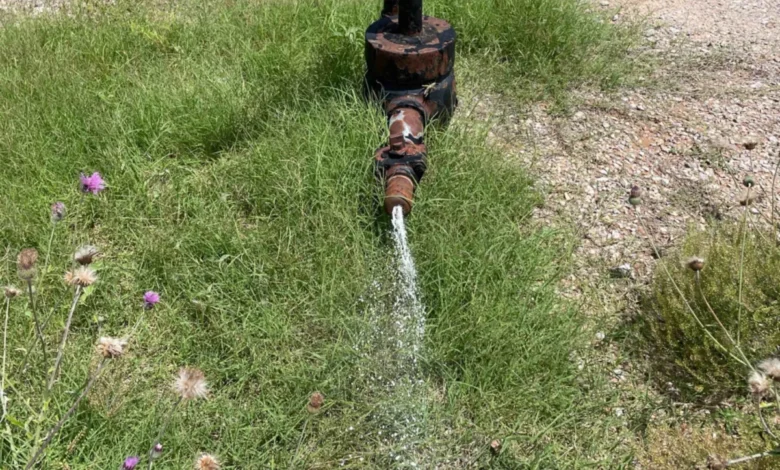
In the verdant landscapes of southern Oklahoma, a quiet environmental crisis has been unfolding for years, characterized not by the sound of drilling rigs, but by the slow, toxic creep of salt-scarred earth and oily creeks. At the center of this controversy is Citation Oil & Gas, one of the nation’s largest privately held energy companies. Despite a staggering record of more than 1,000 documented pollution incidents and rule violations over the past decade—a frequency that dwarfs that of its industry peers—the company continues to operate with minimal friction from the state’s primary regulator, the Oklahoma Corporation Commission (OCC).
The Bayou, a mile-wide oil field situated approximately 30 miles north of the Texas border, serves as the most visible evidence of this regulatory impasse. Here, toxic wastewater, a byproduct of high-pressure injection used to stimulate oil production, has repeatedly gushed to the surface, killing vegetation and threatening critical groundwater sources. While internal agency communications reveal that staff investigators have spent years attempting to build a robust case for enforcement, their efforts have been consistently blunted by leadership, raising profound questions about the mission of the agency tasked with protecting Oklahoma’s natural resources.

A Pattern of Eruption and Impunity
The tension between regulatory staff and the company reached a breaking point in June 2023. Field investigations in the Bayou had linked the surface purges—where saline, contaminated fluid bubbled up through the soil—to the high-pressure injection wells operated by Citation. These wells force wastewater deep underground to facilitate oil recovery, a process that carries significant geological risk if managed improperly.
Documents obtained through open records requests paint a picture of urgency among the frontline staff. Danny Ray, an agency manager at the time, explicitly described the situation as an “emergency” that required immediate intervention. Staff recommended that the commission utilize its administrative law court to mandate a reduction in injection pressures and impose penalties. However, the anticipated crackdown never materialized. Instead, in a move that blindsided many within the division, agency leadership allowed the company to resume operations at pressures that exceeded the safety thresholds recommended by the agency’s own hired consultants.
This decision fits a well-documented pattern. A yearlong investigation by The Frontier and ProPublica has highlighted a systemic culture within the OCC that appears to favor the continued operation of aging, low-producing wells over the enforcement of environmental standards. Citation, having acquired a vast portfolio of such wells from major oil companies that have migrated to more lucrative shale plays in Texas and beyond, has effectively become too big to fail in the eyes of state regulators.

The Financial Liability Trap
The reluctance to hold Citation accountable is rooted in a pragmatic, if controversial, economic calculus. Citation’s business model involves holding onto thousands of aging, low-value wells. Should the company be forced into bankruptcy or decide to walk away from these assets, the financial burden of plugging and remediating these sites would likely fall upon the state of Oklahoma.
Current and former agency employees argue that this fear of inheriting a massive, unfunded liability has effectively granted Citation a regulatory shield. “They’ve had major pollution issues, and you can’t really touch them,” one current manager stated under the condition of anonymity. This dynamic creates a perverse incentive structure: the more dilapidated and dangerous the infrastructure becomes, the more hesitant the state is to enforce compliance, lest the company abandon its obligations entirely.
Chronology of the Bayou Dispute
The struggle for control in the Bayou provides a clear window into the breakdown of the regulatory process:

- 2010: Citation Oil & Gas acquires the Bayou well assets, inheriting infrastructure that dates back to the 1920s.
- Early 2023: Environmental Protection Agency (EPA) reports signal concerns regarding the potential for groundwater contamination in the region.
- June 2023: Following a series of significant surface purges, the OCC temporarily shuts down 22 injection wells in the Bayou.
- November 2023: During a high-stakes meeting at the OCC’s Oklahoma City headquarters, the agency’s consultant, Halff, presents evidence linking Citation’s high-pressure injection to underground rock fracturing.
- March 2024: Negotiations reach a stalemate. Citation representatives, including Vice President Bob Redweik, adopt an aggressive stance, effectively rejecting the state’s pressure limits.
- April 2024: The OCC breaks from staff recommendations, approving a plan that allows Citation to resume operations at pressures higher than those advised by technical experts.
- 2025–Present: The agency closes its formal investigation into the Bayou, despite reports of ongoing spills and new pollution complaints.
The Role of Independent Consultants
The involvement of the engineering firm Halff was intended to depoliticize the decision-making process. Hired on a $550,000 contract, the firm’s mandate was to provide objective, science-based guidance on managing the wastewater eruptions. Yet, even when Halff’s findings explicitly supported the staff’s concerns regarding overpressurization, the agency’s political leadership opted for a “middle-ground” compromise.
This compromise, however, has not yielded environmental stability. Field reports continue to surface, indicating that even with “reduced” pressures, the ecosystem remains under duress. In September, fresh salt residue and oily streaks were reported near the wells, suggesting that the underlying geological integrity remains compromised.
The Broader Regulatory Failure
The internal frustration within the OCC is palpable. In May, at a national conference for oil regulators, attorney Tracy Case, who has worked for the oil and gas division for over a decade, openly admitted that the agency had never pursued its “bad actors.” This admission underscores a startling statistic: of approximately 750 enforcement cases filed in the agency’s administrative courts since 2023, less than one-third have resulted in substantive punishment. The average fine stands at a nominal $1,700—a cost of doing business that serves as little deterrent for a company the size of Citation.

Critics argue that this lack of enforcement undermines the entire regulatory framework. If the agency’s administrative courts are perceived as toothless, the incentive for operators to invest in infrastructure maintenance or responsible disposal practices vanishes. The result is an accumulation of environmental debt that the public, particularly those living near these sites, must eventually pay.
Human and Environmental Tolls
The impact of this regulatory leniency is not merely abstract; it affects the lives of landowners like Mike Faulkner. Ten miles east of the Bayou, Faulkner has spent months battling the effects of salt water that has gurgled to the surface of his land. Despite his repeated reports to the commission, the company has successfully lobbied for multiple deadline extensions regarding the construction of basic containment infrastructure, such as dams and fencing to protect livestock.
For the families living in these regions, the experience is one of profound disillusionment. They see a system that acts with remarkable speed to protect industry interests while moving with glacial inertia to address private property damage. The “spoiled kid” analogy used by many local residents to describe Citation’s relationship with the regulator reflects a broader public sentiment that the state’s watchdogs have been captured by the very entities they are meant to oversee.

Implications and Future Outlook
The implications of the Oklahoma Corporation Commission’s handling of the Citation case extend far beyond the borders of the state. As the domestic oil industry continues to age, the challenge of managing abandoned or low-production infrastructure will only grow. If regulators prioritize the avoidance of immediate financial liability over the long-term health of the water table and soil, they risk a permanent degradation of the rural landscape.
When asked to comment on the record, the OCC spokesperson Jack Damrill declined to discuss specific enforcement actions, citing the potential for future litigation. Similarly, leadership within the oil division, including former Director Robyn Strickland—who has since transitioned to a position with the Interstate Oil and Gas Compact Commission, an organization often aligned with industry interests—have remained silent.
As of the latest reports in October, the cycle of pollution and intermittent enforcement continues. With over 60 spills and leaks logged against Citation in the last year alone, the question remains whether the commission will eventually find the political will to hold the operator accountable, or if the “emergency” in the Bayou will simply be accepted as the new, toxic status quo. For the residents of southern Oklahoma, the answer is currently written in the salt-crusted dirt of their pastures and the ongoing contamination of their water.