Déjà Vu at the Ballot Box: How Missouri and Other States Face Renewed High-Stakes Battles Over Abortion Rights Ahead of the November Midterms

The landscape of reproductive rights across the United States continues to evolve in a fragmented and high-stakes manner, nearly half a decade after the landmark reversal of federal constitutional protections. As voters nationwide prepare for the upcoming November general election, citizens in at least four states will once again find themselves directly shaping abortion policy at the ballot box. Among them, Missouri and Nevada stand out as focal points of a relentless political tug-of-war, forcing electorates back to the polls to re-litigate issues they seemingly settled just two years prior.
The enduring fallout from the U.S. Supreme Court’s 2022 decision in Dobbs v. Jackson Women’s Health Organization decentralized abortion governance, dismantling nearly 50 years of federally guaranteed access under Roe v. Wade. In the wake of that ruling, individual states were granted full autonomy to enact restrictions, total bans, or constitutional protections. This shift has generated a complex geographic patchwork of laws, creating profound disparities in healthcare access and setting the stage for ongoing legislative and judicial confrontations.
The upcoming electoral cycle underscores how deeply polarized and dynamic this issue remains, with both advocacy networks and state lawmakers deploying ballot measures as primary instruments of strategy. While some states are working to fortify and enshrine access into their state constitutions, others are attempting to roll back recent victories for reproductive rights, resulting in voter confusion, legislative maneuvering, and intense grassroots mobilization.
A Groundhog Day Scenario for Missouri Voters
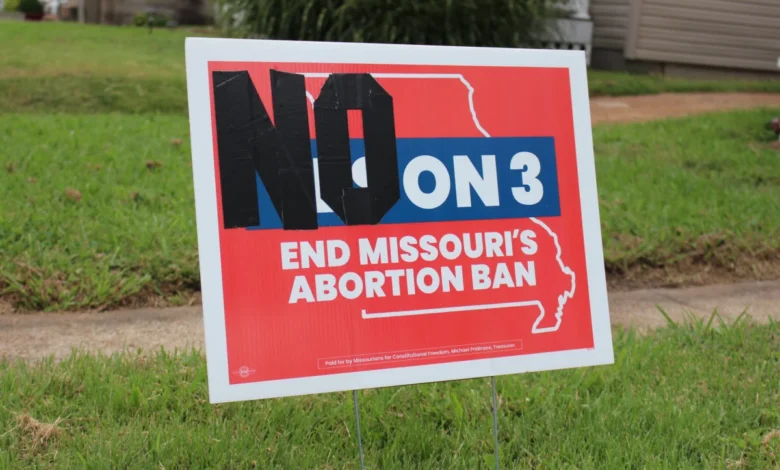
In suburban St. Louis, Kelly McCoomb anticipated this very moment. Back in 2024, when Missouri voters successfully passed a constitutional amendment to reverse the state’s near-total abortion ban, McCoomb proudly displayed a yard sign supporting the measure. Following the election, she stored the keepsake in her basement, driven by a persistent skepticism toward the state’s political leadership.
"I have little faith in our Missouri government," McCoomb remarked from her front porch.
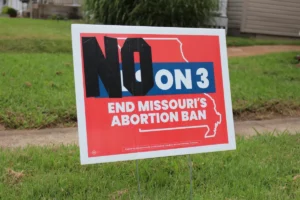
Her intuition proved accurate. Just two years later, Missouri’s Republican-dominated legislature advanced a counter-measure, once again placing the question of abortion access before the public. Strikingly, the conflicting proposals share the exact same designation: Amendment 3. However, the mechanics of the vote have inverted. While a "yes" vote in 2024 successfully added protections to the state constitution, a "no" vote in the upcoming election is required to preserve those same rights. In response, McCoomb creatively adapted her previous campaign material, covering the word "YES" with a strip of black duct tape displaying "NO" before returning the sign to her lawn.
Missouri’s current political battle represents the only known instance this cycle where a state is actively voting to remove existing constitutional abortion protections. The proposed repeal seeks to dismantle the 2024 guarantee of access up until fetal viability—typically recognized around 24 weeks of pregnancy—and replace it with a stringent statutory ban. While the replacement text outlines narrow exceptions for medical emergencies, fetal anomalies, and cases of rape or incest, the latter two categories carry strict temporal limits, requiring procedures to be performed before 12 weeks of gestation.
Historical Context and the Long Road to the Dobbs Decision
To understand the intensity of the current legislative battle in Missouri, one must examine the state’s aggressive anti-abortion trajectory predating the Dobbs ruling. Long before the Supreme Court returned regulatory authority to the states, Missouri maintained some of the most restrictive clinical regulations in the nation. Over a span of three decades, lawmakers enacted a cascade of stringent statutes designed to systematically curtail operations at clinics providing abortion care.
These legislative hurdles included a mandatory 72-hour waiting period, rigid structural requirements dictating the minimum dimensions of procedure rooms and hallways, and a legal mandate requiring all attending clinicians to hold active admitting privileges at a nearby local hospital. The cumulative impact of these regulations dramatically constricted service availability. By 2011, state health records documented 5,772 legal abortions performed within Missouri. A decade later, that figure plummeted to a mere 150 procedures.
When the Supreme Court delivered the Dobbs decision in June 2022, Missouri swiftly became the first state in the nation to enact a near-total ban through a pre-formulated "trigger law." Even after voters successfully passed the 2024 constitutional amendment to restore access, bureaucratic resistance and legal friction meant it took nearly two years for medication abortion services to resume reliably within state borders.
Navigating Voter Confusion and Campaign Complexities
The recurrence of high-stakes referendums has introduced significant logistical hurdles and widespread voter confusion. Margot Riphagen-Dunn, Chief Executive Officer of St. Louis-based Planned Parenthood Great Rivers, noted that the whiplash of back-to-back statewide votes directly mirrors the chronic uncertainty patients face when attempting to determine their legal healthcare options.
"Chaos is kind of the point here," Riphagen-Dunn observed, emphasizing that shifting legal landscapes serve as an operational barrier for healthcare providers seeking to deliver consistent care.
Paradoxically, the administrative overlap has also complicated messaging for anti-abortion organizations operating within the state. Reagan Barklage, vice president of Students for Life of America and treasurer of the Missouri Students for Life Ballot Committee, acknowledged the messaging challenges posed by the numeric coincidence of the ballot measure.
"I think it’s unfortunate," Barklage said. "People need to be very clear on what they’re voting for."
Barklage noted that during grassroots canvassing efforts, volunteers have had to actively correct anti-abortion voters, reminding them that casting a "yes" vote on Amendment 3 is required to support the new restriction, despite those same individuals voting "no" on an identically numbered amendment two years prior. "It is crazy that it ended up being even the same number. I do not think that was intentional, but we’ve got to deal with what we’ve got," Barklage added. "I hope the pro-choicers kept their yard signs from last time."
National Implications: A Patchwork of State Laws and Upcoming Referendums
Missouri is not operating in a vacuum. The upcoming November general election will feature critical abortion-related ballot measures across several other key states, including Nevada, Idaho, and Virginia, reflecting a broader nationwide struggle over bodily autonomy and constitutional governance.
In Nevada, reproductive rights advocates are organizing to secure a second consecutive majority vote to permanently enshrine abortion protections into the state constitution. Under Nevada law, constitutional amendments require majority approval across two separate general elections to take effect. A 2024 measure successfully cleared the first hurdle with 64% of the vote, securing access up to 24 weeks of pregnancy.
Denise Lopez, president of Nevadans for Reproductive Freedom, emphasized that the current campaign focuses on voter mobilization in the shadow of restrictive policies enacted in neighboring conservative states.
"Folks care about it," Lopez stated. "They’re seeing what’s happening at the national level, and they want to make sure that whatever’s happening in our neighboring states, like Idaho and Utah, doesn’t happen here in Nevada."
Conversely, in Idaho—which currently enforces one of the strictest absolute bans in the United States—voters will consider a newly qualified ballot measure designed to establish foundational abortion rights up to fetal viability. Meanwhile, in Utah, litigation surrounding the state’s statutory ban remains active, while voters in Virginia will weigh whether to amend their state constitution to codify existing access through the first two trimesters of pregnancy.
The Prospect of a Constitutional Crisis
As the legal geography of the United States remains fractured into conflicting state jurisdictions, legal and policy experts warn of systemic institutional strain. The coexistence of shield laws in pro-access states—designed to protect local medical providers from out-of-state prosecution—alongside draconian bans in neighboring jurisdictions has established an unprecedented legal gray area.
Kristi Hamrick, vice president of media and policy for Students for Life Action, pointed to these mounting structural contradictions as evidence of an impending institutional conflict.
"I just think there’s a constitutional crisis that’s coming," Hamrick said, raising fundamental questions about legal uniformity. "Can you have 50 state standards on whether or not a human being is a human being? Can you have 50 state standards on whether human beings have legal protection?"
For advocates on both sides of the aisle, the upcoming midterms represent a pivotal juncture. Whether through the ingenious recycling of old yard signs or intensive voter re-education campaigns, the electorate remains deeply engaged. As November approaches, the outcomes in Missouri, Nevada, and beyond will not only dictate local standards of care but will also test the resilience of state-level direct democracy in resolving one of the most polarizing issues in modern American history.