Orcas Unleash Novel ‘Ram-to-Fragment’ Hunting Strategy on Sunfish in Gulf of California, Raising Questions About Evolving Predator Behavior

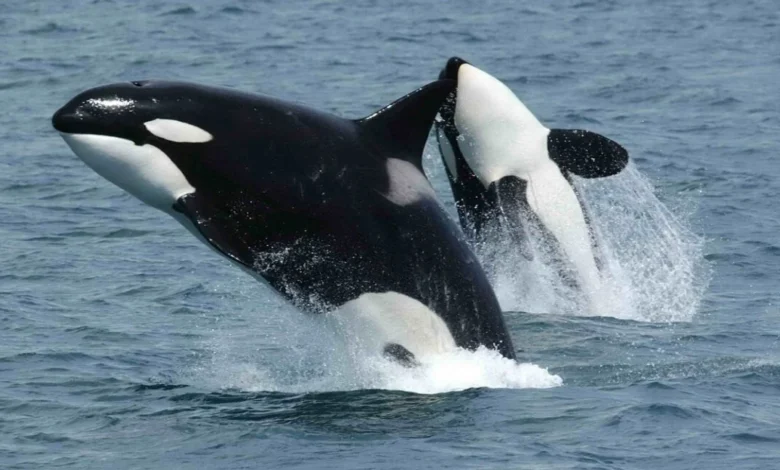
In a significant observation challenging established understanding of marine predation, orcas in the Gulf of California have been filmed executing a powerful, cooperative hunting strategy to fragment sunfish. This newly documented behavior, dubbed "ram-to-fragment," involves multiple orcas teaming up to strike prey with such immense force that the carcasses explode into small pieces, a method distinct from previously known orca hunting techniques. The findings, detailed in a new paper published in the journal Frontiers in Ethology, offer fresh insights into the complex intelligence and evolving cultural behaviors of these apex predators, drawing parallels with other enigmatic orca interactions, such as the widely reported ramming of boats.
The Emergence of a Potent New Hunting Tactic
For years, scientists have observed orcas (Orcinus orca) employing a diverse repertoire of hunting strategies, from coordinated herding of fish to intricate wave-washing techniques for seals. However, the "ram-to-fragment" method represents a stark departure from the typical, more precise dismemberment of prey. The footage, captured by a tourism operator in July 2024 off the coast of San Jose del Cabo, Mexico, depicts a coordinated effort by a pod of orcas to not just subdue, but to utterly pulverize a sunfish. This unprecedented display of power and coordination has ignited discussions within the scientific community regarding its purpose, efficiency, and potential implications for understanding orca culture and predatory evolution.
Kathryn Ayres, a co-author of the study from Beneath The Waves, a nonprofit dedicated to ocean health, posited two primary hypotheses for this novel behavior. "We think this may help younger orcas feed more easily, or it could also just be for fun," Ayres stated, highlighting the known playful nature of orcas with their food. The observation of a juvenile orca readily consuming the fragmented pieces lends credence to the former theory, suggesting a pedagogical or provisioning aspect to this seemingly brutal tactic.
A Deeper Dive into Orca Intelligence and Social Learning
Orcas are not merely powerful hunters; they are among the most intelligent and socially complex animals on the planet. Their cognitive prowess is evidenced by their large, highly convoluted brains, which are second only to humans among marine mammals in terms of encephalization quotient (EQ). These complex brains support advanced communication, intricate social structures, and the remarkable capacity for cultural transmission of behaviors. Different orca ecotypes – such as transient (mammal-eating) and resident (fish-eating) populations – exhibit distinct dialects, hunting techniques, and social customs passed down through generations.
This cultural learning is a cornerstone of orca society, allowing pods to adapt to changing environments, exploit new food sources, and even develop unique forms of play. For instance, some populations have been observed developing specific strategies for hunting seals off ice floes, while others specialize in preying on large whales, requiring highly coordinated attacks. The emergence of a "ram-to-fragment" technique aligns perfectly with this understanding of orca adaptability, suggesting that individual ingenuity or accidental discovery can rapidly spread within a pod and potentially across broader populations. Play behavior, as noted by Ayres, is also a critical component of orca development and social bonding. Young orcas learn essential hunting and social skills through play, often mimicking adult behaviors, and it is not uncommon for orcas to engage in seemingly non-utilitarian activities, sometimes involving their prey, simply for amusement or social interaction.
The Enigmatic Case of Orca-Boat Interactions: A Precedent for Novel Behaviors
The "ram-to-fragment" sunfish behavior takes on additional significance when viewed in the context of other recent, unusual orca interactions, particularly the well-documented incidents of orcas ramming boats off the Iberian Peninsula. Since 2020, there has been a dramatic increase in reports of orcas, predominantly juveniles and subadults, deliberately approaching and sometimes severely damaging sailboats and other vessels in the waters off Spain and Portugal. These interactions have ranged from gentle nudges to forceful impacts that have led to significant hull damage and, in some cases, the sinking of vessels.
The motivations behind these boat-ramming incidents remain a subject of intense scientific debate. Hypotheses include playful curiosity, a response to previous negative interactions (e.g., propellor strikes), a form of stress-induced behavior, or, crucially, a culturally transmitted "fad." Researchers have observed that the behavior appears to spread within specific pods and among individuals, suggesting a form of social learning where younger orcas imitate their elders. This unprecedented phenomenon has caused considerable disruption to maritime traffic and raised significant safety concerns, underscoring the potential for orca populations to develop and propagate novel behaviors that can have tangible impacts on human activities. The sunfish ramming, while targeting prey rather than human vessels, further solidifies the idea that orca culture is dynamic and capable of producing innovative, sometimes startling, actions that defy conventional expectations.
The Mola Mola: An Unwieldy Target
The ocean sunfish, or Mola mola, is a truly unique creature and an unusual target for such an aggressive hunting strategy. As the world’s heaviest bony fish, Mola mola can reach immense sizes, often exceeding 2,000 kilograms in weight and 3 meters in length. Their distinctive appearance—a flattened, disc-like body with large dorsal and anal fins but no caudal fin—makes them appear cumbersome. Despite their size, sunfish are relatively slow-moving and often float near the surface, basking in the sun, which can make them vulnerable to predators.
While their sheer bulk might suggest a significant caloric payoff, sunfish meat is often considered less desirable by predators due to its gelatinous consistency and high cartilage content compared to the muscle of other fish or marine mammals. Orcas are known to prey on sunfish, but typically employ a more methodical approach to access the more nutritious internal organs and muscle tissue. The "ram-to-fragment" method suggests a potential shift in how orcas perceive and process this particular prey, perhaps finding a novel way to overcome the challenges posed by its large, unwieldy form and dense skeletal structure. It could be an adaptation to make the less "convenient" parts more accessible or to simplify the feeding process for an entire pod.
Evolution of a Predatory Art: From Precision to Fragmentation
Orcas are renowned for their highly specialized and cooperative hunting strategies, each tailored to specific prey and environmental conditions. Their traditional methods for hunting sunfish typically involve a three-pronged approach: first, an orca targets the sunfish’s pectoral fins to disable it; next, it slashes the fish across its body to remove the viscera, which are often consumed; and finally, the orca uses its beak to access any remaining desirable tissue. This is a precise, surgical method designed to maximize nutritional yield from a challenging prey item.
Beyond sunfish, orcas exhibit a breathtaking array of cooperative hunting techniques:
- Wave-Washing: In Antarctic waters, killer whales coordinate to create powerful waves that wash seals off ice floes, making them vulnerable.
- Coordinated Pursuits: Transients will often work in groups to chase down and exhaust large baleen whales, frequently targeting calves or weaker individuals, before launching a synchronized attack.
- Bait Balling: Some orca populations herd vast schools of fish into dense "bait balls" near the surface, making it easier for individuals to feed.
- Blocking Escape Routes: Orcas have been observed strategically positioning themselves to block the escape paths of fast-moving prey, such as white sharks, ensuring a successful capture.
- Stabilizing Prey: The new paper also references instances where one orca holds a large prey animal, such as a whale shark, steady while another delivers a powerful blow.
The "ram-to-fragment" behavior for sunfish could be seen as a sophisticated evolution or specialization of these existing cooperative strategies. Instead of a careful dismemberment, the orcas are employing a tactic of overwhelming force. This might serve several purposes: it could be a more efficient way to process the large, cartilaginous body of a sunfish, or, as suggested by Ayres, it might facilitate feeding for the entire pod, particularly the less experienced juveniles who might struggle with larger, intact pieces of prey. The act of one female releasing the carcass just as the male charges speaks to an extraordinary level of coordination and communication within the pod, highlighting the depth of their cooperative intelligence.
The Gulf of California Event: A Detailed Chronology (July 2024)
The groundbreaking footage documenting the "ram-to-fragment" behavior was captured in July 2024, providing a rare glimpse into a previously unrecorded orca hunting technique. The observation occurred off the vibrant coast of San Jose del Cabo, situated in Mexico’s biodiverse Gulf of California—a region known for its rich marine life and frequent orca sightings. The crucial visual evidence was obtained by a local tourism operator, whose proximity and experience allowed for the detailed recording of the event.
The pod involved in this remarkable display consisted of five individuals: three adult females, one adult male, and one juvenile. This specific composition is significant, as the presence of both experienced adults and a developing juvenile provides a prime context for the observation of social learning and potential pedagogical interactions.
The chronological sequence of events unfolded as follows:
- Initial Hunt: The pod was first observed successfully hunting and consuming a spine-tail devil ray. This initial interaction confirmed the pod’s active predatory state and demonstrated their existing cooperative hunting prowess on other local prey.
- Sunfish Encounter: Shortly after the devil ray consumption, the same operator filmed one of the adult female orcas holding the carcass of a sunfish in her mouth. The sunfish already bore a large lateral wound, suggesting that the initial stages of predation, likely including the removal of viscera, had already occurred using more conventional methods. This detail is crucial, indicating that the "ram-to-fragment" was not the initial killing blow, but rather a processing technique.
- The Ramming Sequence: The adult male orca then initiated a powerful charge directly towards the held sunfish carcass. With remarkable precision and timing, the female orca released the carcass just moments before the male’s impact.
- Fragmentation: Upon impact, an audible sound was distinctly heard, followed by the dramatic fragmentation of the sunfish carcass. Bits of flesh and tissue dispersed widely into the water, a clear indication of the immense force generated by the male’s charge.
- Collective Feeding: Immediately following the fragmentation, the juvenile orca moved in to feed on the numerous smaller pieces that were now floating freely in the water. Simultaneously, the adult orcas consumed what remained of the larger, split-open body of the sunfish.
This detailed chronology provides compelling evidence of a sophisticated, multi-stage hunting and processing strategy. The coordination between the female and male, the deliberate fragmentation, and the subsequent feeding by the juvenile all point towards a highly evolved cooperative behavior that likely serves a specific purpose within the pod’s hunting dynamic.
Scientific Analysis and Expert Interpretation
The "ram-to-fragment" behavior offers fertile ground for scientific inquiry into orca ethology. Kathryn Ayres’s dual hypothesis—facilitating juvenile feeding or simple play—provides a framework for understanding this novel action. The "feeding ease" hypothesis suggests a form of parental investment or teaching. By breaking down a large, potentially difficult-to-handle prey item like a sunfish into smaller, more manageable fragments, the adults may be making it easier for the juvenile to consume, reducing the effort and skill required. This could be particularly advantageous for younger orcas still honing their hunting and feeding techniques. Such provisioning would demonstrate a high level of social care and foresight within the pod.
Alternatively, the "fun" hypothesis speaks to the profound role of play in orca life. For a species as intelligent and energetic as orcas, engaging in high-impact activities, even with prey, could be a form of social bonding, skill refinement, or simply a novel way to expend energy and interact with their environment. Given that orcas are known for "playing with their food," this high-energy fragmentation could be an exaggerated form of such playful interaction, perhaps a new cultural fad within the pod. The sheer novelty of the behavior certainly suggests an element of experimentation.
Beyond these two primary theories, the observed behavior underscores the incredible adaptability and innovation inherent in orca societies. It highlights the dynamic nature of their hunting strategies, which are not static but continually evolve based on environmental factors, prey availability, and the ingenuity of individual pod members. The cooperative aspect, particularly the precise timing of the female’s release and the male’s charge, speaks volumes about the intricate coordination and communication within the pod. This is not merely an individual act but a synchronized effort that requires complex social understanding.
Comparing this to other observed orca behaviors, the "ram-to-fragment" technique could be considered a form of "tool use," where the male’s body is effectively used as a powerful, living ram to process prey. This expands our understanding of how orcas interact with their environment to achieve predatory goals, further cementing their status as highly intelligent problem-solvers.
Broader Ecological and Conservation Implications
While a single observed instance, the "ram-to-fragment" behavior holds broader ecological and conservation implications. If this technique proves to be more efficient or advantageous and subsequently spreads across orca populations, it could potentially alter predator-prey dynamics. Sunfish, while not currently considered endangered, play a role in marine ecosystems, and understanding novel predatory pressures is crucial for comprehensive ecological assessments. Any significant shift in orca hunting behavior could, over time, influence the population dynamics of their prey.
For conservation efforts, these evolving behaviors present both challenges and opportunities. Understanding the full spectrum of orca behaviors is paramount for developing effective conservation strategies. If orcas are continually developing new ways to interact with their environment and exploit resources, conservation plans must remain flexible and adaptive. Moreover, the increasing complexity of orca behaviors, whether it’s ramming boats or fragmenting sunfish, reinforces the need for continued, non-invasive research. Genetic studies could help trace the lineage and spread of such behaviors, while acoustic monitoring might reveal unique vocalizations associated with these specific hunting techniques. Comparative studies across different orca ecotypes could also shed light on whether similar extreme force techniques are developing elsewhere.
Finally, these discoveries shape public perception of orcas. They reinforce the image of killer whales as intelligent, powerful, and at times, enigmatic creatures whose behaviors are still being unraveled. This ongoing exploration emphasizes the vast unknowns within our oceans and the continuous need for responsible marine tourism and observation practices. As humans continue to share the marine environment with such complex and adaptable predators, a deeper understanding of their evolving behaviors becomes not just an academic pursuit, but a critical component of fostering coexistence and ensuring the health of marine ecosystems for generations to come.
Related posts: